


OpenAI Secures Historic $110 Billion Investment in Landmark AI Funding Round
A New Chapter in AI Development
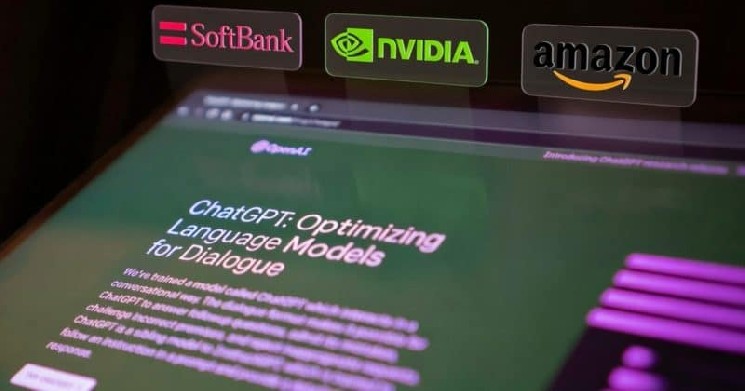
In a move that underscores the explosive growth and potential of artificial intelligence, OpenAI announced on Friday that it has closed one of the largest funding rounds in tech history—a staggering $110 billion investment. This massive influx of capital comes from some of the most influential players in the technology sector: SoftBank, NVIDIA, and Amazon. The deal values the San Francisco-based AI research laboratory at an eye-popping $730 billion before the new money, cementing OpenAI’s position as one of the world’s most valuable private companies. This funding round represents not just confidence in OpenAI’s current products, but a bet on the transformative power of artificial intelligence across virtually every sector of the global economy. For context, this single funding round is larger than the entire annual GDP of many countries, reflecting how AI has moved from a niche technology concern to a central pillar of the modern digital economy. The companies backing this round bring more than just money to the table—they offer critical infrastructure, distribution channels, and technical expertise that will help OpenAI expand its reach and capabilities in ways that would be impossible through organic growth alone.
The Power Players Behind the Investment
The composition of investors in this funding round reads like a who’s who of tech industry titans, each bringing unique strategic advantages to the partnership. SoftBank, the Japanese investment powerhouse known for placing bold bets on transformative technologies, committed $30 billion to the round. SoftBank has a history of identifying and backing companies that reshape entire industries, and their substantial investment signals their belief that AI represents the next major technological revolution. NVIDIA, the dominant force in AI computing hardware whose chips power the vast majority of AI training and inference workloads, also pledged $30 billion. NVIDIA’s involvement is particularly significant because the company literally provides the picks and shovels for the AI gold rush—their graphics processing units are essential for running the complex calculations that make modern AI possible. The largest single contribution came from Amazon, which put in $50 billion and simultaneously announced a multi-year strategic partnership with OpenAI. Amazon’s involvement extends beyond financial investment; through its Amazon Web Services (AWS) cloud computing platform, which commands the largest share of the cloud infrastructure market, the company will work to accelerate AI adoption across both business and consumer applications. This partnership could dramatically expand OpenAI’s reach, making its technologies available to millions of AWS customers worldwide.
Unprecedented User Growth and Market Penetration
The numbers behind OpenAI’s user growth tell a remarkable story of technology adoption at a pace rarely seen in business history. The company’s flagship product, ChatGPT—a conversational AI platform that can understand and generate human-like text—now boasts more than 900 million weekly active users. To put that in perspective, that’s roughly one in nine people on the planet using the service every single week. Even more impressive, the platform has attracted more than 50 million paying consumer subscribers who value the service enough to pay for premium features, demonstrating that this isn’t just a novelty that people try once and forget, but a tool that has become integrated into their daily lives. On the business side, corporate adoption has been equally dramatic, with over nine million paying business users now relying on OpenAI’s platform for daily operations. These aren’t casual users—these are businesses that have incorporated AI into their core workflows for tasks ranging from customer service to data analysis to content creation. The company’s Codex product, an AI-powered coding assistant that helps software developers write better code faster, has seen particularly explosive growth, with its weekly user base tripling since January to reach 1.6 million users. This suggests that AI is moving beyond simple chatbot applications to become an essential productivity tool across professional fields, particularly in technical domains where the technology can provide immediate, measurable value.
Infrastructure Expansion and Technical Capabilities
The massive capital infusion will enable OpenAI to dramatically expand its technical infrastructure, which is essential for training increasingly sophisticated AI models and serving hundreds of millions of users simultaneously. Under an expanded partnership with NVIDIA, OpenAI will gain access to 3 gigawatts of dedicated inference capacity—the computing power needed to run AI models and generate responses to user queries—and 2 gigawatts of training power using NVIDIA’s next-generation Vera Rubin systems. These numbers represent an almost unfathomable amount of computing capability, enough to power a small city, but directed entirely toward AI development and deployment. This new capacity builds upon OpenAI’s existing deployments of NVIDIA’s Hopper and Blackwell hardware, which are already being operated through partnerships with Microsoft, Oracle Cloud, and CoreWeave. The scale of this infrastructure investment reflects a fundamental reality of modern AI: these systems require enormous computational resources to train and operate. The largest language models now involve hundreds of billions of parameters and are trained on datasets encompassing vast swathes of human knowledge, requiring weeks or months of continuous processing on thousands of specialized chips running in parallel. As CEO Sam Altman explained, the company is “pushing the frontier across infrastructure, research, and products to make AI more capable, reliable, and broadly useful.” This infrastructure buildout is essential not just for improving current products, but for developing the next generation of AI systems that may be even more capable.
Broader Strategic Initiatives and Long-term Vision
Beyond the immediate funding announcement, OpenAI has been positioning itself for long-term dominance in the AI sector through a series of strategic moves. By September 2025, the company had committed to a $300 billion infrastructure agreement with Oracle, representing one of the largest technology infrastructure deals in history. This partnership will give OpenAI access to Oracle’s global network of data centers and cloud computing resources, enabling the company to serve users around the world with lower latency and higher reliability. Additionally, OpenAI acquired Statsig, an enterprise analytics firm, for $1.1 billion, signaling the company’s intention to deepen its capabilities in helping businesses understand and optimize their operations through AI-powered insights. These moves demonstrate that OpenAI is thinking beyond simply creating impressive AI models—the company is building a comprehensive ecosystem of products, services, and infrastructure that can support enterprise customers with mission-critical needs. Industry analysts project that cumulative AI compute spending could exceed $450 billion between 2024 and 2030, suggesting that OpenAI’s massive infrastructure investments are aligned with broader industry trends. The new funding round also significantly strengthens the OpenAI Foundation, the nonprofit entity that oversees the company’s mission and values, by lifting its stake in the broader corporate group above $180 billion. This substantial endowment will enable the foundation to fund important philanthropic work in areas such as health research and AI safety, ensuring that as OpenAI grows as a commercial entity, it maintains its commitment to developing AI that benefits humanity as a whole.
The Implications for the Future of AI and Technology
This historic funding round represents more than just a financial transaction—it’s a clear signal about where the technology industry believes the future is heading. The fact that three major tech companies were willing to commit a combined $110 billion to a single AI research lab indicates that artificial intelligence is no longer viewed as speculative or experimental, but as fundamental infrastructure for the digital economy. The partnerships forged through this funding round create a powerful ecosystem: NVIDIA provides the computing hardware, Amazon provides the cloud distribution platform and enterprise customer base, SoftBank provides global investment connections and vision, and OpenAI provides the AI models and research expertise. Together, these companies are positioned to shape how AI develops and is deployed across industries for years to come. For businesses and consumers, this investment should accelerate the pace of AI innovation and make powerful AI tools more accessible and affordable. For the technology industry, it sets a new benchmark for what scale and ambition look like in the AI era. And for society more broadly, it raises important questions about governance, competition, and ensuring that the benefits of AI are widely distributed rather than concentrated in the hands of a few dominant companies. As AI systems become more capable and more deeply integrated into everything from healthcare to education to entertainment, the decisions made by companies like OpenAI will have profound impacts on billions of people worldwide. This $110 billion bet is ultimately a wager that artificial intelligence will be as transformative as the internet itself—perhaps even more so.