



NFL Star Stefon Diggs Faces Serious Legal Trouble: What We Know About the Allegations
Court Appearance and Initial Proceedings
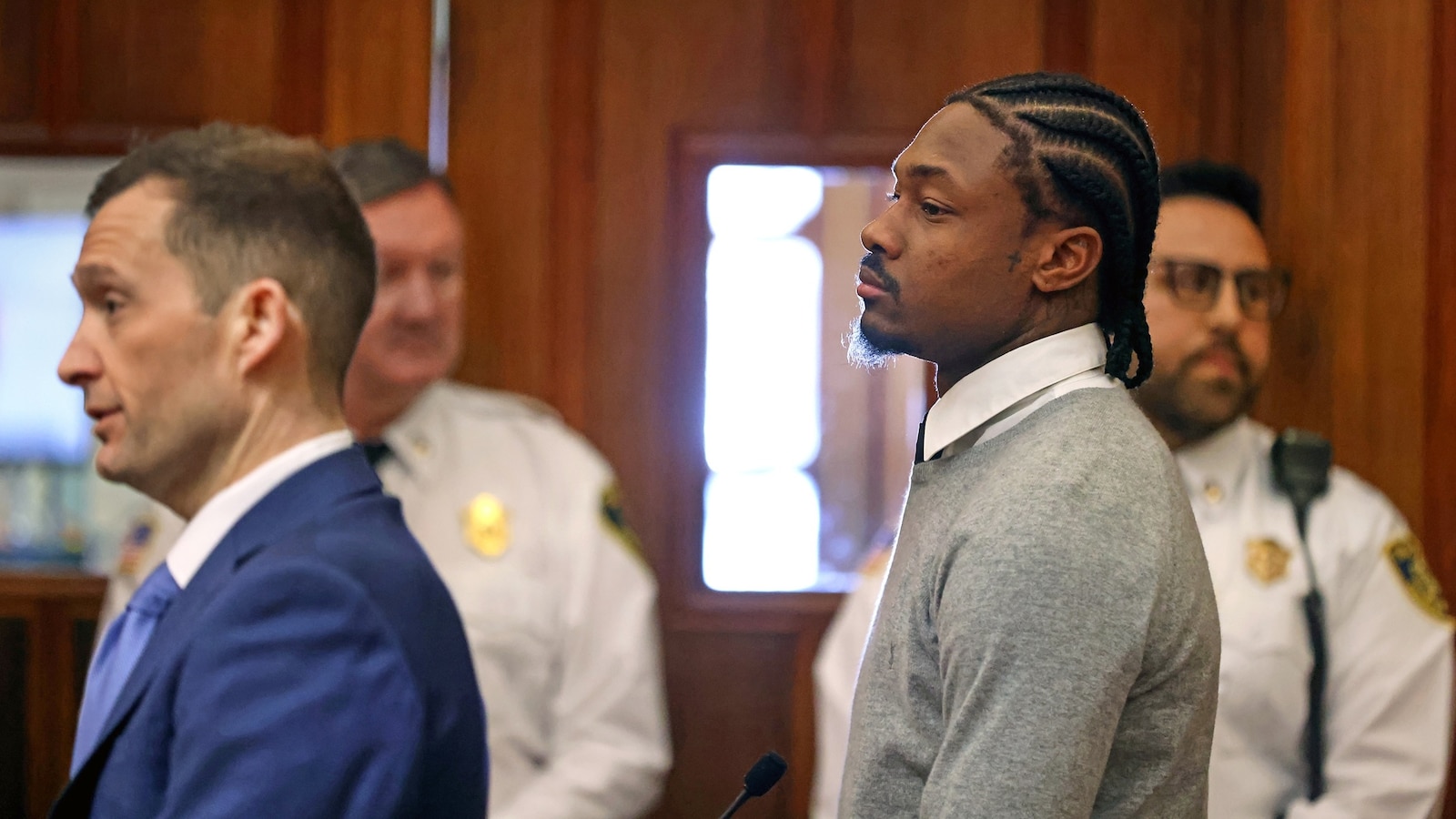
New England Patriots wide receiver Stefon Diggs found himself in a Massachusetts courtroom on Friday morning, facing charges that have sent shockwaves through the NFL community. The 33-year-old athlete appeared at the District Court in Dedham for his arraignment on felony strangulation charges and a misdemeanor assault charge, both stemming from an alleged December 2025 incident. During the hearing, Diggs remained silent while his legal representation entered a not guilty plea on his behalf. The judge made the decision to release him on his own recognizance, meaning he didn’t have to post bail, but imposed strict conditions on his release. Most notably, Diggs was ordered to have absolutely no contact with the alleged victim—not directly, and not through any third parties. This standard protective measure is designed to prevent any potential intimidation or interference with the legal process as the case moves forward. The next scheduled court date has been set for April 1, 2026, when both sides will return to continue the legal proceedings.
The Alleged Incident: A Workplace Dispute Turns Violent
According to police records obtained by ABC News, the incident that led to these serious charges occurred on December 2, 2025, and involved Mila Adams, a private chef who had been working for Diggs. The root of the confrontation was reportedly a financial dispute—specifically, Adams’ request for wages she claimed Diggs owed her. What allegedly began as a conversation about unpaid compensation quickly escalated into a physical altercation that has now landed the NFL star in criminal court. The alleged victim told police that she believes she is still owed approximately one month’s worth of wages for her work as Diggs’ private chef. This type of employer-employee financial disagreement is unfortunately not uncommon, but what makes this situation particularly serious are the allegations of how Diggs allegedly responded when confronted about the money. The incident highlights how quickly workplace disputes can spiral out of control when emotions run high and proper channels for conflict resolution aren’t utilized.
Details of the Alleged Assault
The police report paints a disturbing picture of what allegedly transpired in Adams’ bedroom that December day. According to her account to law enforcement, Diggs entered her unlocked bedroom, and the two began discussing the wages she claimed he owed her. During this conversation, Adams told police that Diggs became angry and allegedly struck her across the face with his hand. When she attempted to defend herself by pushing him away, the situation allegedly escalated further. According to the police report, Diggs then allegedly choked Adams using the crook of his elbow around her neck in what sounds like a chokehold position. As Adams struggled to free herself and tried to pry his arm away from her neck, he allegedly tightened his grip on her. The alleged assault continued when Diggs then threw her onto the bed, according to the police documentation. When Adams persisted in telling him that she still hadn’t received the money she was owed, Diggs allegedly responded by calling her statements “lies.” These are the allegations as presented in the police report, though it’s important to note that Diggs and his legal team have strongly denied that any of this occurred.
The Defense’s Response and Counter-Narrative
David Meier, Diggs’ attorney, issued a forceful statement in December when news of the allegations first surfaced, categorically denying all accusations against his client. The defense’s position is clear and unambiguous: according to Meier, the allegations are “unsubstantiated, uncorroborated, and were never investigated—because they did not occur.” This statement suggests that the defense team believes there is no physical evidence or witness testimony to support Adams’ version of events. Furthermore, Meier’s statement takes aim at what he characterizes as the motivation behind the accusations, suggesting that the “timing and motivation for making the allegations is crystal clear.” According to the defense narrative, these allegations are nothing more than the “direct result of an employee-employer financial dispute that was not resolved to the employee’s satisfaction.” In other words, Diggs’ legal team is arguing that Adams fabricated these serious criminal allegations as retaliation for not getting the money she wanted or believed she was owed. Meier concluded his statement by expressing confidence that “Stefon looks forward to establishing the truth in a court of law,” signaling that the defense is prepared to fight these charges vigorously through the legal system.
The Timing and Diggs’ Recent Career Achievements
The timing of these legal troubles is particularly notable given where Stefon Diggs was in his career just days before his court appearance. According to the details provided, Diggs had just played in Super Bowl LX on February 8, 2026, when his New England Patriots faced off against the Seattle Seahawks at Levi’s Stadium in Santa Clara, California. This means that just five days after competing in the biggest game in professional football, Diggs was standing in a Massachusetts courtroom facing felony charges. The contrast couldn’t be more stark—from the pinnacle of athletic achievement to potentially career-ending legal jeopardy in less than a week. This situation mirrors other cases in professional sports where athletes have seen their careers and reputations threatened or destroyed by legal troubles, regardless of their on-field accomplishments. For the Patriots organization, this creates a significant dilemma as they must balance supporting a player who is presumed innocent until proven guilty while also being mindful of public perception and the serious nature of the allegations.
What Happens Next and the Bigger Picture
As this case moves forward, there are several important considerations to keep in mind. First and foremost, Diggs is presumed innocent until proven guilty—that’s a foundational principle of the American legal system, and it applies regardless of someone’s celebrity status. The April 1 court date will be the next opportunity for both sides to present their arguments, and it’s likely that between now and then, both the prosecution and defense will be gathering evidence, interviewing potential witnesses, and building their respective cases. For Diggs personally, these charges carry potentially serious consequences beyond just the legal realm. A felony strangulation conviction could result in significant prison time, and even if he’s ultimately acquitted, the damage to his reputation and career could be substantial. The NFL has its own conduct policies and could potentially take disciplinary action independent of the legal proceedings. For Adams, pursuing these charges means enduring the scrutiny and pressure that comes with accusing a high-profile athlete of a crime. The case also raises broader questions about power dynamics in employer-employee relationships, particularly when one party is a wealthy celebrity and the other is a service worker. Regardless of the outcome, this case serves as a reminder that financial disputes should be resolved through proper legal channels—small claims court, labor boards, or civil litigation—rather than confrontation. As the legal process unfolds over the coming months, more details will likely emerge that will help clarify what really happened that December day, and whether justice will be served for all parties involved.