
Britain’s Economic Battle: A Clash Over Financial Direction and Future Prosperity
The State of the Nation’s Finances
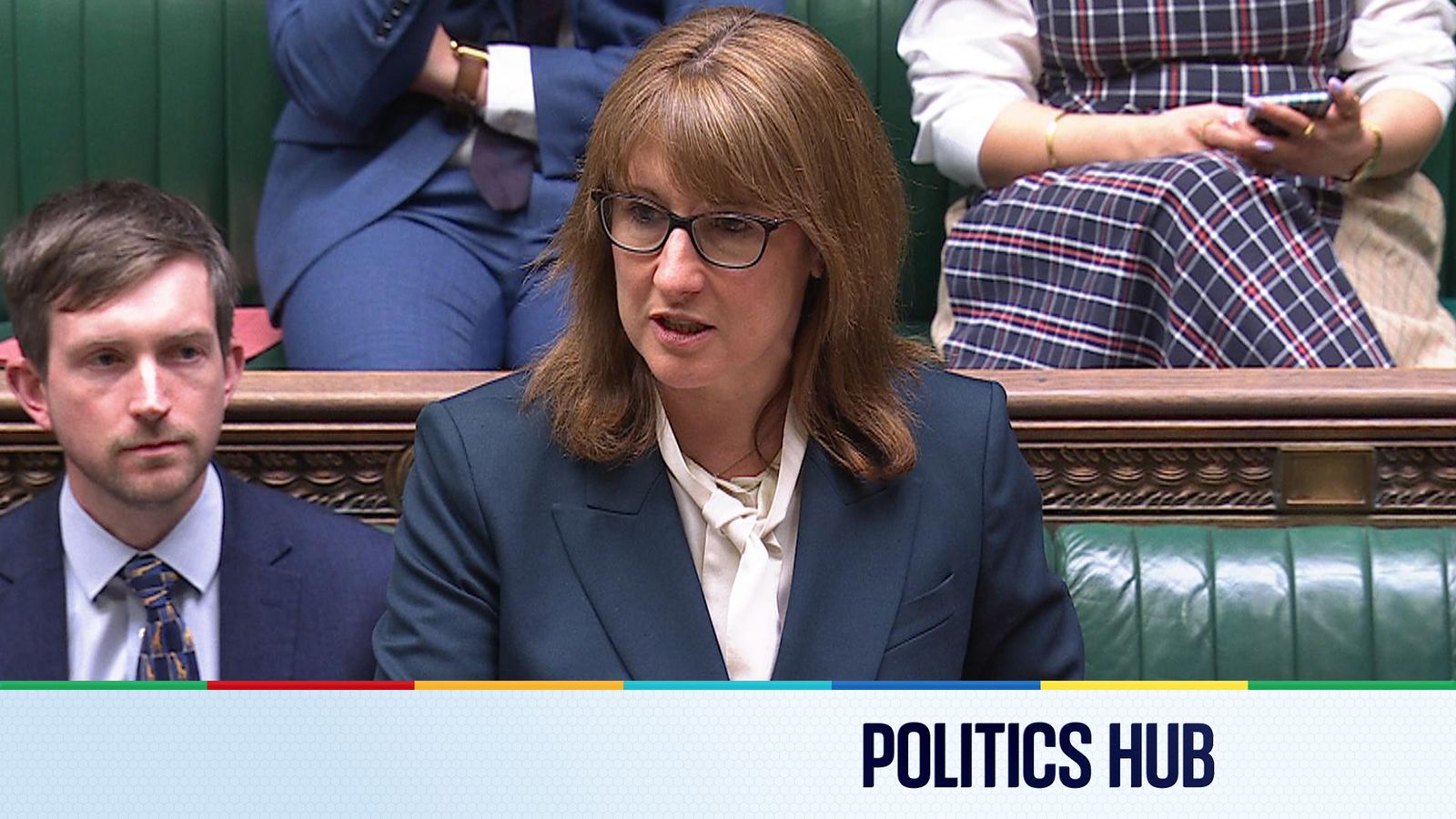
The British economy finds itself at a critical crossroads, with political leaders offering starkly different assessments of the country’s financial health and future direction. In a heated exchange in the House of Commons, Shadow Chancellor Sir Mel Stride painted a grim picture of the United Kingdom’s economic situation, declaring that the British economy “is in tatters.” His assessment came as a direct response to Chancellor Rachel Reeves’ statement on the government’s economic plans, marking another chapter in the ongoing debate about how best to steer the nation through turbulent financial waters.
Sir Mel Stride’s critique was comprehensive and unsparing, targeting what he described as fundamental failures in economic management since the new government took office. According to the shadow chancellor, Chancellor Reeves has fallen short of delivering “the stability and resilience that can weather the storm ahead” – qualities that any finance minister must provide during uncertain times. His comments reflect the opposition’s view that the current administration’s approach to managing the economy has not only failed to provide the necessary safeguards but has actively made the situation worse for ordinary British citizens and businesses alike.
A Damning Assessment of Government Policy
The shadow chancellor’s criticism centered on what he characterized as a series of poor decisions that have compounded Britain’s economic challenges. He pointed specifically to the government’s approach when it first came to power, accusing Chancellor Reeves of having “ramped up borrowing and spending and hiked taxes to record levels.” This triple approach – increased borrowing, higher spending, and elevated taxation – represents what the opposition sees as a fundamentally flawed strategy that has backfired on the British people.
What makes this criticism particularly pointed is Stride’s assertion that these negative outcomes were entirely predictable. He noted that “she was warned at the time by the OBR [Office for Budget Responsibility] and others that her policies would mean higher inflation, higher borrowing costs, higher interest rates and that she would destroy jobs.” The implication is clear: the government was given ample warning by respected economic institutions about the likely consequences of its chosen path, yet proceeded anyway. The shadow chancellor’s verdict is that those warnings have proven accurate, with “all of that has come to pass.” This suggests a failure not just of policy execution, but of judgment at the highest levels of economic decision-making.
Britain’s Position Among Global Economies
Sir Mel Stride didn’t limit his criticism to general economic malaise but provided specific comparisons that paint Britain in an unfavorable light compared to other advanced economies. His litany of concerns reads like a report card of economic underperformance: “the highest inflation in the G7, the highest borrowing costs of any major advanced economy… fragile fiscal headroom, the highest unemployment since the pandemic and rising, and GDP per capita falling.” Each of these metrics represents a different dimension of economic weakness, and taken together, they suggest a country that is struggling on multiple fronts simultaneously.
The reference to G7 inflation is particularly significant because it places Britain’s performance in direct comparison with other major developed economies – the United States, Canada, France, Germany, Italy, and Japan. Being at the top of this list for inflation is not a distinction any chancellor would want, as it indicates that price pressures are affecting British consumers more severely than their counterparts in comparable nations. Similarly, having the highest borrowing costs among major advanced economies means that the government must pay more to finance its debt, leaving less money available for public services or tax relief. The mention of “fragile fiscal headroom” suggests that the government has very little margin for error or flexibility to respond to unexpected economic shocks or crises.
The employment situation described by Stride is equally concerning. With unemployment at its highest level since the pandemic and continuing to rise, more British families are facing the uncertainty and hardship that comes with job loss. Perhaps most troubling of all is the reference to falling GDP per capita – a measure that, unlike overall GDP, accounts for population size and provides a better indicator of average prosperity. When GDP per capita falls, it means that the average person in the country is becoming economically worse off. Stride’s summary captured this reality bluntly: the UK is “getting poorer” and the economy is “increasingly fragile.”
Energy Policy in the Crosshairs
Beyond general economic management, Sir Mel Stride took particular aim at the government’s energy policy, specifically criticizing Energy Secretary Ed Miliband for refusing to expand oil and gas drilling in the North Sea. This criticism reveals a fundamental disagreement about how Britain should ensure its energy security and manage its transition to cleaner energy sources. According to the shadow chancellor, the decision not to pursue additional fossil fuel extraction has resulted in “energy security smashed” – strong language suggesting that Britain has left itself vulnerable to disruptions in energy supply or volatile international energy markets.
Stride’s argument is that “less oil and gas extraction means greater dependency and less security,” implying that by not developing its own fossil fuel resources, Britain becomes more reliant on imports from other countries, potentially hostile or unreliable ones. He warned that “this road leads to ruin on energy, on the cost of living, on jobs, on growth, on public finances.” This connects energy policy to a cascade of other economic concerns: higher energy costs hurt household budgets (cost of living), the oil and gas industry provides employment (jobs), energy costs affect business competitiveness (growth), and all of these factors ultimately impact government revenues and spending (public finances). His concluding assessment left no room for ambiguity: “On every measure that matters, this chancellor has left us weak, weak, weak” – the repetition emphasizing his view of comprehensive failure across the board.
Unanswered Questions and Policy Contradictions
The shadow chancellor concluded his remarks by posing several specific questions to Chancellor Reeves, highlighting what he sees as either confusion or contradictions in government policy. First, he asked about the status of the new Fuel Finder service, a tool designed to help the public locate the cheapest petrol stations in their area. This question touches on cost-of-living concerns, particularly the burden that fuel costs place on household budgets and business operations. The implication is that the government may have promised this helpful resource but has not delivered it.
Second, Stride questioned why the government is not proceeding with a new large-scale nuclear site. This question connects to the earlier energy security concerns and suggests that the opposition believes nuclear power should play a larger role in Britain’s energy mix. Nuclear energy provides baseload power – consistent electricity generation that doesn’t depend on weather conditions like solar or wind – and produces no carbon emissions during operation, making it an important option for countries trying to balance energy security, affordability, and climate goals.
Finally, and perhaps most pointedly, Stride asked what fiscal capacity exists for help with energy bills, while noting that Labour supported a universal energy help package in 2022 under the previous Conservative government. This question is particularly sharp because it highlights what might be seen as a double standard: when in opposition, Labour supported expensive universal support for energy costs, but now that they’re in government facing the same pressures, they appear reluctant to provide similar assistance. This raises questions about whether political positions change based on which party holds the responsibility for managing the budget, and whether the current government has the financial flexibility to help households struggling with energy costs, or whether previous policy decisions have left the treasury without room to maneuver. These questions, left hanging in the air of the Commons chamber, serve to reinforce the shadow chancellor’s overall message that the government lacks both the resources and the clear direction needed to address Britain’s economic challenges effectively.