
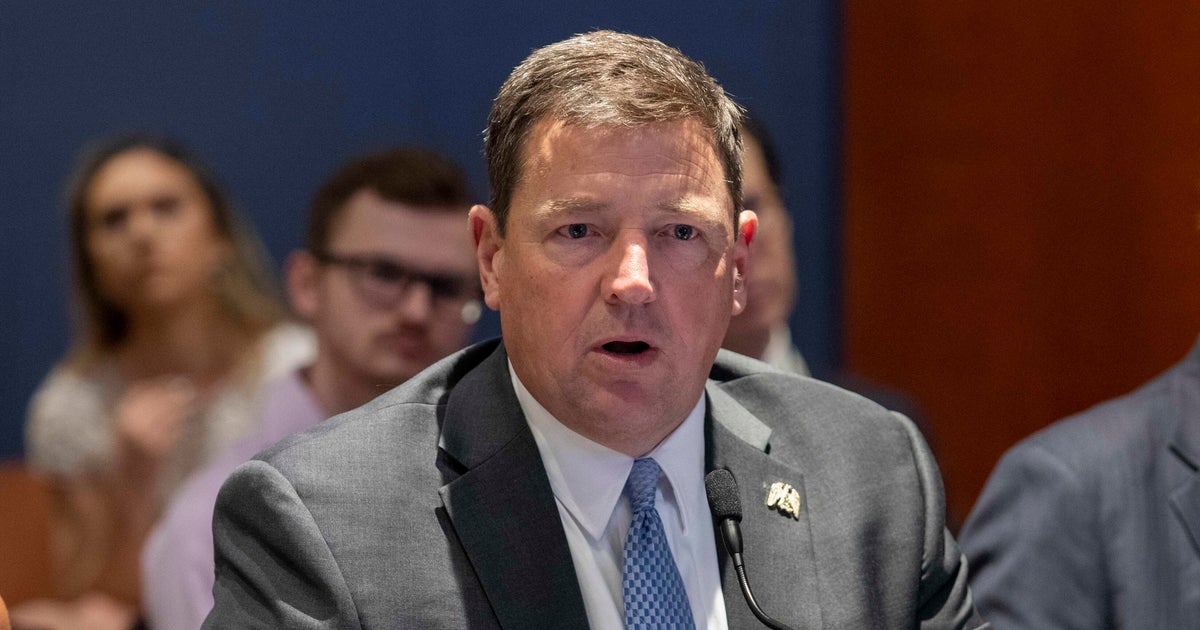

Ed Martin Ousted from Attorney General’s Weaponization Task Force Amid Mounting Controversies
A Controversial Appointment Comes to an End
Ed Martin, a prominent Trump loyalist, has been quietly removed from his position leading Attorney General Pam Bondi’s Weaponization Working Group, according to multiple sources who spoke with CBS News. Martin’s departure from this high-profile role marks the latest chapter in what has been a turbulent and controversy-laden stint at the Justice Department. His appointment to lead the working group came only after he failed to secure confirmation from the Republican-controlled Senate for the position of U.S. Attorney for the District of Columbia. His rejection by fellow Republicans stemmed largely from his vocal political advocacy, particularly his public support for individuals who participated in the January 6, 2021, riot at the U.S. Capitol—a stance that proved too controversial even for senators within his own party.
Despite losing the U.S. Attorney position, Martin maintained several roles within the Justice Department. He was appointed as pardon attorney, serving in an advisory capacity to Deputy Attorney General Todd Blanche, where his responsibilities included reviewing applications for clemency and providing recommendations on whether individuals should receive pardons or sentence commutations. Additionally, he received a separate designation as a special assistant U.S. attorney, a role that involved investigating mortgage fraud cases with a particular focus on those involving public officials. According to a Justice Department spokesperson, Martin continues to hold his position as pardon attorney even after being removed from the Weaponization Working Group. The news of his removal from the weaponization role was first broken by CNN, though the circumstances surrounding his departure remain somewhat unclear.
Behind-the-Scenes Involvement in High-Profile Investigations
During his time with the Weaponization Working Group, Martin was reportedly involved behind the scenes in several politically sensitive mortgage-related investigations targeting prominent Democratic figures. Sources familiar with the matter told CBS News that these investigations included probes into California Senator Adam Schiff, New York Attorney General Letitia James, and Federal Reserve Board Governor Lisa Cook, though Martin’s precise role in these investigations has not been fully clarified. What makes these investigations particularly noteworthy is their origin—all were initially referred to the Justice Department by William Pulte, who serves as director of the Federal Housing Finance Agency and is known as a staunch ally of President Trump. This connection between Pulte and Martin raised questions about the motivations behind these investigations and whether they represented legitimate law enforcement concerns or politically motivated targeting of Trump’s perceived adversaries.
The exact reasons for Martin’s removal from the Weaponization Working Group remain murky, with the Justice Department offering no official explanation. However, one source informed CBS News that Martin was notified of the change back in December, with the transition officially taking effect in early January. When contacted by CBS News for comment, Martin did not immediately respond. According to several sources who spoke with the network, Martin’s time working within Deputy Attorney General Blanche’s office has been marked by friction and conflict. These tensions reportedly stemmed from two main issues: concerns about his lack of productivity in advancing the goals of the working group, and controversy surrounding his social media activity, which raised eyebrows among Justice Department officials who felt his online posts were inappropriate for someone in such a sensitive position.
Scrutiny Over the Schiff Investigation and Potential Misconduct
The situation became more complicated in late 2025 when the Justice Department itself began examining Martin and Pulte’s involvement in the investigation into Senator Schiff. This internal scrutiny came to light after prosecutors issued a grand jury subpoena to Christine Bash, a California politician and real estate agent who emerged as a key witness in the Schiff case. According to a copy of the subpoena reviewed by CBS News, Bash was instructed to provide information about her communications not only with Martin and Pulte but also with anyone who might have been acting on their behalf. Specifically, the subpoena mentioned Robert Bowes and Scott Strauss, two individuals whose connection to the investigation raised questions. Bowes brought significant experience from the first Trump administration, having worked at the Department of Housing and Urban Development, and previously held positions at major financial institutions including Chase Manhattan Bank and Fannie Mae.
A source with knowledge of the matter explained to CBS News that prosecutors were attempting to determine whether Martin and Pulte had improperly enlisted Bowes and Strauss to assist with the Schiff investigation—a potentially serious violation of Justice Department protocols if they were acting in unofficial capacities or without proper authorization. Attorney General Bondi attempted to push back against reports of an investigation into Pulte, posting on X (formerly Twitter) in mid-December that such reports constituted “Fake news.” However, CBS News could not independently verify the current status of this investigation or whether it remains active. Senator Schiff, who has consistently maintained his innocence and denied any wrongdoing related to the mortgage fraud allegations, has not faced any criminal charges in connection with the investigation.
A Pattern of Controversial Actions and Ethical Questions
Martin’s brief time serving as interim U.S. Attorney in Washington was characterized by one controversy after another. Career attorneys within the Justice Department blocked his attempt to launch a criminal investigation into Senate Minority Leader Charles Schumer based on political comments the Democratic leader made in 2020. In those remarks, Schumer warned that several conservative Supreme Court justices would “pay the price” for decisions that undermined abortion rights—comments that many interpreted as political rhetoric rather than actual threats, though Martin apparently viewed them as worthy of criminal investigation. This incident highlighted the concerns many had about Martin’s judgment and his willingness to use the power of law enforcement for potentially political purposes.
Martin also generated significant scrutiny for sending a series of threatening letters to various individuals considered political enemies of President Trump. Beyond this, additional red flags emerged regarding his background and past activities. During the Senate confirmation process, it was discovered that Martin had failed to disclose on committee paperwork his previous paid appearances on Russian state-owned media outlets—an omission that raised serious questions about his candor and judgment. Perhaps most troubling to many senators was his past public praise for a Nazi sympathizer who had been prosecuted for participating in the January 6 Capitol riot. Shortly before assuming leadership of the Weaponization Working Group, Martin disclosed to lawyers in the U.S. Attorney’s office that he was facing a professional ethics investigation by the D.C. Office of Disciplinary Counsel, though CBS News could not immediately confirm the current status of that inquiry.
The Weaponization Working Group’s Limited Accomplishments
The Weaponization Working Group that Martin was appointed to lead was established with an ambitious mandate to review various cases prosecuted during former President Joe Biden’s administration. This portfolio included the numerous prosecutions of January 6 Capitol riot participants, cases brought under the FACE Act (Freedom of Access to Clinic Entrances Act) against individuals who attempted to obstruct access to abortion clinics, and investigations into alleged retaliation against government whistleblowers. The working group’s stated purpose was to identify instances where the Justice Department might have been “weaponized” for political purposes against conservatives and Trump supporters. However, despite these broad responsibilities and the significant resources presumably devoted to the effort, the working group has produced remarkably little, according to multiple sources who spoke with CBS News.
Although the working group is required to submit periodic reports to the White House detailing its findings and activities, several sources indicated that little substantive work has been completed since the group’s formation last year. This lack of productivity was reportedly one of the sources of tension between Martin and officials in Deputy Attorney General Blanche’s office. The combination of Martin’s controversial background, his ethics investigation, his contentious social media presence, and the working group’s failure to produce meaningful results appear to have created an untenable situation. While Martin retains his position as pardon attorney for now, his removal from the high-profile weaponization role represents a significant setback for someone who was once positioned as a key player in the Trump administration’s efforts to reshape the Justice Department. The full story of why Martin was removed may eventually come to light, but for now, his departure serves as yet another example of the challenges facing an administration attempting to install loyalists in positions where legal expertise, ethical standards, and political independence have traditionally been valued above partisan allegiance.