


Senate Democrats Move to Block Trump’s Potential Military Action Against Cuba
Congressional Push for Constitutional War Powers
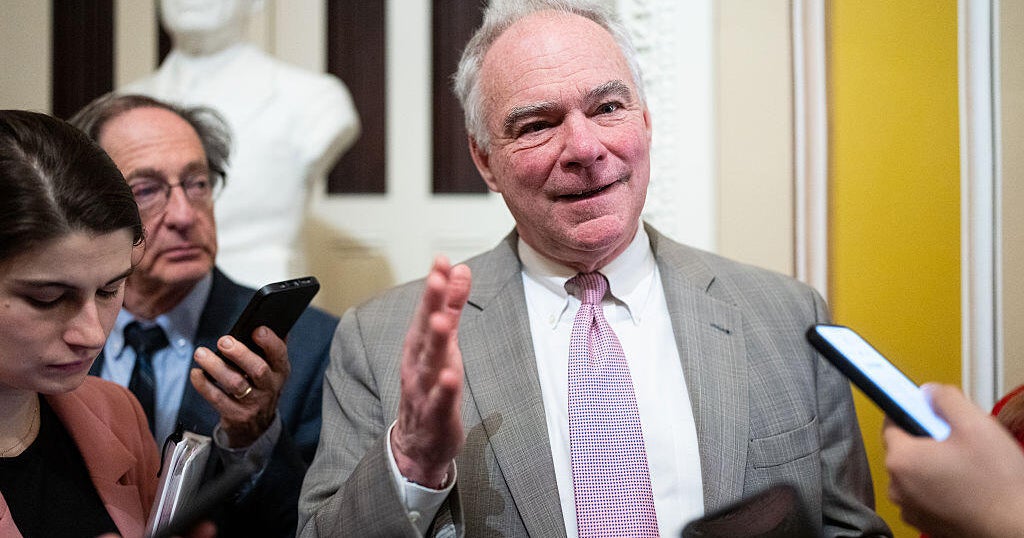
Senate Democrats have taken decisive action to rein in President Trump’s expansive use of military force abroad by introducing legislation specifically aimed at preventing unauthorized military action against Cuba. The resolution, filed by Democratic Senators Tim Kaine of Virginia, Ruben Gallego of Arizona, and Adam Schiff of California, represents the latest effort by Democrats to reassert Congress’s constitutional authority over declarations of war. The legislation would mandate that the president withdraw military forces from any hostile engagement with Cuba unless Congress explicitly authorizes such action. This move comes in direct response to President Trump’s alarming statements about pursuing a “takeover” of the Caribbean nation, raising serious concerns about the administration’s willingness to bypass congressional oversight in matters of war and peace. Senator Kaine has been particularly vocal in criticizing what he sees as the president’s fundamental misunderstanding of constitutional limits on executive power, accusing Trump of treating the U.S. military as his personal “palace guard” rather than a force that requires congressional authorization for deployment in hostilities.
Trump’s Provocative Rhetoric Sparks Alarm
President Trump’s recent comments about Cuba have sent shockwaves through diplomatic circles and raised red flags among constitutional scholars and lawmakers concerned about executive overreach. Speaking at a news conference in Florida earlier this week, the president suggested that Secretary of State Marco Rubio was actively negotiating with Cuban leadership regarding what Trump described as a potential “takeover” of the island nation. In characteristically unpredictable fashion, Trump left the nature of this proposed takeover deliberately ambiguous, stating that “it may be a friendly takeover, it may not be a friendly takeover,” without providing clarity on what either scenario might entail or what legal authority he believes permits such action. The president further indicated that this Cuba initiative would become a priority after concluding military operations in Iran, suggesting a sequential approach to multiple international conflicts. This casual discussion of military intervention against a sovereign nation, delivered without consultation with Congress or apparent concern for international law, exemplifies the administration’s approach to foreign policy that has consistently troubled Democrats and some Republicans who believe the executive branch has grown too comfortable wielding military power unilaterally.
Cuba Confirms Diplomatic Conversations Amid Energy Crisis
Adding another layer of complexity to the situation, Cuban President Miguel Díaz-Canel confirmed on Friday that Cuban officials have indeed engaged in recent conversations with U.S. government representatives, though he emphasized that any potential agreement remains in preliminary stages. Speaking at a press conference, Díaz-Canel acknowledged that these discussions aimed to “look for solutions to the bilateral differences that exist” between the two nations, which have maintained a hostile relationship for more than six decades. The Cuban leader sought to contextualize these talks by noting that such diplomatic contacts are not without precedent, referencing similar conversations that occurred during the Obama administration when relations between the countries briefly thawed. According to Díaz-Canel, the purpose of the current discussions focuses on identifying “bilateral problems that require solutions based on their severity and impact” and working toward practical resolutions. These diplomatic overtures occur against the backdrop of Cuba’s devastating energy crisis, which has been significantly worsened by the U.S. economic blockade of the island—a policy that has remained largely intact despite periodic calls for its elimination from international organizations and human rights groups who view it as collective punishment of the Cuban people.
Rubio’s Personal Connection and Policy Influence
Secretary of State Marco Rubio brings a deeply personal dimension to the Trump administration’s Cuba policy, as his own family history is intertwined with the island nation’s tumultuous past. Rubio’s family immigrated to the United States from Cuba in the 1950s, during the period before Fidel Castro’s revolutionary forces took control of the country, and this background has profoundly shaped his hawkish stance toward the Cuban government throughout his political career. During his confirmation hearings earlier this year, Rubio made his position crystal clear, telling senators that the Trump administration would enthusiastically welcome regime change in Cuba, though he attempted to draw a line by stating that “does not mean we are going to provoke it directly.” However, given President Trump’s recent comments about a potential “takeover” and Rubio’s well-documented hostility toward Cuba’s leadership, many observers question whether that distinction will hold in practice. Rubio has consistently advocated for maintaining and even strengthening economic sanctions against Cuba, arguing that diplomatic engagement only serves to legitimize what he views as an oppressive authoritarian regime. His elevation to Secretary of State has effectively placed U.S.-Cuba policy in the hands of one of the Cuban government’s most vocal critics in American politics.
Pattern of Democratic Opposition to Trump’s Military Actions
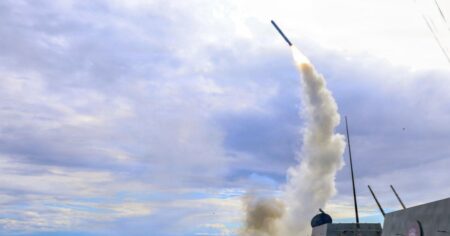
The resolution targeting potential Cuba intervention represents part of a broader Democratic strategy to challenge President Trump’s expansive interpretation of presidential war powers across multiple theaters. Democrats have repeatedly deployed war powers resolutions as a legislative tool to force public debate and congressional votes on the administration’s military activities in various countries, including Iran, Venezuela, and now potentially Cuba. While these resolutions have not yet succeeded in actually constraining the president’s actions, they serve important functions in the Democratic opposition playbook: they compel the administration to at least articulate its rationale for military operations, they create public awareness of conflicts that might otherwise escape widespread attention, and they establish a legislative record of opposition that Democrats believe honors the Constitution’s clear assignment of war-making authority to Congress rather than the executive branch alone. Senator Gallego’s statement accompanying the Cuba resolution captured the Democratic critique succinctly, charging that Trump “ran on America First, but now it’s clear he’s become a puppet of the war hawks in his party.” Democrats have also indicated their intention to force votes on additional war powers resolutions related to Iran unless Republicans agree to hold public hearings on that ongoing conflict, suggesting they view congressional oversight as essentially absent in the current environment.
Constitutional Questions and Republican Support for Trump
The fundamental constitutional question at the heart of this dispute centers on the proper balance of power between the executive and legislative branches when it comes to military force. The Constitution explicitly grants Congress the power to declare war, but modern presidents from both parties have frequently initiated military actions without formal declarations of war, citing inherent executive authority, existing authorizations for the use of military force, or the need for rapid response to threats. President Trump has pushed these boundaries further than most of his predecessors, casually discussing military options against multiple countries and actually ordering strikes without extensive congressional consultation. Republicans in Congress have, for the most part, stood firmly behind the administration’s aggressive foreign policy approach, viewing it as necessary assertiveness after what they characterize as years of American weakness on the world stage under previous administrations. This partisan divide means that Democratic war powers resolutions face steep odds of actually passing, particularly in a Republican-controlled chamber, though the resolutions can still achieve the procedural milestone of forcing floor votes that put members on record. The Cuba resolution could potentially receive a vote by the end of the month, creating a moment of accountability where senators must publicly declare whether they support or oppose giving the president a blank check for military action against America’s island neighbor. As the situation continues to develop, the tension between executive action and congressional authority remains a defining feature of American governance in an era of perpetual global engagement and rapidly evolving threats that don’t always fit neatly into traditional frameworks of declared war between nation-states.