


U.S. Military Completes Major Arctic Training Exercise Spanning Alaska and Greenland
The United States military has just concluded its participation in Arctic Edge, an annual training exercise that marked a significant milestone this week by expanding operations across both Alaska and Greenland for the first time in the program’s history. Since its inception in 2018, Arctic Edge has served as a critical preparation ground for U.S. forces to develop capabilities for responding to emerging threats in the far north, particularly from Russia and, increasingly, from China. This year’s exercise carried additional diplomatic complexity, as American forces trained on Greenland’s territory despite ongoing political tensions sparked by President Trump’s repeated assertions about potentially taking control of the Danish autonomous territory. Nevertheless, the long-planned military cooperation proceeded smoothly, with Denmark graciously hosting U.S. forces and participating alongside them with Danish special operations units. The exercise, coordinated by NORAD and U.S. Northern Command, represented a significant evolution in Arctic military readiness, as it was the first winter-based iteration of the biennial cold-weather training to take place during the harshest months of the Arctic winter in recent years.
The Brutal Reality of Arctic Winter Operations
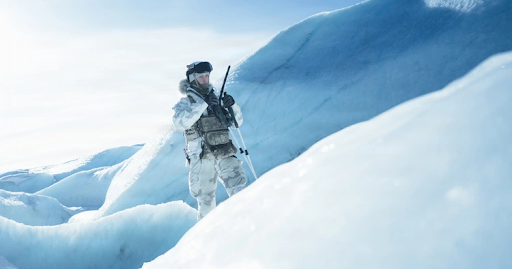
According to military leaders overseeing the exercise, simply surviving the extreme conditions of the Arctic winter presents as much of a challenge as any tactical scenario the troops might face. Royal Canadian Air Force Lt. Gen. Iain Huddleston, serving as deputy commander of NORAD, didn’t mince words when he told reporters that “half of the battle in exercising in the wintertime in the Arctic is simply surviving.” This candid assessment highlights the unique and unforgiving nature of Arctic operations, where the environment itself becomes as formidable an opponent as any human adversary. The temperatures in these regions can plummet to minus 40 degrees Fahrenheit, creating conditions that test not only the physical endurance of service members but also the reliability and functionality of military equipment designed for more temperate climates. The exercise revealed that preparation for Arctic deployment cannot begin upon arrival in the region—it must start well beforehand, with specialized training and familiarization with the unique demands of extreme cold weather operations.
Learning Through Hardship: Equipment Challenges in Extreme Cold
U.S. Air Force Lt. Gen. Robert Davis, who commands U.S. Alaska Command, the Alaskan NORAD region, and the 11th Air Force, shared revealing insights about the practical challenges military units face when operating in Arctic conditions without adequate prior preparation. Throughout the training exercise, aircraft routinely suffered damage and required additional maintenance simply because crews weren’t familiar with the specialized practices necessary for operating in extreme cold. For instance, hydraulic systems require warming before use in Arctic temperatures—a step that might seem minor but becomes critical in preventing equipment failure. Davis recounted incidents where service members attempted to open aircraft windows too quickly in the cold, causing them to crack from the thermal stress. Such seemingly small mistakes have significant operational consequences, as a cracked window grounds an aircraft until replacement parts can be installed. “Now you can’t use the aircraft until you replace the window,” Davis explained, offering this as just one example of “some of the practical challenges of not operating on a routine basis, and then all of a sudden coming up into the Arctic and having to do a little discovery learning.” These experiences underscore the essential lesson that Arctic readiness requires systematic preparation and training before deployment, not learning through trial and error in the field.
Preparing for Great Power Competition in the High North
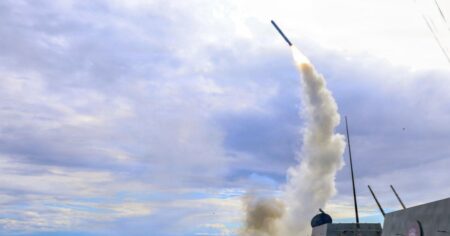
While military leaders emphasized that Arctic Edge didn’t designate a specific theoretical adversary during the exercise, the training scenarios clearly addressed threats that only major military powers like Russia and China could pose to American interests in the region. The forces practiced defensive responses to cruise missile attacks, weapons systems that require the sophisticated military-industrial capabilities possessed by only a handful of nations globally. Lt. Gen. Davis was careful to note that “we don’t have any intelligence that would suggest that we’re actually at risk of them launching cruise missiles against Alaska,” but he emphasized the importance of preparedness regardless of immediate threat assessments. The military’s approach reflects a prudent strategy of ensuring readiness with the defensive capabilities provided by the U.S. government, making certain that different systems and units can effectively integrate and coordinate their responses. This preparation takes on added significance given the increasing strategic importance of the Arctic region, where melting ice is opening new shipping routes and access to natural resources, while simultaneously creating new venues for potential great power competition. Both Russia and China have been expanding their presence and capabilities in Arctic regions, making American military readiness in these extreme environments not just a training exercise but a strategic imperative.
The Growing Drone Threat and Counter-Measures
Beyond preparing for threats from major weapons systems, the Arctic Edge exercise also addressed a more modest but increasingly concerning challenge: unauthorized drone incursions at military installations. The training included realistic scenarios at Fort Greely in Alaska, where forces practiced responding to potential drone surveillance and intrusions. The military tested their detection and response capabilities against both single drone reconnaissance scenarios and small swarms of approximately six drones, evaluating whether the installation’s various sensor systems could effectively detect the threats and communicate actionable information to Army soldiers responsible for base security. The results proved encouraging, as Lt. Gen. Davis reported that “none of the drones were completely undetected,” with the multiple types of sensors deployed ensuring that at least one system identified each drone that approached. Perhaps more importantly, the extreme cold temperatures—which can create havoc with battery-powered systems—did not negatively impact the electronic-based counter-drone systems deployed at Fort Greely, since most don’t rely heavily on batteries that typically drain rapidly in Arctic conditions. During the exercise, U.S. forces successfully interdicted one drone using a counter-unmanned aerial system that deploys a net to capture the drone and lower it intact to the ground, allowing military intelligence personnel to examine the captured device.
The Challenge of Keeping Pace with Rapidly Evolving Technology
The drone portion of the Arctic Edge exercise highlighted a broader challenge facing not just Arctic operations but the entire U.S. military establishment: the remarkable speed at which commercial industry is developing and modifying drone technology. Lt. Gen. Davis acknowledged that this rapid pace of innovation makes it “really difficult” for formal military procurement programs to keep current with the latest capabilities and threats. Traditional defense acquisition processes, designed with extensive testing, evaluation, and procurement timelines, struggle to match the agility of commercial technology companies that can iterate and deploy new drone capabilities in matters of months rather than years. This technology gap represents a concern that Pentagon leadership is confronting throughout all branches of the armed forces, not merely in the specialized context of Arctic operations. The challenge extends beyond just acquiring the latest equipment; it includes developing tactics, training personnel, and integrating new systems into existing operational frameworks. As drones become increasingly capable, affordable, and accessible to both state and non-state actors, the military must find ways to accelerate its own adaptation cycle while maintaining the rigorous standards necessary for military operations. The Arctic Edge exercise provided valuable real-world testing of current counter-drone capabilities in one of the most demanding environments on Earth, offering insights that will inform future procurement decisions and operational planning as the military works to address this evolving challenge across all theaters of operation.