
Venezuela Announces Sweeping Amnesty Bill Following Political Upheaval
A New Chapter for Political Prisoners
Venezuela finds itself at a pivotal crossroads as acting President Delcy Rodríguez unveiled a comprehensive amnesty bill on Friday that could potentially open prison doors for hundreds of individuals detained on political grounds. This historic announcement affects opposition leaders, journalists, and human rights activists who have languished behind bars, sometimes for decades, simply for exercising what international observers consider basic human rights. The amnesty represents a dramatic shift in Venezuela’s political landscape, coming just weeks after a stunning military operation that saw former President Nicolás Maduro captured by U.S. forces in the capital city of Caracas on January 3rd. Since assuming leadership during this extraordinary transition period, Rodríguez has made several conciliatory gestures toward the opposition and international community, with this amnesty bill being perhaps the most significant olive branch extended yet. The measure addresses a long-standing demand from the U.S.-backed opposition, which has consistently called for the release of what they describe as political prisoners held in inhumane conditions.
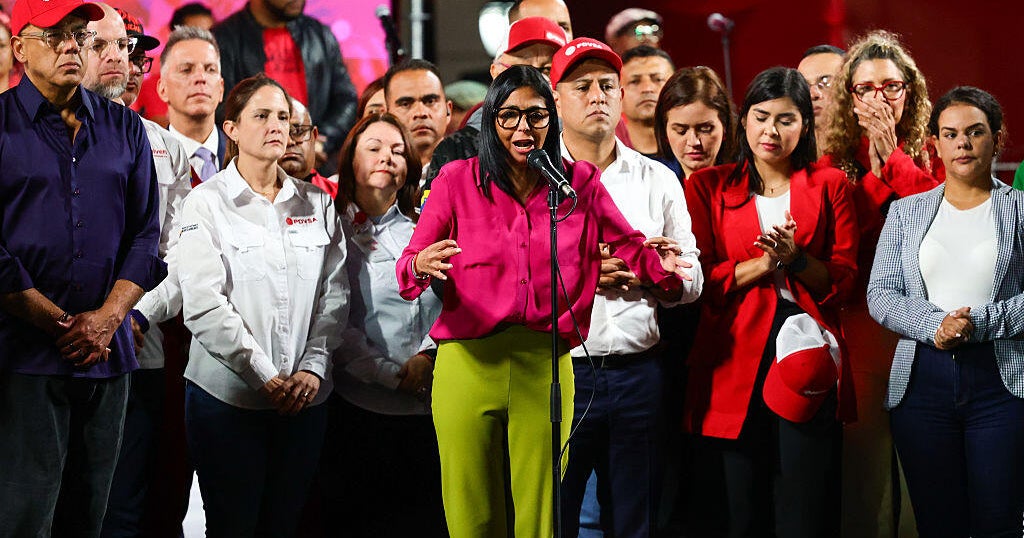
Speaking before an assembly of Venezuela’s judicial, military, and governmental elite, Rodríguez framed the amnesty in language of national healing and reconciliation. “May this law serve to heal the wounds left by the political confrontation fueled by violence and extremism,” she stated during a pre-recorded televised address that carried the weight of historical significance. Her words suggested an acknowledgment, however indirect, of the deep divisions that have torn Venezuelan society apart over more than two decades of political turmoil. The acting president expressed hope that the amnesty would “redirect justice in our country, and serve to redirect coexistence among Venezuelans,” painting a picture of a nation attempting to move beyond its fractured past. The National Assembly, still controlled by the ruling party, has been directed to take up the legislation with urgency, though the exact timeline for passage and implementation remains unclear as details continue to emerge about who will qualify for release.
American Citizens Released and Diplomatic Thaw
Coinciding with the amnesty announcement, the U.S. Embassy responsible for Venezuelan affairs confirmed that all known American citizens detained in Venezuela have been freed, marking a significant diplomatic breakthrough. “We are pleased to confirm the release by the interim authorities of all known U.S. citizens held in Venezuela,” the embassy announced through social media channels, with Secretary of State Marco Rubio amplifying the message through his personal accounts. While the exact number of Americans released wasn’t immediately disclosed, hostage advocates had indicated that at least four U.S. citizens remained in Venezuelan detention as recently as early January. This development follows a pattern of prisoner exchanges that have characterized U.S.-Venezuela relations in recent years, including a notable swap last July when ten Americans gained freedom as part of a complex three-way agreement involving El Salvador. That particular exchange saw 252 Venezuelans who had been deported from the United States to El Salvador’s maximum-security Terrorism Confinement Center returned to Venezuela, highlighting the intricate diplomacy often required to secure the release of detained Americans abroad.
The diplomatic landscape between Washington and Caracas has been extraordinarily complicated, with the United States shuttering its physical embassy in Venezuela’s capital back in 2019 amid widespread protests and deepening political instability. For the past six years, American consular services for Venezuelans have operated out of Bogota, Colombia, an awkward arrangement that underscored the frozen state of bilateral relations. However, the dramatic capture of Maduro has created an opening for diplomatic normalization that seemed unthinkable just months ago. The Trump administration has already notified Congress of its intention to begin the process of reopening the American embassy in Caracas, a move that would restore direct diplomatic presence and signal a fundamental reset in relations. Laura Dogu, who serves as the chief U.S. diplomat to Venezuela despite the lack of in-country embassy, traveled to Caracas this past Saturday for face-to-face meetings with Venezuelan officials, including Foreign Affairs Minister Yvan Gil, who described their discussions as “aimed at charting a roadmap for work on matters of bilateral interest, as well as addressing and resolving existing differences through diplomatic dialogue and on the basis of mutual respect and International Law.”
Closing the Doors of Helicoide Prison
Among the most symbolically powerful announcements from acting President Rodríguez was the planned closure of Helicoide, a detention facility in Caracas that has become internationally notorious as a site of systematic torture and human rights abuses. Independent human rights organizations have repeatedly documented horrific conditions and treatment at the facility, which has become emblematic of state repression under the previous government. Rather than simply shutting down the prison, Rodríguez announced plans to transform the building into a sports, social, and cultural center serving police and surrounding communities, an attempt at symbolic redemption for a structure associated with so much suffering. However, the announcement carried its own dark irony, as Rodríguez delivered her speech in the presence of government officials who former prisoners and human rights organizations have specifically accused of ordering the very abuses committed at Helicoide and other detention centers across the country. This juxtaposition highlighted the complex nature of Venezuela’s transitional moment, where those implicated in past repression remain part of the current power structure.
Outside Helicoide’s imposing walls, relatives of imprisoned individuals gathered as word of the announcement spread, many watching Rodríguez’s speech livestreamed on mobile phones, their faces reflecting a mixture of hope, relief, and lingering anxiety. The emotional weight of the moment proved overwhelming for many, with observers reporting scenes of tears and spontaneous chanting. “Freedom! Freedom!” rang out from the crowd, the simple word carrying years of pent-up longing and frustration. Johana Chirinos, the aunt of a prisoner held at the facility, captured the raw emotion of the moment through her tears: “God is good. God heard us,” she said, her voice breaking as she processed news that might finally bring her family member home after what for many has been an agonizing wait measured not in days or months but in years.
Opposition Perspectives and Ongoing Concerns
Not everyone greeted the announcements with unqualified celebration, with prominent opposition figures offering measured responses that acknowledged the positive steps while emphasizing the coercive context that produced them. María Corina Machado, an opposition leader who received the Nobel Peace Prize for her tireless advocacy for democracy in Venezuela, issued a statement characterizing the amnesty and releases as victories extracted through pressure rather than genuine change of heart. “The regime’s repressive apparatus is brutal and has responded to the numerous criminal forces that answer to this regime, and it is all that remains,” Machado said, her words reflecting a belief that the announcements resulted not from voluntary reform but from “pressure from the U.S. government.” She pointed out the staggering range of detention periods endured by political prisoners, with some having spent as little as a month behind bars while others have languished for up to 23 years for activities that in functioning democracies would be considered normal political participation. Machado’s analysis suggested that while the releases represent progress, they don’t address the fundamental structures of repression that enabled the detentions in the first place.
Among those still behind bars are several high-profile opposition figures arrested following the contested 2024 presidential election, including former lawmaker Freddy Superlano, Machado’s own attorney Perkins Rocha, and Juan Pablo Guanipa, a former governor who ranks among Machado’s closest political allies. According to Foro Penal, a Venezuelan prisoners’ rights organization that has meticulously tracked political detentions, approximately 711 people remain in detention facilities across the country specifically because of their political activities, with 183 having received formal sentences. The government did not release the actual text of the amnesty bill on Friday, leaving uncertainty about the specific criteria that will determine who qualifies for freedom and who remains imprisoned. Rodríguez indicated the “general amnesty law” would cover “the entire period of political violence from 1999 to the present,” essentially spanning the entire period of chavismo governance, while specifying that those convicted of murder, drug trafficking, corruption, or human rights violations would not receive amnesty—categories whose application could become politically contentious as the law’s implementation proceeds.
The Pace of Change and Calls for Transparency
While the government earlier this month announced intentions to release significant numbers of prisoners as a goodwill gesture, the actual pace of releases has drawn criticism from prisoners’ advocates and family members who describe progress as frustratingly slow and opaque. Foro Penal documented 302 releases since the January 8th announcement, a number that represents meaningful progress but leaves hundreds still waiting behind bars, their families caught between hope and anxiety. Alfredo Romero, who serves as president of Foro Penal, articulated the conditional welcome extended by human rights advocates to the amnesty proposal: “A general amnesty is welcome as long as its elements and conditions include all of civil society, without discrimination, that it does not become a cloak of impunity, and that it contributes to dismantling the repressive apparatus of political persecution.” His statement reflected concerns that the amnesty might be implemented selectively or used to shield government officials from accountability for abuses committed during the detention and interrogation of political prisoners.
The human rights organization Provea issued its own statement criticizing what it termed the lack of transparency and “trickle” pace of releases, emphasizing that while freeing those still detained “is urgent, the announcement of an amnesty should not be conceived, under any circumstances, as a pardon or act of clemency on the part of the State.” This framing attempts to redefine the narrative around the releases, rejecting the implication that the government is generously forgiving wrongdoing and instead asserting that “these people were arbitrarily imprisoned for exercising rights protected by international human rights instruments, the National Constitution, and Venezuelan laws.” Outside another Caracas detention facility, Edward Ocariz, who himself spent more than five months imprisoned following the 2024 election before his own release, joined with prisoners’ families to demand swift action. “We, Venezuelans, have all endured so much, all unjust, merciless and trampling on our dignity. No one deserves this,” Ocariz said, his words carrying the authority of personal experience. His concluding observation struck a note of bitter irony that resonated with many opposition supporters: “And today, the guilty continue to govern Venezuela,” a reminder that the transition of power, however dramatic, has not yet produced the wholesale political transformation that many had hoped would follow Maduro’s capture. As Venezuela navigates this unprecedented moment, the amnesty bill represents both genuine hope for reconciliation and a test of whether the country’s new leadership is truly prepared to break with the repressive practices of the past.