
A New Chapter in Venezuela: From Anti-Imperialism to American Investment
The Dramatic Shift in Caracas
It’s a scene that would have been unimaginable just a few months ago. On the thirteenth anniversary of Hugo Chávez’s death – the fiery socialist leader who built his political legacy on resisting American influence – the Venezuelan capital tells a completely different story. Two months have passed since U.S. forces captured Nicolás Maduro, Chávez’s handpicked successor, in a dramatic January operation. Now, instead of anti-American protests filling the streets, Caracas hotels are packed with American oil and mining executives, invited by the White House and welcomed by Venezuela’s interim government. They’re not here to challenge the regime – they’re here to do business. The transformation is stunning: a country that spent decades positioning itself as America’s ideological adversary is now rolling out the red carpet for U.S. corporations eager to tap into Venezuela’s enormous reserves of oil, gold, and critical minerals. The diplomatic freeze that began in 2019 has thawed overnight, with both nations announcing restored relations and promising to work together on stability, economic recovery, and political reconciliation. It’s a complete reversal that’s happening at breakneck speed, leaving many Venezuelans – and outside observers – struggling to make sense of this new reality.
Trump Speed Diplomacy and Resource Extraction
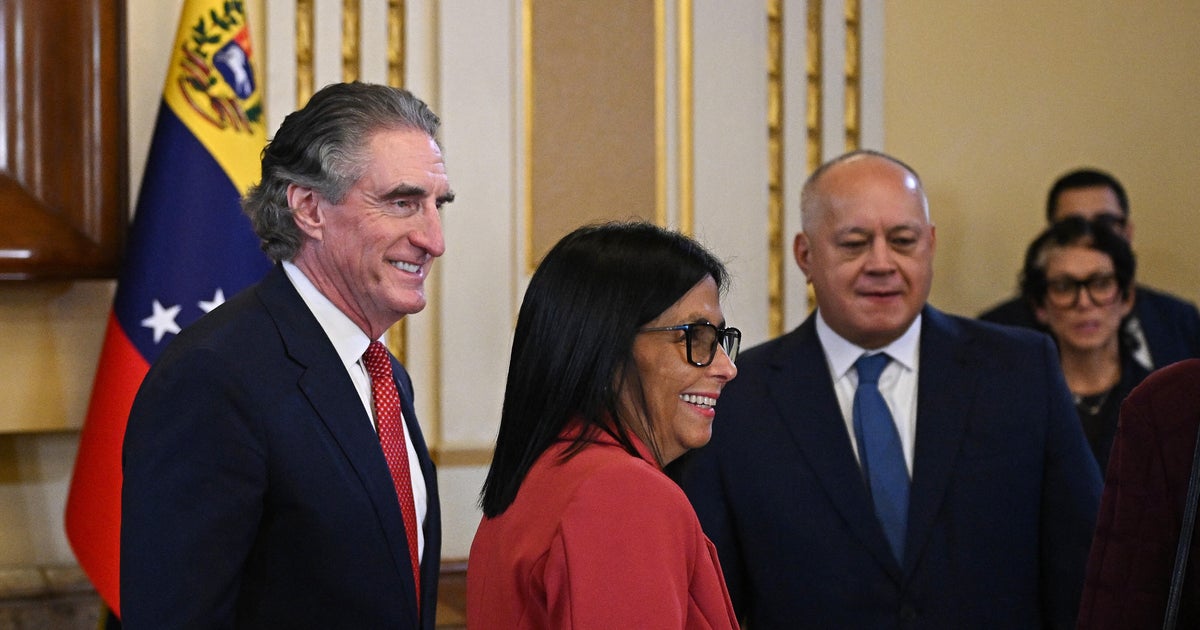
U.S. Interior Secretary Doug Burgum spent two days in Caracas this week, and his enthusiasm was unmistakable. “We’ve just come off a fantastically positive, constructive two days of meetings,” he announced, highlighting the “dozens of companies” from the United States eager to invest in Venezuela’s resource sector. In a striking display of how quickly things are moving, Burgum praised Venezuela’s interim leadership – specifically “Madam President” Delcy Rodríguez and her brother Jorge Rodríguez, who leads the National Assembly – for operating at what he called “Trump speed.” The government rushed through a new hydrocarbons law covering petroleum and natural gas that, according to Burgum, “improves transparency, consistency and cuts red tape.” The goal is straightforward: create an environment where American companies feel confident enough to pour money into Venezuela’s oil fields. The strategy appears to be working. Chevron, which maintained operations in Venezuela even during the worst of U.S.-Venezuela relations, just had its best production day ever. Standing alongside Burgum at the historic Miraflores Presidential Palace, Rodríguez announced that the same streamlined approach used for oil would now be applied to mining, opening yet another sector to American investment. For U.S. businesses that have watched Venezuela’s economy collapse over the past decade, this represents an extraordinary opportunity – a resource-rich nation suddenly open for business.
The $25 Million Question Nobody Wants to Answer
But there’s an elephant in every negotiating room, and his name is Diosdado Cabello. As Venezuela’s interior minister, Cabello controls both internal security and mining operations – exactly the sectors that American companies are now being invited to invest billions in. Here’s the problem: back in 2020, the U.S. Department of Justice indicted Cabello alongside Maduro on serious narcoterrorism and drug-trafficking charges. American prosecutors alleged he was a leader of the “Cartel de los Soles” – supposedly a network of Venezuelan officials working with Colombian guerrilla groups to move cocaine through Venezuela. The U.S. State Department currently offers a $25 million reward for information leading to his arrest or conviction. Yet during these historic meetings at the Presidential Palace, Cabello sat directly across the table from Secretary Burgum as his official counterpart. When CBS News reporters – granted rare access during Burgum’s visit – asked the secretary point-blank why he trusts Cabello and whether the indicted minister would be involved in negotiations, Burgum simply ignored the question. Asked again, directly, he refused to answer. When pressed for any comment whatsoever about Cabello, the Interior Secretary looked away to the next reporter. This uncomfortable silence speaks volumes about the contradictions inherent in this new relationship. The man once worth $25 million to American law enforcement is now a crucial partner in reopening Venezuela’s economy to American investment.
The Complex Reality on Venezuelan Streets
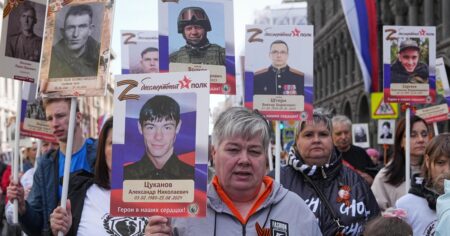
Meanwhile, ordinary Venezuelans are trying to process these rapid changes. At a midday march that ended at Hugo Chávez’s monumental mausoleum, loyalists to the imprisoned Maduro held signs accusing “the empire” – their term for the United States – of “kidnapping” their leader and his wife, Cilia Flores. One woman, tears streaming down her face as she remembered Chávez’s legacy, called the weeks since Maduro’s capture “a painful time.” Yet when asked about the flood of American oil and mining executives and the deals being struck between the Rodríguez administration and U.S. interests, her response revealed the pragmatic calculations happening across Venezuelan society. She said she was “very proud” of the interim government’s leadership – Delcy Rodríguez, Diosdado Cabello, Defense Minister Padrino López, and Jorge Rodríguez. “President Delcy Rodríguez is a woman of peace,” she insisted, explaining that she believes these officials are “doing it for the collective, leaving their personal interests aside.” She acknowledged the fundamental contradiction: “They could be entering into an active conflict because we are an anti-imperialist country, but the collective is more important.” Jholeika Gordillo, who runs a public gas distribution company and proudly identifies as a “daughter of Chávez,” similarly acknowledged the need for investment to revitalize oil production for Venezuela’s benefit. Others, however, accused the Trump administration of forcing these agreements on Venezuela. What unites these different perspectives is a sense that something fundamental has shifted, and Venezuelans are adapting to a reality none of them anticipated just months ago.
The Dark Side of the Mining Boom
Beneath the optimistic talk of investment and jobs lies a troubling reality in Venezuela’s mining regions, particularly the Arco Minero del Orinoco – a massive 112,000-square-kilometer mining zone in the country’s south that was created by presidential decree in 2016. According to United Nations fact-finding missions and independent researchers, this isn’t empty territory waiting for American corporations. Criminal syndicates have established control over large portions of these mines. The National Liberation Army (ELN), designated as a terrorist organization by the United States, operates there. So do dissident factions of the Revolutionary Armed Forces of Colombia (FARC) and various local militias. These groups tax miners and maintain control through violence and intimidation. The human cost has been devastating. Investigations have documented forced labor and sexual exploitation in mining camps. Children work in hazardous conditions. A report from the Washington-based Center for Strategic and International Studies found that “victims are either forced into sex work or find it is their only employment option.” Most horrifying: “There are reports that the average age of sex trafficking victims is 13 to 14 years old.” The environmental destruction is equally severe, with mercury contamination and deforestation spreading through Indigenous territories and major river systems across the Venezuelan Amazon. These aren’t problems that will disappear simply because American companies arrive with investment capital and new management practices.
Economic Solutions to Security Problems?
When CBS News asked Secretary Burgum directly about the U.S. plan to address these criminal elements in the mining sector and whether military involvement might be necessary to combat these dangerous actors, his answer revealed the administration’s thinking – and perhaps its wishful thinking. Burgum framed the issue as fundamentally economic rather than security-based. “The presence of the security concerns that you described was a function of the economic environment,” he argued. In his view, the new mining law would create “great high-paying jobs,” and “that economic force is even more important than a military force in driving a transition.” It’s an optimistic assessment that assumes criminal networks, guerrilla groups, and human traffickers will simply fade away when legitimate employment arrives. Whether that theory holds up in practice remains to be seen. What’s clear is that American companies preparing to invest billions in Venezuelan mining operations will be entering a region where violence, corruption, and exploitation have been the norm for years. The transformation from Chávez’s anti-imperialist rhetoric to an economy open to American extraction industries is happening at remarkable speed. But the deeper questions – about justice for those indicted on serious charges, about security in lawless mining regions, about protecting vulnerable populations from exploitation – remain unanswered. Venezuela’s new chapter is being written quickly, but whether it will bring genuine prosperity and stability or simply new forms of extraction and corruption is the real question that nobody in those fancy Caracas hotels seems eager to address.