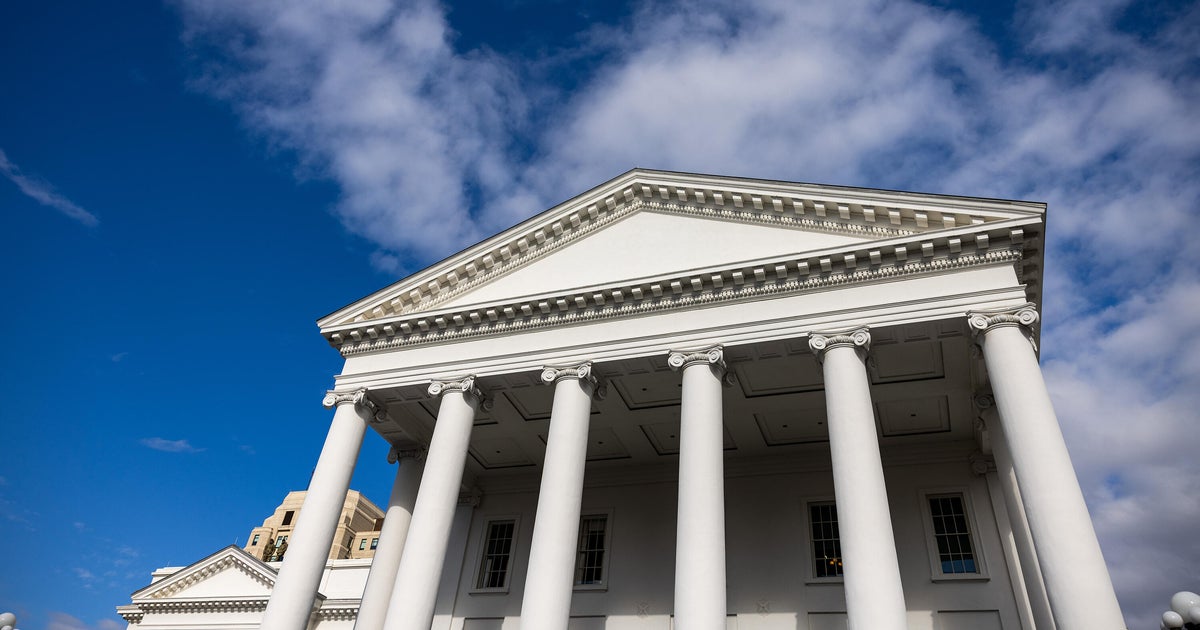

Virginia Takes a Stand: New Legislation to Teach the Truth About January 6th
A Groundbreaking Move to Protect Historical Accuracy in Schools
In what marks a significant moment in American education policy, Virginia’s legislature has taken an unprecedented step by passing legislation that mandates how schools must teach about the events of January 6, 2021. The General Assembly approved this groundbreaking measure on Thursday, making Virginia the first state to formally prohibit schools from spreading misinformation about the Capitol riot. The bill specifically targets false narratives that have emerged from supporters of President Trump, particularly those attempting to reframe the violent insurrection as a peaceful protest or to promote debunked claims about widespread election fraud in the 2020 presidential election. This legislative action comes at a critical time when the truth about that day continues to be contested in political circles, despite overwhelming evidence and thousands of hours of video footage showing the violence and chaos that unfolded. The measure represents more than just education policy; it’s a stand for historical accuracy and democratic values in an era where facts are increasingly treated as matters of opinion.
What the Legislation Actually Requires
The Virginia bill is carefully crafted to establish clear boundaries for how educators can discuss the events surrounding January 6th. According to the legislation, schools are prohibited from describing or portraying the Capitol attack as a “peaceful protest” or presenting such characterizations as credible. Additionally, teachers cannot suggest that extensive election fraud occurred that could have changed the results of the 2020 presidential election—claims that have been thoroughly investigated and debunked by election officials, courts, and independent fact-checkers across the country. Instead, the bill mandates that if schools choose to teach about January 6th, they must describe it accurately: as an unprecedented, violent attack on United States democratic institutions, infrastructure, and representatives, carried out with the purpose of overturning the results of the 2020 presidential election. State Delegate Dan Helmer, a Democrat from Northern Virginia who sponsored the legislation, emphasized an important point: “This bill does not mandate the teaching of Jan. 6. It just says that if you do it, you have to do so in line with the actual facts of the day.” This distinction is crucial because it means the legislation isn’t forcing a particular curriculum on schools, but rather ensuring that if the topic is covered, it’s taught truthfully and accurately, based on documented evidence rather than political spin.
The Political Landscape and Opposition
The bill’s passage through Virginia’s legislature reveals the deep partisan divide that continues to characterize discussions about January 6th. In the state Senate, the measure passed by a narrow margin of 21-19, with all 19 Republican senators voting against it. This unanimous Republican opposition underscores how politicized the memory of that day has become, despite the fact that the violence was broadcast live and witnessed by millions of people worldwide. Delegate Helmer didn’t mince words about the motivation behind the legislation, telling CBS News, “The White House has tried to rewrite history. I don’t want to celebrate traitors in our public schools.” His reference to the White House points to recent efforts by the Trump administration to rehabilitate the image of January 6th defendants, including posting what Helmer characterizes as lies on official federal government web pages, such as falsely claiming that police bore responsibility for the attack. President Trump’s decision to pardon more than 1,500 Capitol riot defendants—including hundreds who were charged with assaulting, beating, and maiming police officers—has intensified concerns among many Americans that the historical record is being deliberately distorted for political purposes. The bill now awaits the signature of Virginia Governor Abigail Spanberger, a Democrat who was serving in Congress during the Capitol attack and who witnessed firsthand the fear and chaos of that day. A spokesperson for Governor Spanberger has stated that she “will review all legislation that comes to her desk,” a standard response that nevertheless leaves room for anticipation about whether she will sign this historic measure into law.
Voices from Those Who Were There
Perhaps the most compelling support for this legislation comes from those who directly experienced the violence of January 6th. Harry Dunn, a former Capitol Police officer who was on the front lines defending the Capitol against the mob, offered strong backing for the Virginia bill. “Delegate Helmer’s bill requiring any education in school curriculum be fact-based, truthful and honest is a no-brainer,” Dunn told CBS News. Now running for the Democratic nomination for a U.S. House seat in Maryland, Dunn pushed back against characterizations that the bill is partisan: “This bill isn’t politically left. Any opponents of the bill who suggest otherwise are the ones who are making it ‘political.’ The world saw what happened that day and who was responsible for it.” Dunn’s perspective carries particular weight because he and his fellow officers faced hand-to-hand combat with rioters, endured chemical irritants, and watched as the seat of American democracy was desecrated. State and local police from Virginia were among the law enforcement responders who helped repel the attacking mob, meaning that Virginians have a direct connection to the events of that day through their own public servants who risked their lives to protect constitutional processes. The testimony and experiences of these officers stand in stark contrast to the sanitized versions of January 6th that have circulated in some political circles, where the violent attackers have been recast as patriots and political prisoners rather than what video evidence clearly shows: a mob attempting to prevent the certification of a democratic election through force and intimidation.
A Broader Movement Toward Historical Truth
Virginia’s legislation isn’t happening in isolation; it’s part of a growing movement to ensure that one of the most significant events in recent American history is taught accurately to future generations. New York’s legislature is considering similar measures, with Long Island Democratic state Representative Chuck Lavine proposing legislation that would require all public schoolchildren in New York to receive instruction about the Capitol insurrection. “The idea is to require New York students to be instructed about what happened on Jan. 6 and its aftermath,” Lavine explained to CBS News. “We can’t sweep history under the rug. If we don’t teach our students about the truth of history, we are doing them a grave disservice. And we’d be doing a disservice to our nation as well.” Lavine’s legislation must be passed by December to become law, but his framing of the issue emphasizes civic responsibility rather than partisan advantage: “People are entitled to their own political beliefs, but they are not entitled to change facts.” This distinction between opinion and factual reality lies at the heart of these legislative efforts. Former Justice Department prosecutors who handled January 6th cases have also voiced support for such measures. Brendan Ballou, who prosecuted several Capitol riot defendants, stated, “It’s absolutely essential that the reality of Jan. 6 not be forgotten and the history of the day not be rewritten.” Former prosecutor Mike Gordon echoed this sentiment: “Kudos to Virginia for pushing back on the relentless gaslighting about January 6th and the 2020 election. Kids should learn the truth.”
The Bigger Picture: Education, Memory, and Democracy
Delegate Helmer placed this legislation in the broader context of Virginia’s troubled history with teaching accurate history, noting, “We have a history in Virginia of celebrating the ‘lost cause of the Civil War’ and the Confederacy in our schools, trying to rewrite history that way. We have a long history of some of that going the wrong way.” This reference to how the Confederacy was romanticized in Southern schools for generations—portraying treasonous rebellion as noble resistance—serves as a cautionary tale about what happens when education systems allow political ideology to trump historical fact. The “Lost Cause” mythology poisoned American understanding of the Civil War and Reconstruction for more than a century, contributing to systemic racism and a fundamentally distorted understanding of that pivotal period. The parallel Helmer draws suggests that without legislative guardrails, a similar mythologizing could happen with January 6th, particularly given the current administration’s active efforts to rewrite what happened that day. Representative Lavine invoked the famous quote, “Those who ignore history are condemned to repeat its mistakes,” emphasizing that proper education about January 6th is essential not just for historical accuracy, but for the preservation of democratic norms and institutions. The legislation represents a recognition that education shapes civic understanding, and that allowing demonstrable falsehoods to be taught as legitimate alternative viewpoints does profound damage to students’ ability to function as informed citizens. In an era of intense political polarization and widespread misinformation, Virginia’s bill represents an attempt to draw a line: while political opinions may differ, schools have a responsibility to teach documented historical events accurately. Whether this legislation becomes a template for other states or remains a unique Virginia approach will depend on political developments in statehouses across the country, but it has already sparked an important conversation about the role of education in preserving democratic values and historical truth.