
Pope Leo XIV Names New Vatican Ambassador to Navigate Complex U.S. Relations
A Seasoned Diplomat Takes the Helm
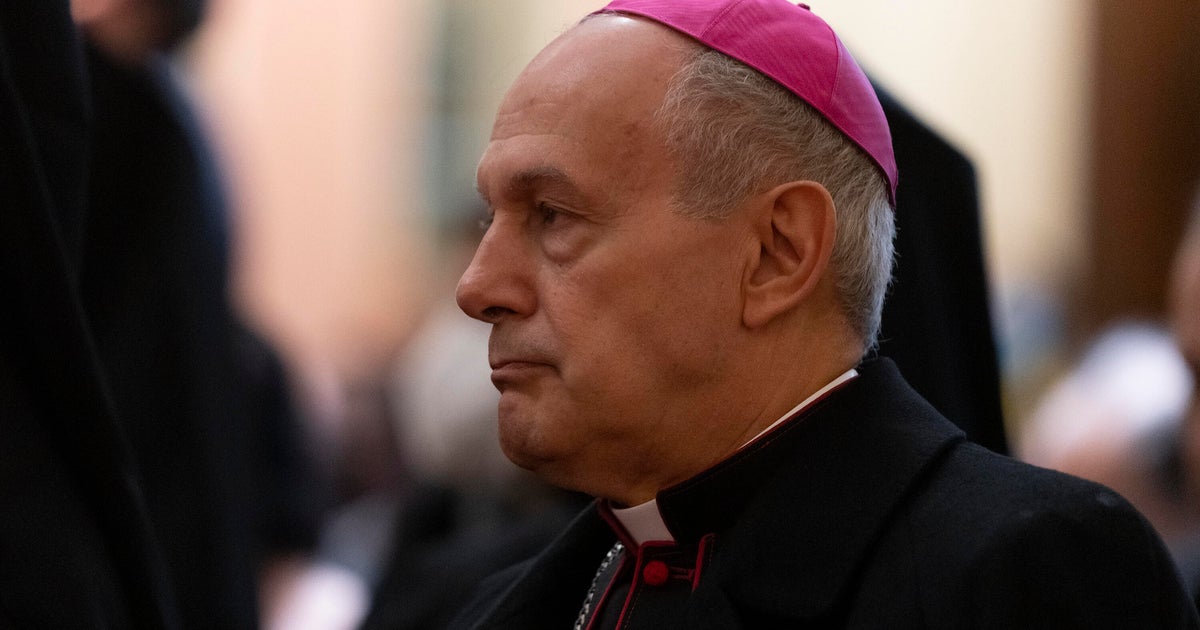
In a significant diplomatic appointment, Pope Leo XIV has selected Archbishop Gabriele Caccia, a 68-year-old Italian diplomat with extensive international experience, to serve as the Vatican’s new ambassador to the United States. This appointment comes at a particularly delicate moment in the relationship between the Holy See and Washington, as tensions have emerged over several critical issues including the ongoing conflict in Iran, immigration policies, and broader questions about America’s role on the world stage. Caccia, who currently represents the Vatican at the United Nations in New York, brings a wealth of experience from previous postings in Lebanon and the Philippines, along with a deep understanding of Vatican bureaucracy from his time serving in a key administrative role within the Vatican’s secretariat of state. He will replace Cardinal Christophe Pierre, the French-born diplomat who is stepping down at age 80 after serving as the apostolic nuncio in Washington during a particularly turbulent period in American politics and church-state relations.
Archbishop Caccia’s journey to this prestigious posting reflects a lifetime of service to the Catholic Church and international diplomacy. Ordained as a priest in Milan in 1983, he spent decades honing his skills in the delicate art of Vatican diplomacy before being entrusted with some of the Holy See’s most challenging assignments. His experience in Lebanon, a nation long torn by sectarian conflict and regional instability, and in the Philippines, a majority Catholic country with its own complex political landscape, has prepared him for the multifaceted challenges he will face in the United States. His role at the United Nations since 2019 has given him valuable exposure to global affairs and the intricate dynamics of multilateral diplomacy. This combination of experiences makes him particularly well-suited to navigate the complicated relationship between the Vatican and the world’s most powerful nation, where religious, political, and diplomatic interests intersect in uniquely complex ways.
Navigating Church Politics in a Divided Nation
One of the most significant challenges facing Archbishop Caccia will be managing the internal dynamics of the American Catholic Church itself, which has become increasingly polarized along ideological lines that often mirror the broader divisions in American society. During Cardinal Pierre’s tenure, clear tensions emerged between the conservative-leaning leadership of the U.S. Conference of Catholic Bishops and the more progressive agenda championed by Pope Francis and now continued by Pope Leo XIV. These tensions have played out over various issues, from the church’s engagement with social justice causes to questions about liturgy and doctrine. The U.S. Catholic community represents not only a significant portion of the global Catholic population but also serves as the most generous financial contributor to the Vatican’s operations, making this relationship crucial from both spiritual and practical perspectives. Pope Leo XIV, as history’s first American-born pope, understands these dynamics intimately, having served as Pope Francis’ principal advisor on bishop nominations for two years before his election in 2025. His emphasis on pacification and unity within the church signals his desire to bridge these divides, and Caccia will be expected to advance this mission on American soil.
The delicate balance Caccia must strike involves honoring the legitimate autonomy and perspectives of the American bishops while also ensuring that the universal priorities of the papacy are understood and respected. American Catholics have long maintained a certain independence of spirit, shaped by their nation’s democratic traditions and cultural emphasis on individual conscience. At the same time, the Vatican seeks to maintain doctrinal consistency and unity across the global church. This tension is not new, but it has intensified in recent years as political polarization in the United States has increasingly influenced how Catholics understand their faith and its implications for public life. Caccia will need to be both a sympathetic listener to American Catholic concerns and a faithful representative of papal priorities, a dual role that requires exceptional diplomatic skill and pastoral sensitivity.
The Immigration Flashpoint
Few issues have created as much friction between the Vatican and recent U.S. administrations as immigration policy, and this remains one of the most pressing challenges on Caccia’s agenda. The Trump administration’s aggressive approach to border enforcement and immigration restrictions has repeatedly drawn criticism from church leadership, with both Pope Francis and Pope Leo XIV insisting on the fundamental human dignity of migrants and refugees. Pope Leo has been particularly vocal in demanding that the Trump administration respect the rights of migrants while acknowledging the legitimate right of nations to control their borders—a nuanced position that attempts to balance humanitarian concerns with recognition of national sovereignty. This issue is especially complex because it touches on deeply held American political divisions, with Catholics themselves sharply divided along partisan lines about immigration policy. Some American Catholics strongly support restrictive immigration measures, viewing them as necessary for national security and economic stability, while others see such policies as fundamentally incompatible with Catholic social teaching on human dignity and the preferential option for the poor.
Archbishop Caccia will need to communicate the Vatican’s message on immigration with both clarity and sensitivity, recognizing that this is not merely a political issue but one with profound moral and theological dimensions. The Catholic Church has long taught that while nations have the right to regulate immigration, this right must be exercised with justice and mercy, particularly toward those fleeing violence, persecution, or desperate poverty. The challenge lies in translating these principles into practical dialogue with government officials who may view immigration primarily through the lens of national security or economic impact. Caccia will also need to support American Catholic organizations working directly with migrants, many of which have faced their own challenges as they try to provide humanitarian assistance in an increasingly restrictive political environment. His success in this area will largely depend on his ability to build respectful relationships with administration officials while firmly upholding the church’s non-negotiable commitment to human dignity.
War, Peace, and Global Power Dynamics
The recent escalation of conflict between the United States and Iran has added another layer of complexity to the Vatican’s relationship with Washington, with Pope Leo XIV expressing “profound concern” about the war and urging both sides to step back from what he characterized as a potentially “irreparable abyss.” In comments delivered last Sunday, the Pope called for a return to diplomatic solutions, emphasizing that weapons only bring “destruction, pain and death”—a message that stands in stark contrast to the military-first approach often favored by American policymakers. This represents a continuation of the Vatican’s long-standing tradition of diplomatic neutrality and its consistent advocacy for peaceful conflict resolution, though Leo has not hesitated to speak forcefully against actions he views as humanitarian catastrophes, including Israel’s military operations in Gaza and Russia’s invasion of Ukraine. In a major foreign policy address earlier this year, Pope Leo offered what many interpreted as a pointed critique of American foreign policy, denouncing the use of military force to assert dominance and warning that such actions “completely undermine” the international legal order established after World War II.
Archbishop Caccia faces the delicate task of representing these views to an administration that has shown little patience for international criticism of its military and strategic decisions. The Trump administration’s recent actions in Venezuela and its expressed interest in acquiring Greenland—both mentioned in papal statements as examples of concerning uses of power—demonstrate an approach to international relations that often prioritizes American interests over multilateral cooperation or traditional diplomatic norms. The Vatican’s perspective, rooted in centuries of diplomatic experience and a global rather than national viewpoint, frequently conflicts with this America-first approach. Yet Caccia must find ways to maintain productive dialogue even when fundamental disagreements exist, seeking areas of common ground while also clearly articulating the moral principles that guide Vatican diplomacy. His experience at the United Nations, where he has observed and participated in debates over these very issues, will serve him well as he navigates these treacherous diplomatic waters.
Moving Forward with Hope and Realism
As Archbishop Gabriele Caccia prepares to assume his new role, he has received a warm welcome from Archbishop Paul S. Coakley, the current president of the U.S. Conference of Catholic Bishops, who has pledged the American hierarchy’s “warmest welcome and our prayerful support.” This public gesture of support is encouraging, though it cannot entirely mask the real challenges that lie ahead. Caccia will need to build trust with American bishops across the ideological spectrum, with government officials who may be skeptical of Vatican interventions in U.S. policy, and with ordinary American Catholics whose understanding of their faith’s relationship to politics varies widely. His success will ultimately be measured not by his ability to resolve all disagreements—an impossible task—but by his capacity to maintain respectful dialogue, to witness to Catholic principles with both courage and prudence, and to strengthen the bonds between the American church and the universal church led by Pope Leo XIV.
The appointment of Archbishop Caccia represents more than just a routine diplomatic rotation; it signals the Vatican’s recognition that the U.S. relationship requires experienced, skilled leadership at this critical juncture in both church and world affairs. As the United States continues to grapple with deep internal divisions and its evolving role in global affairs, and as the Catholic Church works to maintain unity amid diverse perspectives and priorities, the Vatican’s representative in Washington will play a crucial role in shaping how these two ancient institutions relate to one another. With his combination of diplomatic experience, pastoral sensitivity, and understanding of both American and Vatican cultures, Archbishop Caccia brings valuable assets to this demanding position. The challenges are substantial, but so too are the opportunities to advance peace, justice, and mutual understanding in a world desperately in need of all three.