
The Battle Over Children and Social Media: A Parent’s Perspective
A Decade of Dramatic Change
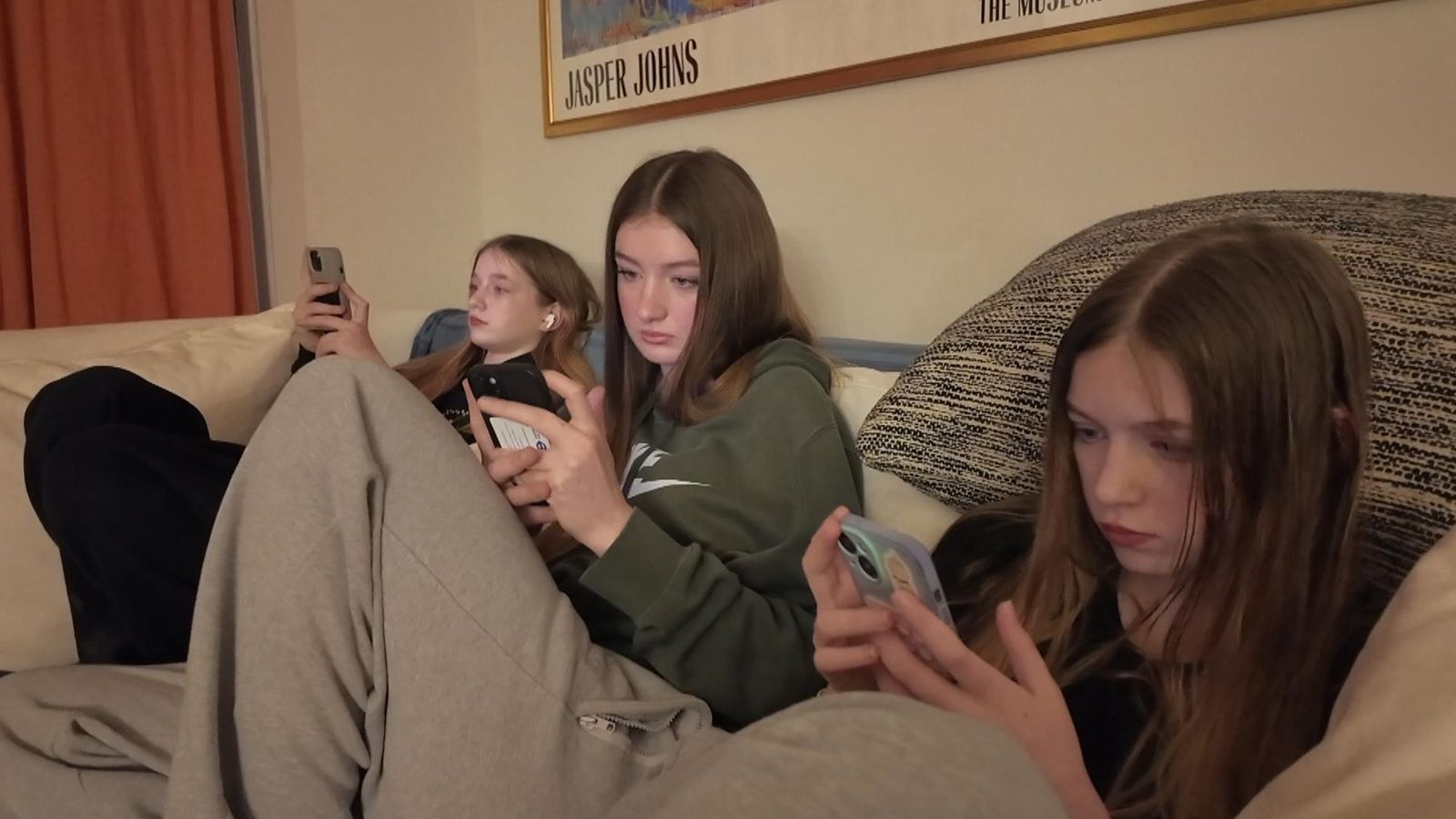
More than ten years ago, journalist Tom Clarke filmed his children for a report examining how screens affect young minds. At the time, his world looked remarkably different from today’s digital landscape. His eldest daughter was just six years old, and her twin sisters were barely three. These young children didn’t own personal devices, and the social media platforms that now dominate teenage life—Instagram, Snapchat, and YouTube—existed beyond their comprehension. TikTok hadn’t even been conceived yet. Fast forward to today, and those same children, now teenagers, find their lives thoroughly intertwined with social media, mirroring the experiences of virtually every other young person they know. Snapchat has become the cornerstone of their social interactions, while TikTok serves as their preferred source of instant gratification and entertainment. This transformation from a screen-free childhood to a digitally dominated adolescence represents a seismic shift that has occurred within a single generation, leaving parents struggling to navigate uncharted territory.
Like countless other parents, Clarke and his family constantly battle to wrestle devices from their children’s hands and impose reasonable screen time limits. It’s an exhausting, ongoing struggle that makes the idea of a government-mandated ban on social media for children appealing to many parents, though predictably unpopular with the young people themselves. One of Clarke’s 13-year-old daughters articulated the generational divide perfectly: “We’ve been born into a world with social media so it’s a bit unfair if you just take it away from people who are younger.” She added a particularly sharp observation—that this feels especially hypocritical “when they’re influenced by adults who are also on their phones.” It’s a fair point that highlights the contradictions many parents face. Adults frequently model the very behavior they’re trying to discourage, scrolling through their own feeds while lecturing children about excessive screen time. Yet despite acknowledging this hypocrisy, parents have simply reached their breaking point with these constant arguments and negotiations over device usage.
Global Movement Toward Regulation
The frustration that individual families feel has now crystallized into a broader societal consensus that something must change. Countries across Europe are moving rapidly toward legislative solutions. France and Spain have both promised to enact laws banning children’s access to social media as early as this year, representing some of the most aggressive timelines for such restrictions. They’re not alone in this movement—Austria, the Czech Republic, Denmark, Finland, Greece, Italy, and Slovenia have all proposed similar legislation to protect minors from unrestricted social media access. The approaches vary slightly: Portugal is considering requiring parental consent for children to access social media platforms, creating a middle ground between outright bans and complete freedom. Last month, the Westminster government in the UK announced it would conduct consultations on the issue of social media access for those under sixteen, signaling that even traditionally market-friendly governments are reconsidering their hands-off approach. Perhaps most significantly, the European Union as a bloc has expressed support for a Europe-wide ban, which could create uniform standards across the continent and significantly increase pressure on global social media companies to modify their products and practices.
This raises an important question: have we finally reached a tipping point where social media companies will be forced to fundamentally change their products to protect children? Clare Melford, chief executive of the Global Disinformation Index, draws a sobering parallel to tobacco regulation. “We knew cigarettes were harmful and addictive and kill people for decades before we actually got legislation that made a difference,” she observed. From that historical perspective, social media regulation is actually moving relatively quickly—these companies have only existed for fifteen to twenty years, a short time compared to the decades-long battle against tobacco. However, Melford acknowledges the painful reality for parents currently raising teenagers: “It is relatively quick on a historical scale, but for those of us who have teenagers now, it’s not quick enough.” This tension between the pace of regulatory change and the urgent needs of families navigating these challenges right now creates a frustrating gap where children continue to be exposed to potentially harmful content and addictive design features while society slowly catches up with appropriate safeguards.
Pushback from Big Tech and Its Allies
The movement toward regulation faces significant opposition, particularly from a Big Tech-friendly White House in the United States. In December, US Secretary of State Marco Rubio took the extraordinary step of banning Clare Melford and three other European online safety campaigners from entering the United States. The targeting of advocates went even further—another campaigner, a legal resident in New York, was threatened with deportation simply for their work promoting online safety for children. Imran Ahmed, the British leader of the US-based Centre for Countering Digital Hate (CCDH), reflected on his own experience being targeted by these measures. “I wasn’t surprised because we know the impact of Big Tech and big money on government in America and around the world,” he said, acknowledging the powerful influence these companies wield. “But of course, it was shocking as a family to be threatened with potential detention just for the things I said.” This personal dimension—the threat to his family’s security for his advocacy work—illustrates the high stakes involved in challenging powerful technology companies.
The technology industry’s most prominent figures are also fighting back aggressively against regulation. Elon Musk, owner of X (formerly Twitter), has become a particular target of European criticism over allegedly extremist content on his platform and his Grok AI’s controversial “nudification” capabilities, which could create explicit images (a feature that has since been curtailed). When Spanish Prime Minister Pedro Sanchez announced his country’s planned social media ban earlier this month, Musk responded with characteristic combativeness. He posted “Dirty Sanchez” on his own platform, then escalated his attack by declaring that Sanchez, not himself, is “the true fascist totalitarian” and “a tyrant and traitor to the people of Spain.” This inflammatory rhetoric from one of the world’s wealthiest and most influential tech figures demonstrates the intensity of the industry’s resistance to governmental oversight. However, it would be a mistake to assume that the White House’s position and social media companies’ aggressive defense of their current business models align with broader American public opinion on this issue.
Grassroots American Support for Protection
Despite the federal government’s apparent alliance with Big Tech interests, American parents share the same concerns as their European counterparts, and their elected representatives at state and local levels are responding accordingly. Individual US states, including Florida (notably, Secretary of State Rubio’s home state), have moved forward with child social media bans, creating a patchwork of regulations across the country. Beyond state-level action, regulations designed to protect children online are gaining significant traction in Congress with rare bipartisan support—a remarkable achievement in an era of deep political polarization. When Democrats and Republicans can agree on something, it signals genuine public concern that transcends partisan divisions.
In the absence of comprehensive federal restrictions, court cases are emerging as another avenue for forcing change in how social media platforms treat young users. A particularly significant case currently under way in California this week centers on the deliberate “addictiveness” of social media applications and whether companies have intentionally designed their products to hook young users. If successful, this litigation could establish legal precedents that force platforms to fundamentally amend their offerings to children, potentially creating change through the courts that has proven difficult to achieve through legislation. From Imran Ahmed’s perspective at the CCDH, these multiple pressure points are creating real momentum: “From my perspective… we are further along in that battle than we ever have been. I think that ultimately we will be able to renegotiate the toxic relationship that we have with tech, where they are exploiting rather than enriching our kids.” His cautiously optimistic assessment suggests that the combination of legislative efforts, legal challenges, and shifting public opinion is creating conditions for meaningful change.
The Long Road Ahead
The convergence of parental frustration, legislative action across multiple countries, legal challenges, and shifting public sentiment suggests that Big Tech will ultimately be forced to make social media a safer, more appropriate place for children. The pressure is building from too many directions for companies to simply ignore or dismiss concerns about their impact on young minds. However, given the technology industry’s extraordinarily deep pockets, extensive political influence, and history of successfully resisting or diluting regulation, the path forward remains uncertain and likely lengthy. These companies have resources that dwarf those of most advocacy organizations and even challenge the regulatory budgets of many governments. They can afford to fight on multiple fronts simultaneously—in courts, in legislative bodies, in public relations campaigns, and through direct lobbying.
For parents like Tom Clarke, this means the exhausting daily negotiations over screen time and device usage will continue for the foreseeable future. Despite his hope that public opinion will eventually force meaningful change, he’s realistic about the timeline: “I’m expecting to be arguing with my kids about their screens for a while yet.” This honest assessment captures the reality facing millions of families—that even as society slowly builds consensus around the need for better protections for children online, individual families must continue navigating these challenges day by day, often feeling isolated and overwhelmed. The question of how to raise children in a world saturated with addictive, algorithmically optimized content designed to maximize engagement regardless of developmental appropriateness remains one of the defining parenting challenges of our time. While regulatory solutions may eventually provide some relief, the current generation of parents and children are essentially serving as unwitting test subjects in a massive, uncontrolled experiment on the effects of ubiquitous social media on developing minds—an experiment whose full results won’t be known for years to come.