
Japanese Prime Minister Sanae Takaichi Distances Herself from Unauthorized Cryptocurrency
Unexpected Cryptocurrency Controversy Hits Japan’s Leadership
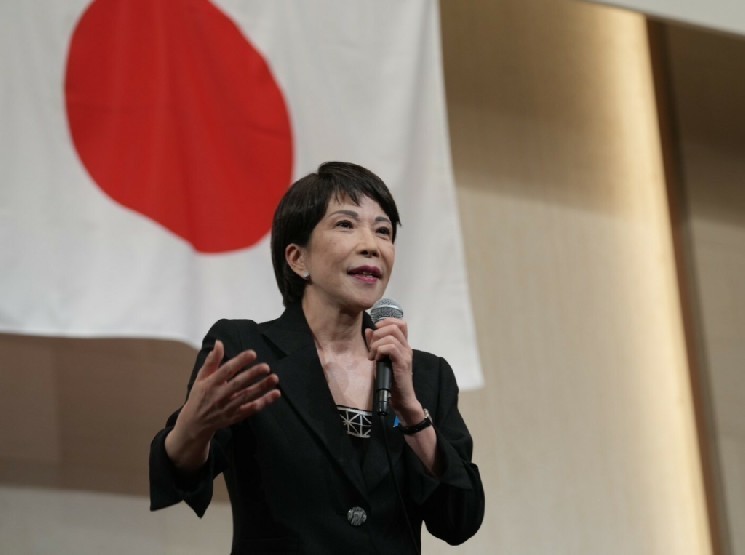
In an unusual development that highlights the growing intersection between politics and cryptocurrency, Japanese Prime Minister Sanae Takaichi found herself at the center of a digital currency controversy that she never asked for. The matter came to light when a memecoin bearing her name, “SANAE TOKEN,” suddenly appeared on the cryptocurrency market and began gaining traction among traders and speculators. This incident represents yet another example of how the largely unregulated world of memecoins can create unexpected challenges for public figures, forcing them to publicly address financial instruments they have no connection to. The situation underscores the ease with which anyone can create and launch a cryptocurrency token in today’s digital landscape, particularly on platforms like the Solana network, which has become increasingly popular for such launches due to its lower transaction costs and faster processing speeds compared to other blockchain networks.
Prime Minister Issues Public Denial
Responding swiftly to the growing attention surrounding the token, Prime Minister Takaichi took to social media platform X (formerly known as Twitter) to set the record straight and distance herself from the cryptocurrency. In her statement, she made it abundantly clear that she had only recently learned about the existence of a token called “SANAE TOKEN” and that it was being actively traded in cryptocurrency markets. More importantly, she emphasized that she had absolutely no prior knowledge of this token’s creation or launch, and neither did her office have any information about what this cryptocurrency actually represents or its intended purpose. The Prime Minister stressed that neither she personally nor the Prime Minister’s Office had provided any form of endorsement, approval, or authorization for this token to be created or marketed using her name. Her decision to make a public statement on this matter wasn’t taken lightly – she explained that she felt compelled to speak out specifically to prevent the public from being misled into believing there was some official connection between herself and this cryptocurrency.
Understanding the SANAE TOKEN Launch and Trading Activity
According to available market data and blockchain information, the SANAE TOKEN was launched on the Solana network, which has become a popular platform for memecoin projects due to its technical advantages. The token saw a dramatic and volatile trading pattern that is characteristic of many speculative memecoins that leverage the names of celebrities or public figures. Data from GMGN, a cryptocurrency tracking platform, revealed that the Solana-based memecoin experienced a brief but significant surge in value, with its market capitalization reaching an impressive peak of approximately $27.72 million. However, this peak proved to be short-lived, as the token’s value subsequently crashed, falling to approximately $7.2 million in market capitalization – representing a decline of more than 70% from its highest point. At the time of reporting, the individual token price stood at $0.0071. Perhaps most concerning from a market concentration perspective is the fact that the three largest wallet addresses collectively hold approximately 60% of the total token supply, which raises serious questions about market manipulation potential and suggests that a small number of holders could significantly influence the token’s price through their trading actions.
The Broader Context of Political Memecoins
The SANAE TOKEN incident is far from an isolated case in the cryptocurrency world. In recent years, there has been a troubling trend of individuals or groups creating memecoins that capitalize on the names, images, or likenesses of politicians, celebrities, and other public figures without their knowledge or consent. These tokens often generate initial excitement and trading volume based purely on the recognition factor associated with the person’s name, rather than any actual utility or value proposition. The creators of such tokens typically hope to profit from the initial hype and price surge before the inevitable collapse that usually follows once it becomes clear that the public figure has no actual involvement. This practice raises ethical questions about unauthorized use of someone’s identity for commercial purposes, and it also poses risks to unsuspecting investors who may genuinely believe they are investing in something officially connected to the person whose name appears on the token. The ease with which these tokens can be created and launched on various blockchain platforms has made it increasingly difficult to prevent such unauthorized uses, placing the burden on public figures to actively monitor for and deny association with these projects.
Risks and Implications for Investors
For anyone considering investing in cryptocurrency, the SANAE TOKEN situation serves as a crucial cautionary tale about the risks inherent in the memecoin market, particularly those associated with celebrity or politician names. The dramatic price volatility demonstrated by this token – rising to nearly $28 million in market capitalization before plummeting to approximately $7 million – illustrates how quickly fortunes can be lost in this speculative market. The concentration of 60% of the token supply in just three wallet addresses represents a significant red flag that should concern any potential investor, as it indicates the possibility of coordinated price manipulation or a “pump and dump” scheme, where early holders inflate the price through coordinated buying or hype, only to sell their holdings at the peak, leaving later investors with worthless tokens. The Prime Minister’s explicit denial of any connection to the token should also serve as a warning sign to anyone who might have purchased the token believing it had some official endorsement or governmental backing. Unfortunately, by the time such public denials are issued, many investors may have already suffered financial losses. This situation reinforces the importance of conducting thorough research before investing in any cryptocurrency, being skeptical of projects that seem to trade primarily on name recognition rather than technological innovation or practical utility, and understanding that the absence of regulation in much of the cryptocurrency space means that investors have limited recourse when things go wrong.
Moving Forward: Need for Greater Awareness and Potential Regulation
The controversy surrounding the SANAE TOKEN raises important questions about the future of cryptocurrency regulation and the protection of both public figures and investors from unauthorized token launches. As blockchain technology continues to make it easier for virtually anyone to create and launch a cryptocurrency with minimal technical knowledge or financial investment, we can expect to see more instances of unauthorized tokens bearing the names of celebrities, politicians, and other prominent individuals. This creates a challenging situation where public figures may need to dedicate resources to monitoring for unauthorized use of their names in the cryptocurrency space and issuing public denials when necessary, as Prime Minister Takaichi did in this case. From an investor protection standpoint, this incident highlights the need for greater education about the risks of memecoin investments and the importance of verifying claims about celebrity or political endorsements before investing money. Some jurisdictions may eventually need to consider regulatory frameworks that address the unauthorized creation of tokens using someone’s name or likeness, similar to existing laws around trademark infringement and identity theft. For now, the most important takeaway is that investors should approach any cryptocurrency investment with extreme caution, particularly memecoins that appear to trade on name recognition, and should always remember that if a public figure were genuinely launching or endorsing a cryptocurrency, they would make that connection clear through official channels. As the disclaimer appropriately notes, information about cryptocurrency should never be construed as investment advice, and anyone considering such investments should consult with qualified financial professionals and only invest money they can afford to lose entirely.