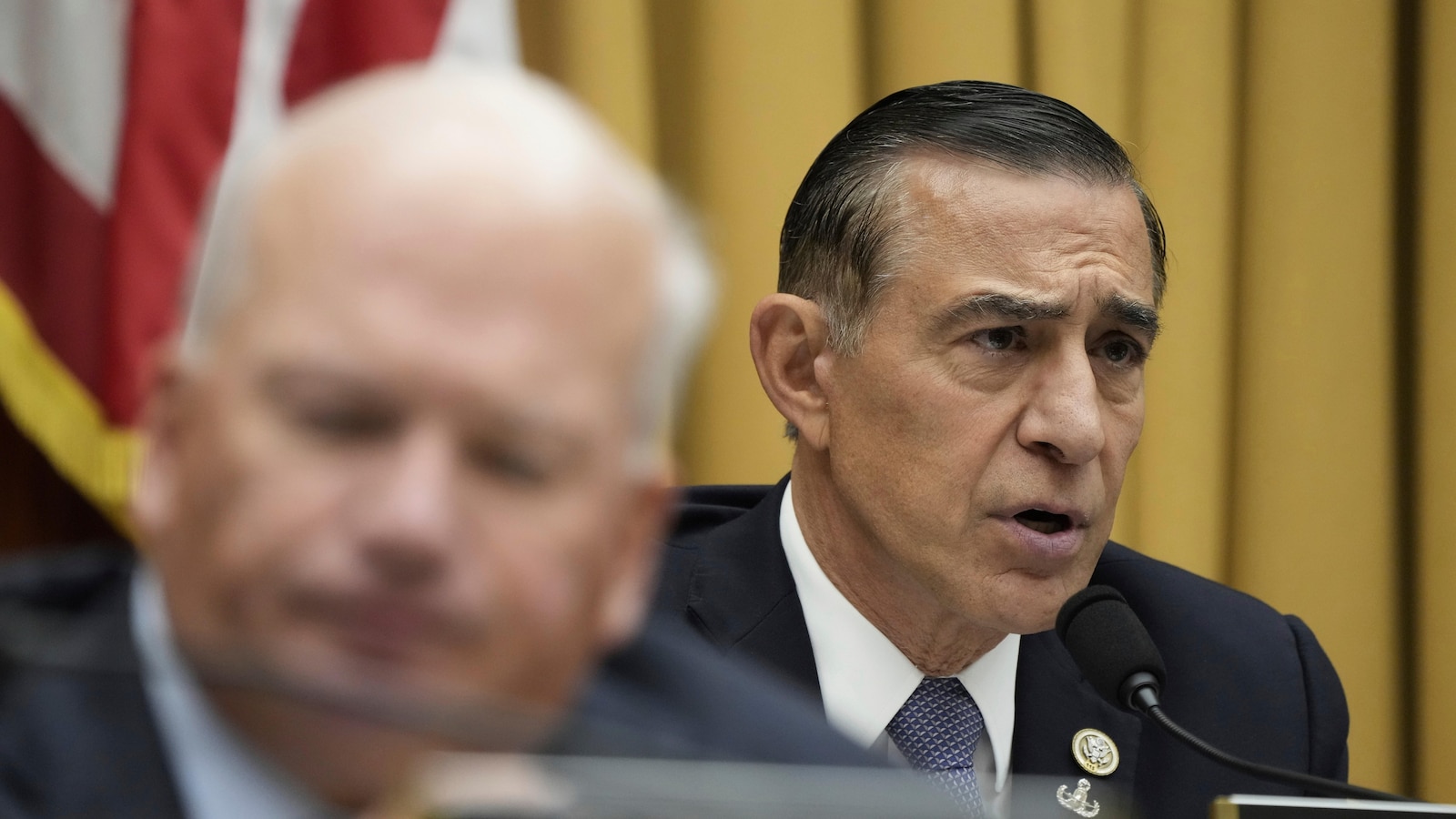

California Rep. Darrell Issa’s Surprising Retirement Announcement
A Sudden Change of Heart
In a stunning reversal that caught political observers off guard, California Republican Representative Darrell Issa announced his retirement from Congress on Friday, just three months after boldly declaring he wasn’t going anywhere. The announcement marks a significant shift for the veteran lawmaker, who had previously insisted he would fight to retain his seat despite facing increasingly difficult political headwinds. “It’s the right time for a new chapter and new challenges,” Issa stated, characterizing his decision as a personal choice rather than a political retreat. He reflected on his time in Washington with gratitude, saying that “serving in Congress has been the honor of my life.” The timing of this announcement, however, suggests that the reality of campaigning in a dramatically redrawn district may have weighed more heavily on his decision than he initially anticipated.
From Car Alarms to Congressional Oversight
Darrell Issa’s journey to Congress was anything but conventional. Before entering politics, he built a fortune in the car alarm industry, becoming one of the wealthiest members of Congress. His business success translated into political influence, and he became particularly prominent during the Obama administration when he served as chairman of the House Oversight and Government Reform Committee from 2011 to early 2015. During this time, Issa became a household name among political watchers as one of the most aggressive congressional critics of President Barack Obama and then-Secretary of State Hillary Clinton. His committee launched numerous investigations into the Obama administration’s activities, making him a polarizing figure who was celebrated by conservatives as a watchdog and criticized by liberals as a partisan attack dog. This high-profile role established Issa as a significant player in Republican politics, but it also made him a prime target for Democrats seeking to flip Republican-held seats.
The Redistricting Game Changes Everything
The landscape that led to Issa’s retirement announcement was fundamentally altered in November when California voters approved a new congressional map that redrew the boundaries of the state’s U.S. House districts. Issa’s Southern California 48th District, which is anchored in San Diego County, was drastically reshaped in ways that favored Democratic candidates. This redistricting effort was spearheaded by California’s Democratic Governor Gavin Newsom and represented a strategic counter-move in a national chess game of partisan redistricting. The new California map was specifically designed to tip as many as five Republican-held seats to Democrats during the upcoming election cycle, serving as a direct response to President Donald Trump’s similar efforts in Texas to gain five seats for Republicans. For Issa, this meant that his once-safe seat had transformed into a competitive battleground where victory was far from guaranteed, requiring a grueling and expensive campaign with uncertain outcomes.
The Brief Flirtation with Texas
When the redistricting changes first became apparent, Issa briefly considered an unusual solution: leaving California altogether and running for Congress in Texas instead. This idea reflected just how significantly the redistricting had altered his political prospects in his home state. However, after considering this option, Issa initially decided to stay and fight for his California seat. In a statement issued just three months before his retirement announcement, he struck a defiant tone: “I can hold this seat. I’m not quitting on California and neither should anyone else.” This earlier declaration made his Friday announcement all the more surprising, as it represented a complete reversal of his stated intentions. The brief interval between these two statements suggests that either the political realities became clearer as the campaign season approached, or that Issa simply decided that the fight ahead wasn’t worth the personal and political costs it would entail.
National Implications and the Battle for House Control
Issa’s retirement decision carries consequences that extend far beyond Southern California. With an incumbent representative out of the race, it becomes significantly harder for Republicans to hold the 48th District seat, which in turn threatens the party’s fragile majority in the House of Representatives. The race for control of the House has become increasingly intense, with both parties engaging in aggressive redistricting efforts across multiple states. The battle to redraw congressional districts for partisan advantage continues to rage nationwide ahead of the November midterm elections, creating uncertainty and confusion in several states. Voters in Texas and North Carolina have already cast ballots in primary elections for redrawn districts that were reconfigured at Trump’s urging, while states like Missouri face the peculiar situation of candidates filing for office even though the final boundaries of their voting districts remain uncertain. Virginia presents another complicated case, where the final shape of congressional districts could depend on both a voter referendum and pending court rulings, illustrating just how contested and chaotic the redistricting process has become across the country.
Looking Forward: Issa’s Endorsement and the Race Ahead
In his retirement statement, Issa moved quickly to try to shape the race for his succession, endorsing San Diego County Supervisor James Desmond as his preferred replacement. This endorsement represents an attempt to maintain some influence over the direction of the district’s representation and to provide Republicans with a candidate who might have a better chance of winning in the redrawn district than Issa himself would have had. However, without the advantage of incumbency, which typically provides name recognition, fundraising networks, and established constituent relationships, Republicans face an uphill battle in the newly configured 48th District. The race will likely attract multiple candidates from both parties, substantial outside spending, and intense national attention as both parties view it as a key component of their strategies to control the House. Issa’s departure removes a well-known and well-funded Republican from the race, potentially creating an opening for Democrats to flip a seat that has been in Republican hands. As the campaign season unfolds, the 48th District will serve as a test case for whether aggressive redistricting can indeed reshape the political landscape as dramatically as its architects intend, and whether voters will accept these partisan boundary manipulations or push back against what many view as politicians choosing their voters rather than voters choosing their representatives.