


The Colosseum’s Stunning Renaissance: Ancient Glory Restored for Modern Times
A Monument Reborn Through Traditional Craftsmanship
In the heart of Rome, one of humanity’s most iconic monuments has undergone a remarkable transformation that bridges the gap between ancient grandeur and contemporary appreciation. The Colosseum, that magnificent amphitheater that has stood as a testament to Roman engineering for nearly two millennia, now boasts a stunning restoration that brings visitors closer than ever to experiencing what ancient Romans saw when they flocked to witness the spectacular—and often brutal—entertainment within its walls. This isn’t just any renovation involving modern materials and techniques; instead, restorers have gone to extraordinary lengths to source the exact same travertine marble from the very quarries that supplied the original builders two thousand years ago. The result is a semicircular piazza outside the arena that allows contemporary visitors to sit where ancient spectators once stood, waiting in anticipation beneath towering arcades before entering the amphitheater to watch gladiators battle each other and wild animals in combat that was as central to Roman culture as cinema is to ours today.
The Colosseum’s enduring appeal speaks volumes about its cultural significance—it remains Italy’s most visited tourist destination, drawing an astounding 9 million visitors in 2025 alone. This constant stream of humanity from every corner of the globe demonstrates that the fascination with ancient Rome hasn’t dimmed despite the passage of two thousand years. People still want to stand where emperors once presided over games, where gladiators fought for their lives and freedom, and where the roar of crowds celebrating victories or mourning defeats once echoed off stone walls. The restoration project recognizes this deep human connection to history and seeks to enhance it by recreating, as faithfully as possible, the experience of approaching and entering this magnificent structure as a Roman citizen would have done centuries ago.
Recreating the Grand Entrance: Where Romans Once Gathered
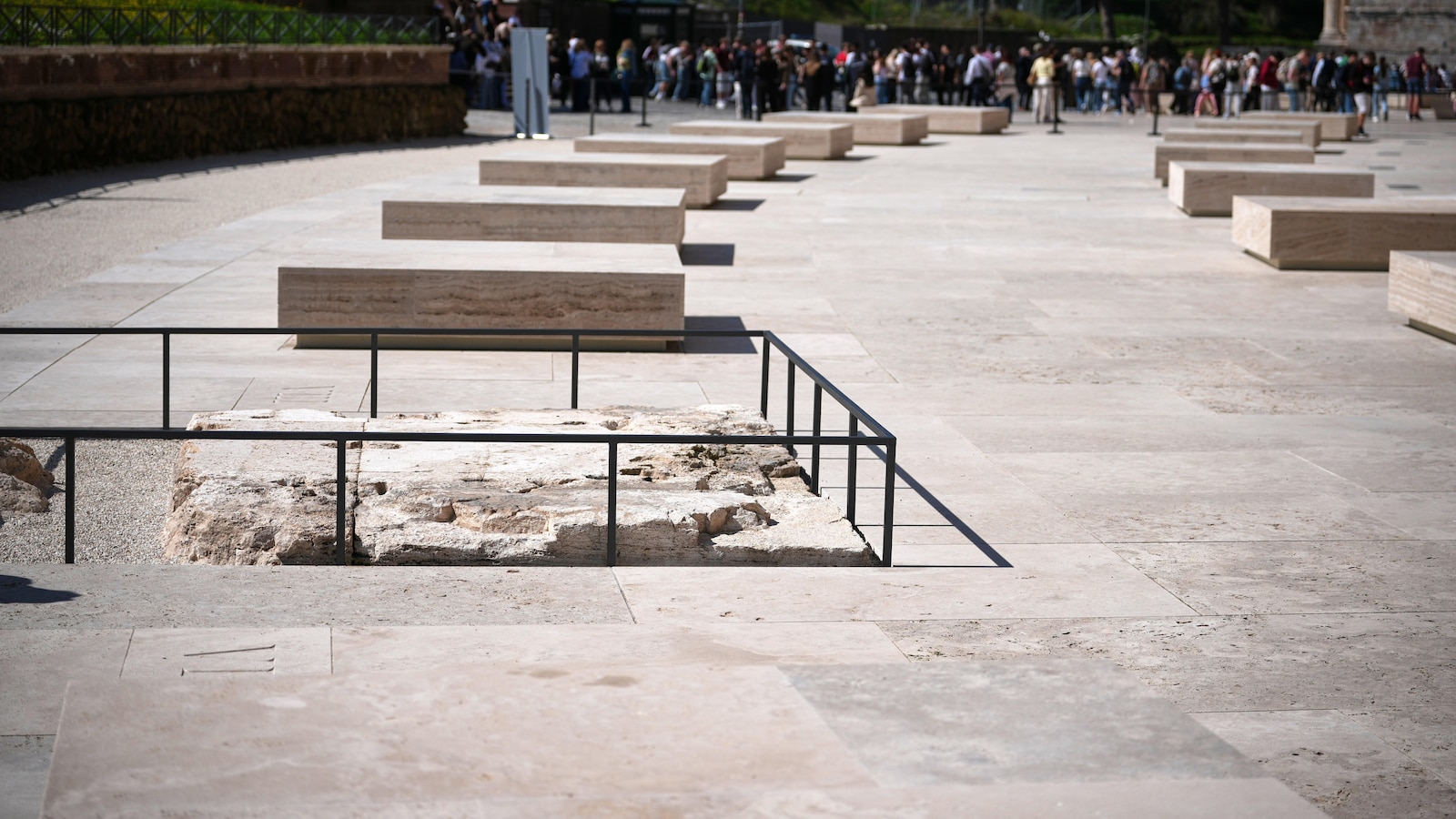
The restoration focused specifically on the semicircular piazza that served as the gathering place outside the arena’s entrance. Here, Roman spectators would crowd together under two impressive arcades comprised of marble columns that stretched skyward to heights of 50 meters—roughly equivalent to a 16-story building in today’s terms. Imagine the scene: thousands of Romans from all walks of life, dressed in their finest togas and tunics, milling about in the shadows of these towering columns, chattering excitedly about the day’s scheduled events, perhaps placing bets on their favorite gladiators, or simply enjoying the social spectacle that was as much a part of the games as the combat itself. These arcades weren’t merely functional; they were architectural statements of Roman power and sophistication, designed to inspire awe even before spectators entered the amphitheater proper.
Tragically, those magnificent arches disappeared over the centuries, victims of earthquakes, ground instability, and the general degradation that comes with extreme age. The Colosseum, despite its appearance of permanence, has actually been quite vulnerable to natural disasters and the slow march of entropy. But now, thanks to this thoughtful restoration, tourists can once again appreciate the scale and proportion of these lost features. Visitors can sit on large travertine marble slabs positioned exactly where the original columns once stood. Even more remarkably, they can read reproductions of the Roman numerals that once indicated different seat sections, helping them understand how the ancient Romans organized the massive crowds that attended the games. It’s a small detail, but one that brings the experience vividly to life—you can imagine hurrying to find section XII or XXIV, hoping to claim the best available spot to witness the day’s entertainment.
Archaeological Treasures and Engineering Marvels Beneath the Surface
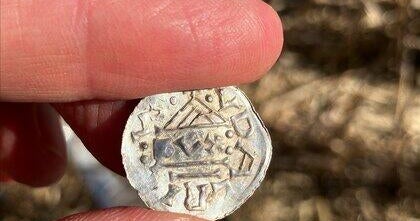
The restoration work involved much more than simply placing new stones on the surface. As Italian architect Stefano Boeri, who designed the piazza, explained, the project aimed to “give back to the public the perception of the proportion of the arcades and the proportion of the vaults of the arches that were used to enter in the center of the Colosseum.” To achieve this authentic recreation, restorers had to dig down approximately a meter—roughly a yard—through accumulated debris that had filled the area over two millennia. What they found was a treasure trove of archaeological artifacts that offer intimate glimpses into daily life during the Roman Empire. Among the discoveries were ancient coins that might have fallen from the purses of spectators, statues that once decorated the entrance area, animal bones likely from the creatures that fought and died in the arena, and even a gold ring—perhaps lost by a wealthy Roman patron on their way to watch the games.
Even deeper beneath the surface lies one of the Colosseum’s most fascinating features: a secret underground passageway that Emperor Commodus used to enter the amphitheater while avoiding the common people. This hidden corridor, opened to the public just last year, reveals another layer of Roman society’s complex social hierarchies. While ordinary citizens crowded together in the open arcades, the emperor enjoyed a private, secure entrance that allowed him to arrive in style without having to mingle with his subjects. It’s a reminder that while the games themselves might have been a somewhat democratizing experience—with citizens from various social classes all gathering in one place—Roman society remained rigidly stratified, with the powerful literally walking a different path than everyone else. These archaeological layers transform the restoration project from a simple beautification effort into a genuine educational experience that helps modern visitors understand the complexity of ancient Roman life.
Traditional Craftsmanship: Four Generations of Stone-Cutting Excellence
One of the most remarkable aspects of this restoration project is the commitment to authenticity that extended to sourcing materials from the original quarries. The new travertine marble slabs came from the exact same quarries in Tivoli where ancient Roman builders obtained their stone two thousand years ago. These quarries continue to operate today, supplying travertine for a new generation of significant buildings including churches, banks, museums, government facilities, and private homes throughout Italy and beyond. The stone’s enduring popularity speaks to its inherent beauty and durability—qualities that the Romans recognized and exploited to create structures that would last for millennia.
The Mariotti Carlo stonecutting firm, which has been carving travertine for four generations, had the honor of providing materials for the Colosseum restoration. Fabrizio Mariotti, the current head of this family business, expressed the profound significance of contributing to the project: “For a family like ours that has been working with travertine for four generations, working at the Colosseum, which is the symbol not only of Rome but also of this material, is so important.” His words, spoken while sitting on one of the very slabs his firm prepared for the restoration, capture the deep sense of connection that traditional craftspeople feel to their materials and their work. For the Mariotti family and others like them, this wasn’t just another commercial project—it was an opportunity to participate in the ongoing story of Rome’s greatest monument, to connect their own family’s history with the much longer history of their city and their craft. This kind of intergenerational knowledge and pride in workmanship is increasingly rare in our modern world, making it all the more precious when we encounter it in projects like this.
Modern Infrastructure Meets Ancient Heritage
The Colosseum restoration didn’t happen in isolation from Rome’s other development needs. Earlier in 2025, the city opened two new subway stations, including one located deep beneath the Colosseum itself, completing a multi-billion euro metro project that had been decades in the making. Building modern infrastructure in a city as archaeologically rich as Rome presents extraordinary challenges—virtually every excavation uncovers historically significant artifacts or structures that must be carefully documented, preserved, or relocated. The metro project beneath the Colosseum was particularly complex, requiring engineers to dig deep enough to avoid disturbing the ancient foundations while ensuring that the vibrations from passing trains wouldn’t damage the centuries-old structure above.
Interestingly, the restoration of the Colosseum’s perimeter was funded using compensatory money from the metro project itself. This approach reflects a sophisticated understanding that development and preservation need not be opposing forces; rather, they can work together when projects are planned thoughtfully. The metro brings more visitors to the area while reducing traffic and pollution, benefiting both the local population and the monument itself. The compensatory funds ensure that increased tourism doesn’t come at the expense of the site’s integrity. It’s a model that other historic cities might do well to study as they grapple with similar tensions between meeting modern transportation needs and preserving irreplaceable cultural heritage.
Experiencing History: The Colosseum for Future Generations
The ultimate purpose of this restoration extends far beyond the physical improvements to the monument itself. It’s about creating deeper, more meaningful connections between contemporary visitors and the ancient world. When you sit on one of those travertine marble slabs, knowing that you’re positioned exactly where a column stood two thousand years ago, and that the stone beneath you came from the same quarry that supplied the original builders, history becomes tangible in a way that photographs and descriptions can never quite achieve. You can look up at the remaining walls of the Colosseum and more accurately imagine the full scale of the arcade that once framed your approach to the amphitheater. You can picture the crowds that surrounded you, all waiting for the same entrances, all eager for the spectacle within.
This restoration represents the best kind of heritage preservation—not merely maintaining what survives, but thoughtfully, carefully recreating what was lost in ways that enhance understanding without misleading visitors about what’s original and what’s new. The Colosseum has always captured the public imagination, standing as it does at the intersection of architectural achievement, historical significance, and cultural fascination with both ancient Rome’s grandeur and its brutality. Now, with this restoration complete, it can continue to inspire wonder in the 9 million people who visit each year, and in countless millions more who will come in the years ahead. By honoring the past through authentic materials and traditional craftsmanship while incorporating modern archaeological discoveries and conservation techniques, this project ensures that the Colosseum will continue to educate, inspire, and amaze visitors for generations to come, just as it has for the past two thousand years.