


The Poisoning of Alexei Navalny: A Dark Chapter in Russian Politics
Scientific Evidence Confirms Kremlin Critic’s Suspected Murder
The tragic death of Alexei Navalny, Russia’s most prominent opposition leader, has taken a chilling turn with new revelations that paint a disturbing picture of political assassination. European governments have now confirmed what many suspected from the beginning: Navalny didn’t die from natural causes as Russian authorities claimed, but was instead fatally poisoned while imprisoned in an Arctic penal colony. In a powerful joint statement, leaders from the United Kingdom, France, Germany, Sweden, and the Netherlands announced that laboratory analysis of samples taken from Navalny’s body revealed the presence of epibatidine, a highly toxic substance naturally found in South American poison dart frogs. This discovery transforms what was once suspicion into scientific certainty, giving weight to the accusations that the Russian state orchestrated the murder of one of Vladimir Putin’s most vocal critics. The findings represent not just a personal tragedy for Navalny’s family, but a stark reminder of the lengths authoritarian regimes will go to silence dissent.
A Poison That Sends a Message
The choice of epibatidine as the murder weapon is particularly telling and sinister. This isn’t a substance that accidentally finds its way into someone’s system—it’s an extremely potent toxin that requires sophisticated handling and access. European officials made it clear that given the extraordinary toxicity of epibatidine and the symptoms Navalny reportedly experienced before his death, poisoning was overwhelmingly likely to be the cause. British Foreign Secretary Yvette Cooper didn’t mince words in her assessment, stating that Russia viewed Navalny as a threat and poisoned him as a demonstration of power. The use of such an exotic poison serves a dual purpose: it eliminates the target while simultaneously sending a chilling message to other potential dissidents. As Cooper emphasized, by deploying this particular form of poison, the Russian state revealed both the despicable tools in its arsenal and the overwhelming fear it harbors toward political opposition. The UK’s foreign office was unequivocal in its position, declaring that only the Russian state possessed the means, motive, and opportunity to deploy this lethal toxin against Navalny, and holding Moscow directly responsible for his death.
Yulia Navalnaya’s Vindication and Grief
For Yulia Navalnaya, Alexei’s widow, these findings represent a bittersweet vindication of what she has maintained since her husband’s death. Speaking at the Munich Security Conference in Germany—the very same venue where she had addressed world leaders two years earlier—Navalnaya reflected on how her accusations have evolved from heartfelt conviction to scientific fact. She recalled standing on that same stage two years prior, stating with certainty that Vladimir Putin had killed her husband. At that time, her words were based on intuition, knowledge of her husband’s situation, and understanding of the Putin regime’s tactics. Now, she explained, those words have transformed into science-proven facts, backed by laboratory evidence that cannot be dismissed or ignored. Navalnaya had actually revealed in September that independent laboratories found evidence of poisoning shortly before her husband’s death, though she hadn’t provided specific details at the time. She explained that these labs initially withheld their results due to “political considerations”—a testament to the complex international dynamics and potential consequences of publicly accusing a nuclear power of state-sponsored assassination. Her journey from grieving widow to international advocate for justice demonstrates remarkable courage in the face of a regime known for eliminating its critics.
The Life and Persecution of a Putin Critic
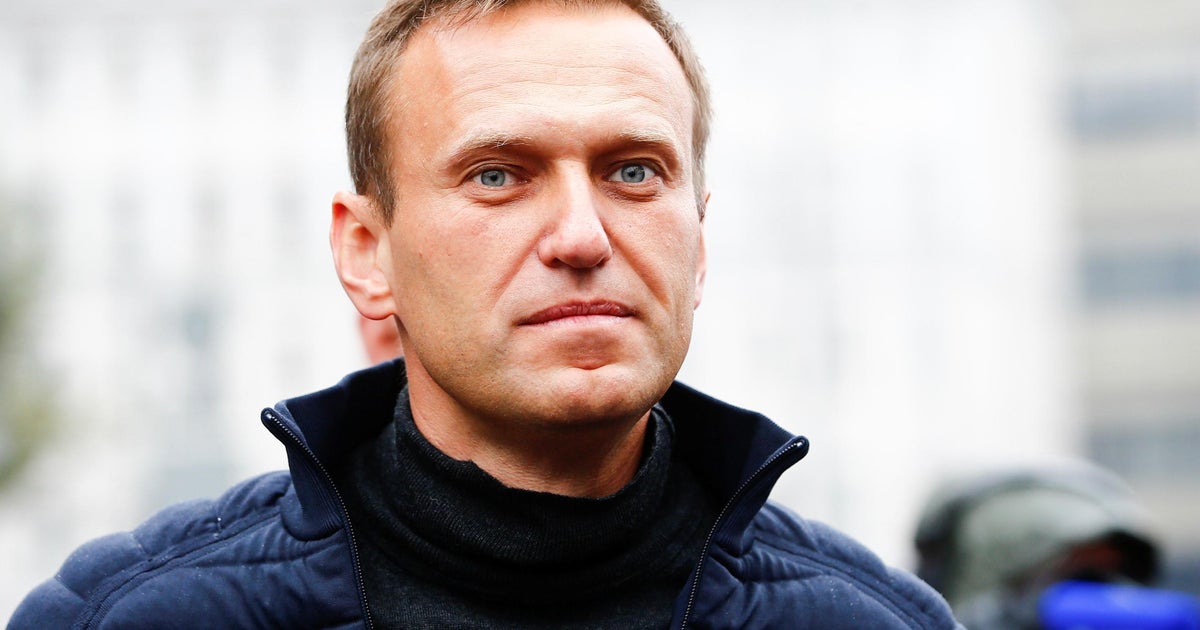
To understand the significance of Navalny’s death, one must understand who he was and what he represented to both the Russian people and the Kremlin. Alexei Navalny wasn’t just another political opponent—he was Vladimir Putin’s loudest and most effective critic, someone who had built a massive following by exposing official corruption and organizing large-scale anti-Kremlin protests that rattled the foundations of Putin’s power. His influence extended far beyond traditional political circles, reaching ordinary Russians through social media and investigative journalism that revealed the lavish lifestyles and corrupt practices of government officials. This wasn’t even the first time the Russian state had allegedly tried to silence him through poison. In 2020, while traveling from Moscow to Siberia, Navalny was poisoned with Novichok, a Soviet-era nerve agent that nearly killed him. He survived only because his plane made an emergency landing and he received treatment in Germany. In a later interview with 60 Minutes’ Lesley Stahl, Navalny stated his belief that the poisoning was an assassination attempt orchestrated by Putin himself—an accusation Russia denied. Remarkably, despite knowing the dangers that awaited him, Navalny returned to Moscow in 2021, where he faced certain arrest. He was subsequently convicted three times on charges he called politically motivated and received a 19-year sentence for extremism. After being jailed in January 2021, he was moved to an Arctic penal colony in late 2023, where he died in February 2024.
Russia’s Dubious Explanations Unravel
From the moment of Navalny’s death, Russian authorities provided explanations that strained credulity. They offered few concrete details about what caused the death of their most famous political prisoner, a suspicious vagueness that only fueled international suspicion. According to Navalnaya, Russian investigators told her in August 2024 that her husband had died from a combination of “a dozen different diseases” and finally succumbed to arrhythmia—an irregular heartbeat—after taking a walk. This explanation was particularly unconvincing given that Navalnaya emphasized her husband had exhibited no instances of heart disease before his imprisonment. The implication was clear: either Navalny’s health had catastrophically deteriorated under Russian custody, or the official explanation was a cover story. The discovery of epibatidine in his system has now definitively proven the latter. The contrast between Russia’s claimed “natural causes” and the presence of a highly toxic poison in Navalny’s body couldn’t be starker. The European governments’ statement pulled no punches in highlighting this discrepancy, noting that Navalny died while held in prison, meaning Russia controlled every aspect of his environment and had complete access to administer poison to him.
International Implications and Russia’s Pattern of Chemical Weapons Use
The poisoning of Navalny fits into a disturbing pattern of Russian disregard for international norms and treaties. The European leaders’ statement explicitly accused Russia of “repeated disregard for international law” and violations of the Chemical Weapons Convention, a 1997 treaty that prohibits the development, production, stockpiling, and use of chemical weapons. This isn’t an isolated incident—Russia has been previously accused of using Novichok in a 2018 incident in the United Kingdom that resulted in the death of Dawn Sturgess, a British woman who had no connection to espionage or politics but became collateral damage in an assassination attempt. The European leaders also expressed concern that Russia has not destroyed all of its chemical weapons stockpiles, suggesting the country maintains capabilities it should have dismantled decades ago. Their statement concluded with a promise to “make use of all policy levers at our disposal to continue to hold Russia to account,” though the effectiveness of such measures remains uncertain given Russia’s willingness to violate international norms. The Navalny case represents more than just one man’s murder—it’s a test of the international community’s ability and willingness to respond when a major power blatantly violates the rules meant to govern civilized nations. As the world watches how governments respond to this confirmed poisoning, the stakes extend far beyond justice for one family, reaching into questions about the future of international law and whether authoritarian states can murder dissidents with impunity.