


Iran’s Execution of Protesters Sparks International Outcry
A Troubling Escalation in State-Sanctioned Violence
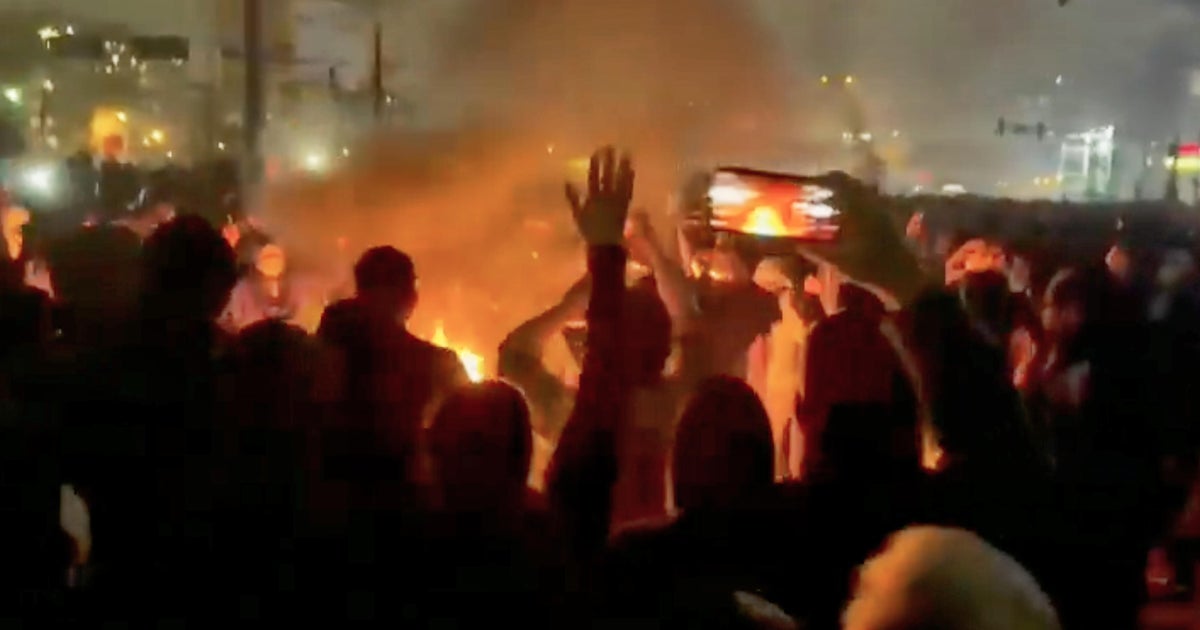
The Iranian government announced on Monday the execution of three men convicted of participating in anti-government protests that swept across the country during December and January. This grim development marks another chapter in what human rights organizations describe as an alarming escalation of state violence against dissent. The executed men—Mehdi Rassouli, Mohammad Reza Miri, and Ebrahim Dolatabadi—were accused of involvement in demonstrations that began as peaceful protests over deteriorating living conditions but quickly evolved into confrontations with security forces. Their deaths represent just a fraction of what appears to be a systematic campaign by Iranian authorities to suppress opposition through capital punishment, a trend that has intensified dramatically since regional tensions heightened following a U.S.-Israeli military action in late February. The executions were carried out after Iran’s Supreme Court confirmed the death sentences, lending a veneer of legal legitimacy to what critics characterize as judicial murder designed to terrorize the population into silence.
Controversial Charges and Contested Narratives
According to Iran’s judiciary spokesperson through the Mizan Online website, Rassouli and Miri were labeled as agents of Mossad, Israel’s intelligence agency, allegedly responsible for orchestrating violence during January riots in Mashhad, a major city in northeastern Iran. The court accused these two men of using Molotov cocktails and bladed weapons while inciting others to violence, ultimately holding them accountable for the death of a security officer. The third executed man, Ebrahim Dolatabadi, was described as one of the main instigators of the Mashhad riots, which authorities claim resulted in the deaths of several security force members. These characterizations reflect the Iranian government’s consistent narrative that the protests—which began peacefully over economic grievances including inflation, unemployment, and declining living standards—were actually “riots fomented by foreign powers” rather than genuine expressions of domestic discontent. The government has acknowledged that more than 3,000 people died during the protests but has steadfastly blamed this violence on what it terms “terrorist acts” orchestrated by the United States and Israel, effectively denying any responsibility for the bloodshed caused by its own security forces’ response to civilian demonstrations.
A Pattern of Repression and Judicial Executions
The executions announced this week are part of a broader pattern of state violence that has characterized Iran’s response to popular unrest. Just days before these three men were hanged, another individual was executed for his alleged role in a murder committed during a previous wave of protests that occurred between 2022 and 2023. Those earlier demonstrations were sparked by the death of Mahsa Amini, a 22-year-old Iranian Kurdish woman who died while in the custody of Iran’s morality police after being arrested for allegedly wearing her hijab improperly. Her death became a rallying point for Iranians frustrated with restrictive social policies and authoritarian governance. Last month also saw Bita Hemmati reportedly become the first woman sentenced to death in connection with the recent protests, according to several human rights organizations. The increasing use of capital punishment against protesters reveals a government desperate to maintain control through fear and intimidation rather than addressing the legitimate grievances driving citizens to the streets. These executions follow what human rights advocates describe as “grossly unfair, fast-tracked trials conducted without due process,” where defendants often lack access to independent legal counsel and where convictions frequently rely on confessions extracted under torture.
Iran’s Position as a Global Execution Leader
Iran’s aggressive use of the death penalty places it among the world’s most prolific executioners, second only to China in the total number of people put to death annually. The statistics compiled by independent monitoring organizations paint a disturbing picture of a state that routinely employs capital punishment as a tool of political repression and social control. According to the Iran Human Rights Monitor, Iranian authorities carried out 656 executions in just the first three months of this year alone. However, this shocking figure is believed to represent only a partial count, as researchers note the actual tally is “likely far higher.” This uncertainty stems from the fact that Iran experienced widespread internet shutdowns in March, a common government tactic during periods of unrest, which meant that only eight executions could be documented during that month despite the likelihood that many more occurred. A joint annual report issued last month by Norway-based Iran Human Rights and Paris-based Together Against the Death Penalty documented that at least 1,639 people were executed in Iran during 2025, including 48 women. These numbers don’t merely represent statistics—each execution represents a human life ended, often following dubious legal proceedings, and leaves behind grieving families and communities traumatized by state violence.
High-Profile Cases and International Condemnation
Among the recent executions was that of Saleh Mohammadi, a young member of Iran’s national wrestling team, who was put to death in March along with two other men accused of killing police officers during protests. Mohammadi’s case drew particular attention both domestically and internationally because of his athletic prominence and youth, highlighting how the government’s crackdown has swept up individuals from all walks of life. The Center for Human Rights in Iran, a New York-based advocacy organization, has issued strong condemnations of the judicial process surrounding these cases, stating that “dozens of individuals arrested during the January 2026 protests have been sentenced to death following grossly unfair, fast-tracked trials.” The organization emphasized that these proceedings were conducted without due process, without access to independent legal counsel, and relied heavily on torture-tainted forced confessions as primary evidence—a practice that violates international human rights standards and conventions to which Iran is theoretically a signatory. International human rights organizations, foreign governments, and United Nations bodies have repeatedly called on Iran to halt executions and reform its judicial system, but these appeals have gone largely unheeded by Tehran’s leadership, which views such criticism as interference in its internal affairs.
The Human Cost and Future Implications
Behind the stark numbers and legal language lies an immense human tragedy affecting thousands of Iranian families who have lost loved ones either to execution or to the violence that has characterized the government’s response to protests. The economic grievances that initially sparked the demonstrations—rising prices, unemployment, corruption, and economic mismanagement—remain unaddressed as authorities prioritize suppression over reform. The wave of executions sends a chilling message to anyone contemplating protest or dissent: opposition to the government can be a capital offense. This climate of fear has undoubtedly silenced some voices, but history suggests that repression alone rarely resolves the underlying tensions that drive people to risk their lives for change. The international community faces difficult questions about how to respond effectively to Iran’s human rights violations while navigating complex geopolitical dynamics in an already volatile region. For ordinary Iranians, particularly those who have participated in protests or have family members who were arrested, each day brings uncertainty and fear about who might be next to face the executioner. The situation represents not only a humanitarian crisis but also a profound political challenge, as the government’s reliance on violence to maintain power may ultimately prove unsustainable, potentially setting the stage for even greater instability in the future. As the world watches, the question remains whether Iran’s leadership will recognize that addressing citizens’ legitimate concerns through dialogue and reform offers a more viable path forward than attempting to drown opposition in blood.