
The Hidden Trade: Russia’s Shadow Fleet and Britain’s Maritime Dilemma
The Discovery of Russia’s Floating Arsenal
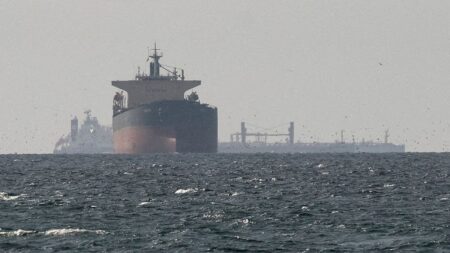
In the cold waters off Britain’s coastline, a disturbing pattern has emerged that reveals the lengths to which Russia will go to finance its ongoing war in Ukraine. Investigative journalist Paul Kelso has uncovered evidence of a sophisticated network of vessels carrying illicit cargo through British-controlled waters, operating under the radar of international sanctions. These ships, part of what intelligence experts call Russia’s “shadow fleet,” are not merely commercial vessels going about legitimate business. Instead, they represent a calculated effort by the Kremlin to circumvent Western restrictions and maintain the flow of revenue that keeps its military machine running. The scale of this operation is staggering, with estimates suggesting that billions of pounds worth of oil, gas, and other sanctioned goods are being transported through these maritime routes. This discovery raises profound questions about Britain’s ability to monitor and control its own territorial waters, and more importantly, what it means for the ongoing conflict in Ukraine where every ruble that reaches Moscow’s coffers potentially translates into continued aggression and human suffering.
The Economics of Evasion: Calculating the True Value
The financial implications of Russia’s shadow fleet operations are nothing short of astronomical. According to maritime intelligence sources and financial analysts interviewed by Kelso, the illicit cargo passing through or near British waters could be worth anywhere from hundreds of millions to several billion pounds annually. This isn’t merely about oil tankers sneaking past naval patrols; it’s a comprehensive system involving complex ownership structures, flag-of-convenience registrations, and sophisticated financial instruments designed to obscure the true origin and destination of goods. The Russian government has become remarkably adept at exploiting loopholes in international maritime law, using intermediary countries, shell companies, and deliberately opaque corporate structures to mask the movement of sanctioned commodities. What makes this particularly concerning is that this revenue stream directly supports Putin’s war effort in Ukraine. Every shipment that successfully evades detection represents weapons, ammunition, and military equipment that will be used against Ukrainian forces and civilians. The economic warfare that Western nations thought they were waging through sanctions is being systematically undermined by these floating violations of international law, and Britain finds itself at a crossroads between maintaining its traditional stance on freedom of navigation and the pressing need to enforce restrictions meant to cripple Russia’s war-making capability.
Britain’s Strategic Conundrum: Freedom of the Seas vs. Security Imperatives
The United Kingdom faces a particularly complex challenge when it comes to intercepting and stopping these vessels. Britain has historically been one of the world’s strongest advocates for freedom of navigation and the principle that international waters should remain open to all nations’ commercial shipping. This position has served British interests well over centuries, from the days of the Empire to the modern era of global trade. However, the current situation presents a direct conflict between these long-held principles and the urgent necessity of preventing Russia from financing its invasion of Ukraine. Legal experts point out that while Britain has the authority to inspect vessels in its territorial waters and can refuse port access to suspicious ships, the international legal framework for stopping vessels in international waters remains murky at best. The risk of setting precedents that other nations might exploit for less noble purposes weighs heavily on policymakers. Additionally, there’s the practical consideration that Britain’s Royal Navy, already stretched thin by budget constraints and global commitments, may lack the resources to effectively patrol and interdict the volume of suspicious traffic passing through the English Channel, the North Sea, and the waters around Scotland and Northern Ireland. Intelligence gathering and risk assessment have become critical tools, but they’re only useful if there’s the political will and practical means to act on the information gathered.
The Prospect of Maritime Confrontation: Preparing for a New Kind of Conflict
Perhaps the most alarming aspect of Kelso’s investigation is the very real possibility that Britain may soon find itself engaged in a militarised confrontation at sea with Russian vessels or their proxies. This isn’t the Cold War-era scenario of submarine cat-and-mouse games or naval task forces facing off across ocean expanses. Instead, it’s a more insidious and potentially more dangerous situation involving civilian vessels that may or may not be carrying sanctioned goods, potentially protected by Russian naval assets or operating in waters where the legal authority to stop them is questionable. Defense analysts warn that any attempt to forcibly board or redirect these ships could escalate rapidly, particularly if Russia decides to use such incidents as pretexts for wider confrontation. The Kremlin has already demonstrated a willingness to push boundaries in maritime spaces, from dangerous near-misses with NATO vessels to suspected sabotage of undersea infrastructure. British military planners are now gaming out scenarios where Royal Navy vessels might need to interdict suspicious cargo ships, potentially facing resistance from Russian warships or armed guards aboard the commercial vessels themselves. The Ministry of Defence has quietly been updating rules of engagement and conducting training exercises focused on maritime interdiction, but there’s recognition that any actual confrontation carries risks of miscalculation and escalation that could draw Britain into direct military confrontation with a nuclear-armed power.
International Cooperation and the Intelligence Network
The challenge of tracking and stopping Russia’s shadow fleet cannot be solved by Britain alone, which is why Kelso’s investigation also highlights the critical importance of international cooperation and intelligence sharing. NATO allies, particularly those with significant maritime interests like Norway, Denmark, and the Baltic states, have been pooling resources and information to build a comprehensive picture of Russian maritime activity. Satellite surveillance, automatic identification system (AIS) tracking, and human intelligence from port facilities and shipping industry insiders all contribute to a growing database of suspicious vessels and their movements. However, this cooperation faces its own challenges, including differing legal frameworks among allied nations, varying levels of commitment to enforcement, and the simple fact that Russia has proven remarkably adaptable in finding new routes and methods when old ones are closed off. The United States has shared intelligence from its extensive maritime surveillance network, but European nations closer to the action bear much of the burden for actual interdiction efforts. There’s also the complicating factor that some NATO allies and EU member states have been less enthusiastic about strict enforcement of sanctions, either due to their own economic interests or concerns about energy security. Building and maintaining a unified front requires constant diplomatic effort and a willingness to subordinate short-term national interests to the longer-term goal of constraining Russia’s ability to wage war.
The Path Forward: Policy Options and Strategic Choices
As Britain confronts this maritime challenge, policymakers are weighing several potential courses of action, each with its own advantages and risks. At one end of the spectrum is a more aggressive interdiction posture, involving expanded naval patrols, more frequent inspections of suspicious vessels, and potentially even the seizure of ships found to be carrying sanctioned cargo. This approach would send a strong message to Moscow and demonstrate Britain’s commitment to supporting Ukraine, but it would also require significant additional resources, carry legal risks, and potentially provoke dangerous confrontations at sea. At the other end is continued reliance on diplomatic pressure, financial sanctions against shipping companies and insurers, and intelligence-sharing with allies, while avoiding direct confrontation with vessels themselves. This more cautious approach minimizes the risk of escalation but may prove insufficient to actually stop the flow of illicit cargo. The most likely outcome is probably some middle path combining enhanced surveillance and selective enforcement targeting the most egregious violations while avoiding blanket interdiction that might prove unsustainable or legally problematic. What’s clear from Kelso’s investigation is that this issue isn’t going away anytime soon and that Britain’s response will help define its role in the broader confrontation with Russian aggression. The decisions made in the coming months about how to handle these shadow fleet vessels will have implications not just for the war in Ukraine but for Britain’s strategic position, its relationship with allies, and the future of international maritime law itself.