
Bringing Home a Hero: USS California Sailor Identified 83 Years After Pearl Harbor
A Family’s Long-Awaited Answer
After more than eight decades of uncertainty, a family in South Texas finally received the news they had been waiting generations to hear. On November 25, 2025, the Defense POW/MIA Accounting Agency officially confirmed that the remains of U.S. Navy Seaman 1st Class Clyde C. McMeans had been positively identified through DNA and forensic analysis. McMeans, who was just 26 years old when he perished during the devastating attack on Pearl Harbor, can now be laid to rest with his name restored and his sacrifice properly honored. For his family members, including his niece Kathy Herrmann, the identification brings a bittersweet sense of closure to a story that has been part of their family’s history since December 7, 1941. “We’ve loved him forever, without ever knowing him,” Herrmann told reporters, capturing the profound emotion of connecting with an uncle she never had the chance to meet but whose memory has been cherished across generations.
The Day That Changed Everything
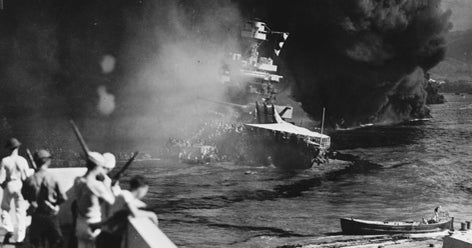
On that fateful Sunday morning in December 1941, Seaman McMeans was stationed aboard the USS California, a mighty battleship moored peacefully at Ford Island in Pearl Harbor, Hawaii. Nobody could have anticipated the horror that was about to unfold as Japanese warplanes descended upon the unsuspecting naval base. The USS California became one of the primary targets during the surprise attack, as enemy aircraft unleashed a barrage of torpedoes and bombs upon the vessel. The proud battleship caught fire, began flooding, and slowly sank into the harbor waters—a scene that would become one of the most iconic and tragic images of World War II. According to historical records maintained by Pacific Historic Parks, McMeans wasn’t cowering below deck when disaster struck. Instead, he demonstrated the courage and selflessness that defined the greatest generation. He was in a motorboat actively helping fellow sailors escape to shore when that small craft was struck directly by a bomb. In that instant, this young man from South Texas became one of 103 crewmen from the USS California who would never return home. He was initially reported missing, and later officially declared dead, leaving his family to grapple with a loss that came without the comfort of a proper burial or even the certainty of what had happened to their loved one.
The Painstaking Recovery Efforts
The aftermath of the Pearl Harbor attack presented an overwhelming challenge for Navy personnel tasked with the grim duty of recovering and identifying casualties. From the immediate days following the attack until April 1942, dedicated teams worked tirelessly to recover the remains of fallen servicemen from the USS California and other damaged vessels. The recovered remains were respectfully interred in the Halawa and Nu’uanu Cemeteries in Hawaii, where they would rest for decades. In the immediate aftermath of the attack, Navy officials were able to positively identify 42 casualties from the USS California using the identification methods available at that time—methods that were primitive by today’s standards, relying primarily on personal effects, physical characteristics, and witness accounts. However, dozens of other crewmen could not be identified with certainty, leaving their families in an agonizing state of limbo. They knew their loved ones had been lost, but without confirmed remains, there was always an incomplete quality to their grief. The passage of time and the development of advanced forensic technology, particularly DNA analysis, has opened new possibilities for bringing these long-lost sailors home and giving them back their names. The Defense POW/MIA Accounting Agency has made the identification of these Pearl Harbor casualties an ongoing priority, representing a commitment that America never forgets those who made the ultimate sacrifice in service to their country.
A Family Remembers Their Hero
While the DPAA did not initially provide details about McMeans’ hometown, his family members came forward to share the story of the young man who left South Texas to serve his country and never returned. Speaking with KRIS-TV in Corpus Christi, family members painted a picture of a sailor who was part of a family that understood service and sacrifice. Clyde had a brother, Edward McMeans, who served as a medic during World War II and, unlike his sibling, survived the war and returned home. One can only imagine the mixture of emotions Edward must have experienced—relief at his own survival coupled with profound grief for his lost brother, and perhaps survivor’s guilt that haunted many who made it home while their comrades did not. For subsequent generations of the McMeans family, Clyde became a figure of reverence, a family member whose youth and sacrifice were remembered even by those who never knew him personally. The family maintained his memory through stories, perhaps a photograph in uniform, and the knowledge that somewhere, their relative lay in an unmarked grave far from home. When Navy officials finally contacted the family on the Tuesday before the public announcement to inform them that Clyde’s remains had been positively identified, it marked the end of 83 years of uncertainty and the beginning of a new chapter in how they could honor his memory.
Coming Home at Last
The identification of Clyde McMeans represents more than just advanced forensic science at work—it symbolizes a promise kept. On May 1, family members will gather at the Coastal Bend State Veterans Cemetery in Corpus Christi to finally give Seaman McMeans the funeral service he deserved eight decades ago. He will be laid to rest with full military honors in his home region of South Texas, surrounded by family members who have carried his memory across generations. The ceremony will undoubtedly be emotional, bringing together elderly relatives who may have faint childhood memories of Uncle Clyde, middle-aged family members who grew up hearing stories about him, and younger generations for whom he has been a historical figure rather than a living presence. The military honors—the folded flag, the rifle salute, the playing of taps—will finally acknowledge his service and sacrifice in the formal, ceremonial way that was impossible in the chaos and confusion following Pearl Harbor. For his niece Kathy Herrmann and other family members, the burial will provide something precious that they’ve been denied all these years: a place to visit, to leave flowers, to sit quietly and connect with the memory of a young man who gave everything for his country before he’d barely begun his adult life.
The Continuing Mission
McMeans is not the only USS California crew member to be identified in recent months, highlighting the ongoing nature of this important work. In October 2025, U.S. military officials announced that another crew member, Navy Fireman 1st Class Edward D. Bowden, had also been successfully accounted for through similar forensic methods. Each identification represents countless hours of meticulous scientific work, careful historical research, and sensitive coordination with family members who have waited lifetimes for answers. The mission extends beyond just the USS California. Earlier this month, the DPAA announced plans to exhume the remains of 88 unidentified sailors and Marines who were killed when the USS Arizona was attacked at Pearl Harbor—the ship that has become the most iconic symbol of that day’s tragedy. The Arizona sank in just nine minutes after being bombed, taking 1,177 men down with her—nearly half of all the servicemen killed during the entire attack. For decades, these men have been honored collectively at the USS Arizona Memorial, but the new exhumation efforts aim to give them back their individual identities and return them to their families for proper burial. This ongoing work represents a solemn commitment that transcends generations: that America will never stop working to bring its fallen heroes home, no matter how many decades have passed, and that every service member who makes the ultimate sacrifice deserves to have their name spoken, their story told, and their final resting place marked with honor and dignity.