


Justice Samuel Alito’s Health Scare: What Happened and Why It Matters
A Sudden Medical Episode in Philadelphia
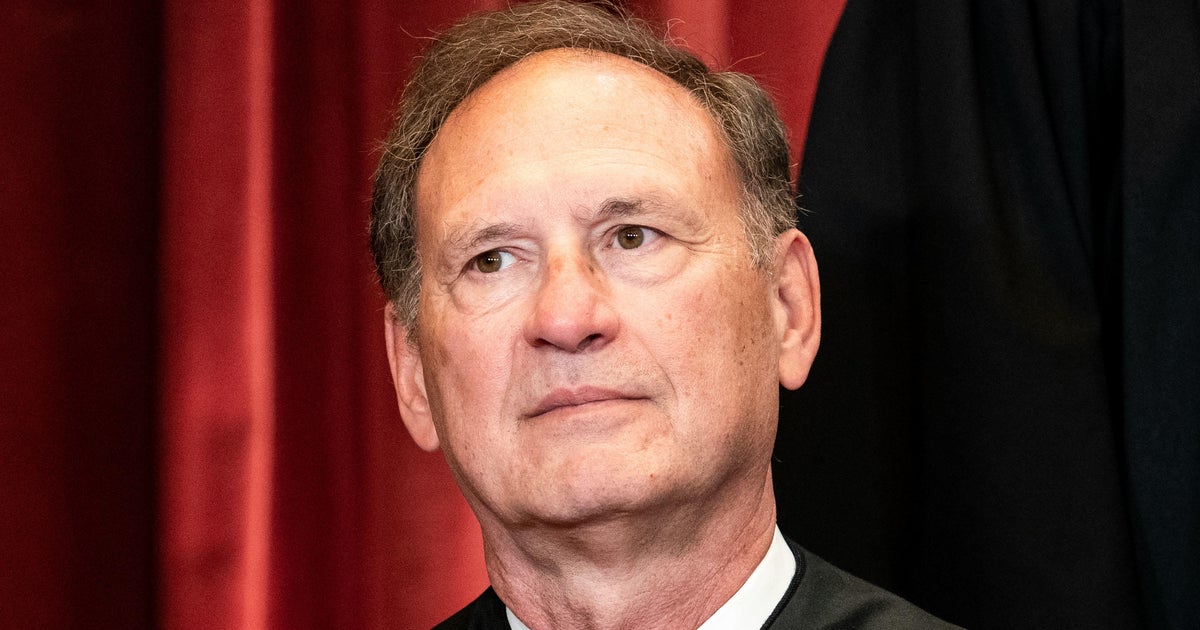
On March 20, Supreme Court Justice Samuel Alito experienced a health scare that briefly raised concerns about his well-being and sparked conversations about the future composition of America’s highest court. While attending a Federalist Society event in Philadelphia, the 76-year-old justice fell ill, prompting his security detail to recommend medical attention before he made the three-hour journey back home. According to the Supreme Court’s public information office, Alito was treated for dehydration and received intravenous fluids at a medical facility. The court emphasized that the decision to seek medical care was made “out of an abundance of caution,” suggesting that while the situation warranted attention, it wasn’t immediately life-threatening. After receiving treatment and being thoroughly examined, Justice Alito returned home that same evening as he had originally planned, indicating that the medical team felt confident he was stable enough to travel.
The incident, which was first reported by CNN on a Friday morning, initially raised alarm bells given Alito’s age and prominent position on the Supreme Court. However, the court’s public information office moved quickly to reassure the public that the justice had received proper care and was doing well. They noted that Alito had been “thoroughly checked by his own physician” following the episode and had quickly returned to his regular duties at the court. This swift communication helped to calm immediate concerns while also highlighting the court’s awareness that any health issue involving a sitting justice inevitably becomes a matter of public interest, given the lifetime appointments these judicial officers hold and their immense influence on American law and society.
Back to Business as Usual
Despite the medical episode, Justice Alito demonstrated remarkable resilience by quickly returning to his full duties at the Supreme Court. In the two weeks following the incident, he participated in multiple oral arguments, showing no apparent signs of being slowed down by his health scare. Most notably, just days before the news of his Philadelphia incident became public, Alito was present on the bench on a Wednesday when the Supreme Court heard arguments on one of the most significant and controversial cases of the current term: a challenge to President Trump’s executive order aimed at ending birthright citizenship. This case carries enormous constitutional implications, touching on the interpretation of the Fourteenth Amendment and potentially affecting millions of people born in the United States to non-citizen parents. Alito’s participation in such a consequential hearing underscored that he remained fully engaged with the court’s work and capable of handling the demanding intellectual and physical requirements of his position.
The fact that Alito returned to work so quickly also speaks to the dedication that Supreme Court justices typically demonstrate to their roles. Unlike many other positions where taking time off for health concerns would be standard practice, Supreme Court justices often maintain grueling schedules well into their advanced years. The court’s term runs from October through June, during which justices hear oral arguments, research cases, write opinions, and engage in the deliberative process that shapes American jurisprudence. Missing even a single day of oral arguments or deliberations can have significant consequences, as justices may be recused from cases they haven’t fully heard. Alito’s swift return suggests both his personal commitment to his duties and perhaps also an awareness of the political implications that any extended absence might carry.
Alito’s Legacy and Conservative Influence
Samuel Alito stands as one of the most influential conservative voices on the current Supreme Court, a position he has held since his appointment by President George W. Bush in 2006. Now the third-longest-serving justice on the current bench, Alito has built a substantial legacy over his nearly two decades on the court. His judicial philosophy is characterized by originalism and textualism—approaches that emphasize interpreting the Constitution and statutes according to their original public meaning at the time they were written. This philosophy has led him to author or join majority opinions in some of the most consequential and controversial decisions of the modern era, including the overturning of Roe v. Wade in Dobbs v. Jackson Women’s Health Organization, for which he wrote the majority opinion. That decision alone ensures that Alito’s name will be remembered in American legal history, whether celebrated or criticized depending on one’s perspective on abortion rights.
Throughout his tenure, Alito has consistently sided with the court’s conservative wing on issues ranging from religious liberty and gun rights to voting rights and campaign finance. He has been a staunch defender of executive power in many contexts, a skeptic of broad interpretations of federal regulatory authority, and a champion of what he sees as traditional American values being threatened by cultural changes. His opinions are often marked by thorough historical analysis and a resistance to what he perceives as judicial activism—the idea that courts should avoid creating new rights or policies that he believes should be left to the democratic process. This judicial approach has made him a hero to conservatives who believe the courts had overstepped their proper role in previous decades, while drawing sharp criticism from progressives who argue his decisions roll back hard-won rights and protections for vulnerable populations.
The Retirement Speculation and Political Implications
Ever since President Trump returned to office, speculation about Justice Alito’s possible retirement has intensified significantly. This speculation isn’t rooted primarily in concerns about his health or ability to perform his duties, but rather in the strategic political calculations that have come to dominate Supreme Court appointments in recent decades. At 76 years old, Alito is not unusually elderly by Supreme Court standards—Justice Ruth Bader Ginsburg served until her death at 87, and Justice Stephen Breyer retired at 83—but the current political environment has created pressure for justices to time their retirements strategically. Conservative legal observers and activists have reportedly been encouraging Alito (and Justice Clarence Thomas, who is 76) to consider retiring while a Republican president and potentially a Republican-controlled Senate are in place to confirm similarly conservative successors.
This retirement speculation has become even more urgent as the midterm elections approach. If Democrats were to win control of the Senate in the upcoming midterms, filling any Supreme Court vacancy would become extraordinarily difficult for President Trump once the new Congress convenes in January. The Senate’s role in confirming judicial nominees means that a Democratic majority could block or significantly delay any Trump nominee, potentially leaving a vacancy on the court for an extended period or forcing the nomination of a more moderate candidate acceptable to the opposition party. This scenario has created an unusual dynamic where Alito’s health incidents, even minor ones like the dehydration episode in Philadelphia, immediately trigger discussions not just about his well-being but about the political calculations surrounding a potential vacancy. The health scare, though apparently minor, served as a reminder of the mortality of the justices and the high-stakes nature of Supreme Court composition in an era of deep political polarization.
The Broader Context of Supreme Court Health and Transparency
The incident involving Justice Alito also raises broader questions about transparency regarding the health of Supreme Court justices. Unlike the president, whose health is typically disclosed in some detail through annual physical examinations and reports, Supreme Court justices have no formal requirement to disclose health information to the public. The court operates with considerable independence and has historically been protective of justices’ privacy, including regarding their medical conditions. This lack of transparency has occasionally led to situations where justices have remained on the bench despite significant health challenges, raising questions about whether they could adequately fulfill their duties. The late Justice Ginsburg, for example, continued serving through multiple bouts with cancer, and while she remained intellectually sharp, her prolonged absences from oral arguments and her eventual death while a Republican president and Senate were in power had enormous political consequences.
The tension between respecting justices’ privacy and the public’s legitimate interest in knowing whether these powerful lifetime appointees can fulfill their duties remains unresolved. Some court observers and reform advocates have called for mandatory health disclosures or even term limits for Supreme Court justices to address these concerns, but such changes would likely require constitutional amendments or significant legislative action. In the case of Alito’s recent health episode, the court chose to release information fairly promptly once the incident became public, striking a balance between transparency and privacy by confirming the basic facts while emphasizing that the situation was minor and had been resolved. However, the court released this information only after CNN had already reported the story, raising questions about whether the court would have proactively disclosed the incident had it not been uncovered by journalists. This pattern—where health information becomes public through leaks or reporting rather than official announcements—continues to fuel debates about whether the Supreme Court should adopt more formal protocols for disclosing justices’ health issues, particularly when those issues might affect their ability to serve or could potentially lead to a vacancy on the nation’s highest court.