





U.S. Financial Regulators Unite to Create Comprehensive Crypto Oversight Framework
Historic Collaboration Between SEC and CFTC
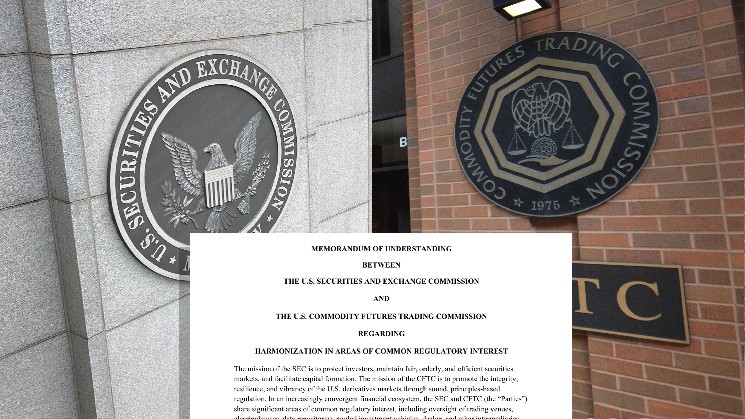
In a landmark move that signals a major shift in how digital assets will be governed in the United States, the country’s two primary financial market watchdogs have decided to join forces. The Securities and Exchange Commission (SEC) and the Commodity Futures Trading Commission (CFTC) announced on Wednesday that they’re combining their efforts in areas where their responsibilities intersect, with particular emphasis on establishing a coherent regulatory structure for cryptocurrencies and blockchain technologies. This collaboration, formalized through a memorandum of understanding, represents a departure from decades of fragmented oversight that industry participants have long complained stifled innovation and created unnecessary confusion in the marketplace.
The agreement outlines several key areas where the agencies will coordinate their activities, including supervision of market participants, approval processes for new financial products, interpretation of existing policies, and coordination of enforcement actions against rule violators. Perhaps most significantly for the cryptocurrency industry, the agencies explicitly stated that one of their primary objectives is “providing a fit-for-purpose regulatory framework for crypto assets and other emerging technologies.” This specific mention indicates that digital assets are no longer being treated as an afterthought or shoehorned into existing regulations designed for traditional financial instruments, but are instead being recognized as a distinct asset class requiring tailored oversight approaches that acknowledge their unique characteristics and potential.
Ending the Era of Regulatory Confusion
SEC Chairman Paul Atkins provided a preview of this collaborative approach during remarks made on Tuesday, where he explained how the agencies would establish clear contact points for regulated companies to arrange joint meetings when they need to discuss policy questions or submit applications for new products. This seemingly simple procedural change actually represents a significant improvement for businesses operating in the crypto space, many of which have previously found themselves caught in a regulatory no-man’s-land, uncertain whether their products fell under SEC jurisdiction as securities, CFTC oversight as commodities, or some confusing combination of both.
In his Wednesday statement, Atkins didn’t mince words about the problems the new agreement aims to solve. “For decades, regulatory turf wars, duplicative agency registrations, and different sets of regulations between the SEC and CFTC have stifled innovation and pushed market participants to other jurisdictions,” he acknowledged. This frank admission from the head of one of America’s most powerful regulatory bodies confirms what industry participants have been saying for years: the fragmented regulatory approach in the United States has placed American companies at a competitive disadvantage compared to their counterparts in jurisdictions with clearer, more unified regulatory frameworks. Atkins emphasized that by aligning how the agencies define key terms, coordinating their oversight activities, and establishing secure methods for sharing information between the two organizations, they would finally deliver the regulatory clarity that businesses have been requesting for years.
Practical Improvements in Day-to-Day Operations
The memorandum of understanding commits staff members from both agencies to hold regular meetings and systematically share information on matters of mutual interest. While this might sound like bureaucratic housekeeping, the practical implications for the crypto industry are substantial. One of the most significant changes involves how enforcement actions will be handled going forward. Historically, the SEC and CFTC pursued enforcement cases independently, following their own investigative processes and timelines. This approach sometimes resulted in the same cryptocurrency company facing similar allegations from both agencies separately, forcing them to defend themselves on two fronts simultaneously, often with substantial overlap in the issues being examined but frustrating differences in how each agency approached the matter.
Under the new agreement, when the two regulators identify overlapping interests in an enforcement case, they’ve committed to “confer on potential charges and relief, sequencing of filings, litigation strategy and public communications.” This coordination should reduce the burden on companies under investigation, eliminate contradictory messaging from different government agencies, and make the enforcement process more efficient for everyone involved. For companies operating in good faith but navigating genuinely complex questions about how regulations apply to novel technologies, this coordination could mean the difference between a manageable compliance issue and an existential business threat stemming from conflicting regulatory demands.
From Contradiction to Consensus
The previous presidential administration saw the SEC and CFTC sometimes taking positions that directly contradicted each other, particularly regarding the fundamental question of how to classify specific crypto assets. This wasn’t merely an academic debate—whether a digital asset is classified as a security (falling under SEC jurisdiction) or a commodity (under CFTC oversight) determines which set of rules apply, what disclosures are required, who can trade it, and what penalties might apply for violations. When the two agencies couldn’t agree on these basic categorizations, companies were left in an impossible position, potentially violating one agency’s rules regardless of which regulatory path they chose to follow.
The current regulatory environment presents a stark contrast. Both agencies now share an enthusiasm for developing crypto-friendly rules, and this alignment of perspective exists without the traditional checks and balances that might normally temper regulatory approaches. The CFTC is currently led by a single Republican chairman, with the other four seats on the commission sitting empty. Similarly, the SEC is headed by Chairman Atkins along with two other Republican commissioners, while the Democratic seats remain vacant. This unusual composition means there’s essentially no internal opposition to the agencies’ crypto-friendly direction. Both chairmen were appointed by President Donald Trump, who came into office with what observers have characterized as a newfound enthusiasm for cryptocurrency—an interest that coincides with his own expanding business ventures in the digital asset space. Adding another layer to the regulatory picture, both Atkins and CFTC Chairman Mike Selig had professional relationships with crypto industry clients before assuming their current government positions, bringing insider knowledge of industry concerns to their regulatory roles.
Looking Toward a Clearer Regulatory Future
This collaborative framework between the SEC and CFTC represents more than just an administrative reorganization—it reflects a fundamental reimagining of how the United States approaches regulation of emerging financial technologies. For years, the crypto industry has pointed to regulatory uncertainty as one of the primary obstacles to mainstream adoption and innovation in the United States. Companies faced a choice between either avoiding the U.S. market entirely, operating in a legal gray area with substantial risk, or spending enormous resources trying to comply with overlapping and sometimes contradictory regulatory requirements. The new memorandum of understanding suggests those days may be ending, replaced by a more coordinated approach that acknowledges the unique nature of digital assets while still maintaining appropriate oversight to protect investors and maintain market integrity.
The implications of this shift extend beyond just cryptocurrency companies. If successful, this model of inter-agency cooperation could serve as a template for how regulators approach other emerging technologies that don’t fit neatly into traditional regulatory categories. The willingness of these powerful agencies to acknowledge past shortcomings and commit to substantive operational changes suggests a regulatory philosophy that prioritizes clear rules and consistent application over rigid adherence to legacy frameworks designed for a different technological era. Whether this new approach ultimately delivers on its promise to provide clarity while fostering innovation remains to be seen, but the commitment from both agencies to work together rather than in parallel—or worse, at cross purposes—represents a significant step forward for everyone trying to build the future of finance while remaining on the right side of the law.









