


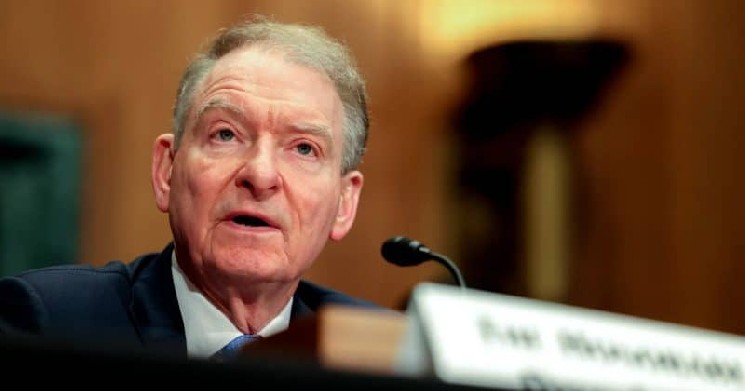

SEC Chair Paul Atkins Pushes Congress to Pass Landmark Crypto Legislation
The Growing Urgency for Crypto Regulation
The cryptocurrency industry has reached a pivotal moment. After years of regulatory ambiguity and enforcement-driven oversight, SEC Chair Paul Atkins has taken a bold public stance, urging Congress to finalize the CLARITY Act and send it to President Trump’s desk for signature. Speaking on April 9, 2026, Atkins made it clear that both the Securities and Exchange Commission and the Commodity Futures Trading Commission are prepared and ready to implement the new framework the moment it becomes law. This isn’t just bureaucratic posturing—it’s a signal that the regulatory apparatus is finally willing to embrace comprehensive crypto legislation rather than continuing the whack-a-mole approach of enforcement actions that has characterized the past several years. The push comes at a critical juncture as the bill, officially designated as H.R. 3633, sits in the Senate following a strong bipartisan showing in the House. For an industry that has operated in a regulatory gray zone for much of its existence, Atkins’ public advocacy represents a meaningful shift in tone from the nation’s top securities regulator. His willingness to publicly prod Congress suggests genuine institutional readiness for change and an acknowledgment that the status quo simply isn’t working for anyone—not regulators, not businesses, and certainly not investors.
Understanding What the CLARITY Act Will Change
At its core, the CLARITY Act does something the crypto industry has been begging for since the 2017 ICO boom: it establishes clear definitions and regulatory boundaries. The legislation draws a bright line between digital asset securities and digital commodities, assigning oversight responsibilities accordingly. Under the proposed framework, the SEC would maintain its traditional jurisdiction over tokens that function as securities—essentially, tokens that represent ownership stakes or promise returns based on the efforts of others. Meanwhile, the CFTC would assume regulatory authority over most blockchain-native tokens, treating them as commodities rather than securities. For the vast majority of tokens currently in circulation, this represents a significant jurisdictional shift away from SEC oversight toward the CFTC. This isn’t merely an administrative reshuffling—it fundamentally changes how these assets would be regulated, reported, and traded. The Act also includes important provisions specifically designed to protect decentralized finance protocols, recognizing that DeFi’s architecture doesn’t fit neatly into regulatory frameworks originally designed for centralized financial institutions with clear management structures and headquarters. During his remarks, Chair Atkins referenced an internal initiative dubbed “Project Crypto,” which he described as an effort to ensure the SEC is operationally prepared to implement the Act’s provisions efficiently and effectively from day one. This level of advance preparation is noteworthy and suggests the agency is taking the legislation’s passage seriously rather than treating it as a remote possibility.
The Political Landscape and the Stablecoin Compromise
The CLARITY Act has garnered significant political support across the ideological spectrum, which is increasingly rare in today’s polarized Washington. The bill sailed through the House of Representatives in July 2025 with a commanding 294-134 vote, demonstrating genuine bipartisan consensus that crypto regulation needs to move beyond the enforcement-only approach. Treasury Secretary Scott Bessent and tech advisor David Sacks have both publicly endorsed the legislation, giving it influential backing from within the Trump administration. However, Senate negotiations have proven more complicated, which is why Chair Atkins felt compelled to issue his public appeal. A major breakthrough came in May 2026 when negotiators reached a compromise on one of the bill’s most contentious issues: stablecoin regulation. The compromise prohibits passive yield on stablecoins, meaning holders cannot simply earn interest on parked digital dollars the way they might with a traditional savings account. This addresses regulatory concerns that such arrangements might constitute unregistered securities offerings. However, the compromise does permit activity-based rewards, allowing stablecoin issuers to incentivize specific behaviors—such as providing liquidity to decentralized exchanges—without triggering securities law violations. This nuanced approach attempts to balance innovation with investor protection, though it remains to be seen how it will work in practice. Current prediction markets place the CLARITY Act’s odds of passage at roughly 55%—essentially a coin flip. While the strong House vote and administration backing are positive signs, the Senate’s slower pace and the complexity of the issues involved mean passage is far from guaranteed.
Why the Banking Sector Is Paying Close Attention
Traditional financial institutions have been watching the CLARITY Act’s progress with keen interest, and for good reason. According to expert analyses, the legislation could unlock approximately fourteen new crypto-related services that banks would be permitted to offer their customers. These services range from collateralized lending using crypto holdings as security to custody services for digital assets—offerings that many banks have been hesitant to provide in the absence of clear regulatory guidelines. The regulatory uncertainty of recent years essentially froze innovation in this space, as banks’ compliance departments understandably refused to approve products and services that might later be deemed illegal or trigger enforcement actions. The 2022 collapse of FTX, which wiped out billions in customer deposits and exposed catastrophic failures in both risk management and basic accounting practices, paradoxically provided legislators with the political justification they needed to craft comprehensive legislation. The spectacular nature of FTX’s failure—and the very public suffering of retail investors who lost their savings—made it politically untenable to continue the previous approach of regulation by enforcement. Lawmakers from both parties recognized that clear rules, established through the democratic legislative process rather than through regulatory actions and court cases, were necessary to prevent future disasters. For banks, the CLARITY Act represents an opportunity to finally enter the crypto space with confidence, offering services to customers who have been seeking them for years while maintaining compliance with clear, congressionally-established guidelines.
What Investors Should Expect If the Act Becomes Law
For cryptocurrency investors and market participants, the CLARITY Act’s passage would bring both opportunities and new obligations. The most significant benefit is obvious: regulatory clarity reduces risk. When companies, investors, and service providers understand the rules, they can make better decisions, build more robust businesses, and operate with confidence that they won’t face surprise enforcement actions years down the line. This clarity should, in theory, encourage institutional investment, improve market infrastructure, and potentially increase overall market stability. The shift of most blockchain-native tokens from SEC jurisdiction to CFTC oversight is particularly noteworthy. The CFTC has historically been perceived as more favorable to crypto innovation compared to the SEC’s more cautious approach under previous leadership. However, taking on regulatory responsibility for an entirely new asset class representing hundreds of billions in market value will test the agency’s capacity, expertise, and philosophical approach. On the compliance side, however, clarity comes with costs. The Act would likely impose enhanced reporting requirements on exchanges, protocols, and possibly even individual participants. Critics have raised concerns about increased surveillance measures that could mirror some of the monitoring mechanisms associated with Central Bank Digital Currencies—a prospect that runs counter to crypto’s foundational privacy ethos. Decentralized protocols, which currently operate with minimal reporting obligations, may need to implement new compliance infrastructure, potentially changing their operational models or even their decentralized nature. The practical implementation of rules designed for decentralized systems remains one of the Act’s most challenging aspects, and how regulators approach enforcement in this area will significantly impact the DeFi ecosystem’s future trajectory.
The Road Ahead and What It Means for Crypto’s Future
With passage odds hovering around 55%, investors and industry participants face genuine uncertainty about whether 2026 will be remembered as the year comprehensive crypto regulation finally arrived or as yet another false start. The stablecoin compromise resolved one major sticking point, but other contentious issues remain under negotiation in the Senate. Some senators have expressed concerns about whether the legislation provides adequate consumer protections, while others worry it might stifle innovation or disadvantage American companies relative to international competitors. Chair Atkins’ public advocacy suggests the regulatory agencies themselves are eager to move forward, which represents a significant shift from previous SEC leadership’s more skeptical stance. The fact that both the SEC and CFTC have engaged in advance preparation work like “Project Crypto” indicates genuine institutional commitment to making the framework operational rather than treating it as theoretical possibility. For investors, the smart approach is to prepare for both scenarios. If the CLARITY Act passes, expect a period of adjustment as agencies issue guidance, companies revise their operations to achieve compliance, and courts begin interpreting the new statutory language. Some tokens currently trading may need to cease operations or restructure; others may find new opportunities opening up. Institutional participation will likely increase, potentially driving prices higher but also increasing correlation with traditional markets. If the Act stalls in the Senate, the regulatory purgatory continues, meaning enforcement actions will remain the primary mechanism for establishing boundaries, creating ongoing uncertainty and risk for market participants. Either way, the crypto industry has reached a inflection point where the old “move fast and break things” ethos increasingly conflicts with regulators’ mandate to protect investors and maintain market integrity. How this tension resolves will shape digital asset markets for years to come.