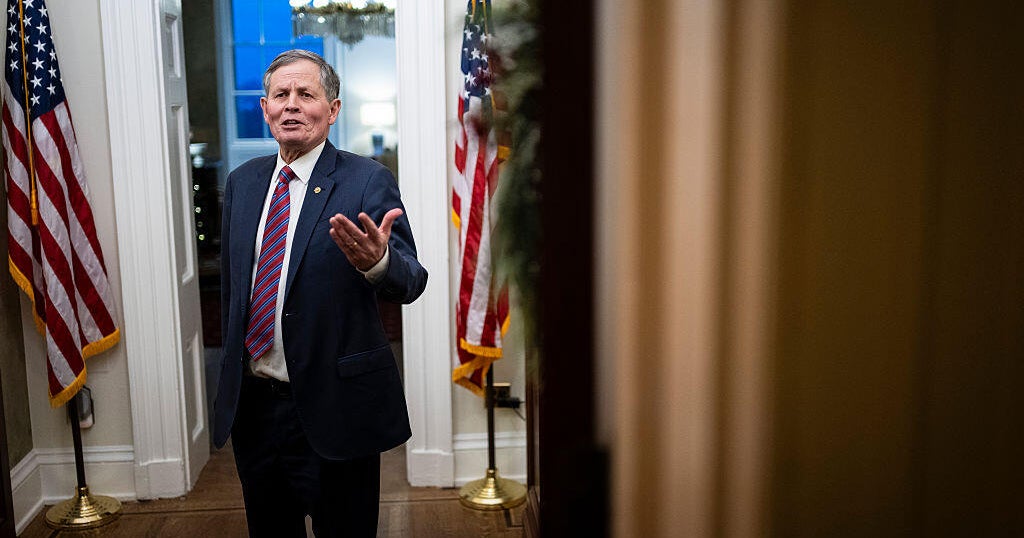

Montana Senator Steve Daines Announces Retirement from Congress
A Distinguished Career Comes to an End
After more than a decade serving the people of Montana in Washington, Senator Steve Daines has announced he will not seek reelection, joining a growing wave of Republican lawmakers choosing to step away from congressional service. The announcement, made on Wednesday, marks the end of a political journey that began in 2013 when Daines first entered the House of Representatives before ascending to the Senate. While the Montana lawmaker didn’t point to any single factor driving his decision, he revealed that the choice had weighed heavily on him for several months. In a heartfelt statement, Daines reflected on his time in public service, calling it “the greatest honor of my professional career,” a sentiment that underscores the profound impact his years in Washington have had on both his life and his state.
From Business to Public Service
Before entering the political arena, Steve Daines spent nearly three decades building a career in the private sector, accumulating 28 years of business experience that would later inform his approach to governance. However, despite finding those years professionally rewarding, Daines acknowledged that they simply couldn’t match the deep sense of fulfillment he discovered through public service. This transition from businessman to public servant is a journey that many Americans can relate to—the search for meaningful work that extends beyond personal success to making a tangible difference in people’s lives. Daines’ reflection on this shift highlights an important truth about public service: for those who genuinely embrace it, representing constituents and fighting for their interests provides a unique satisfaction that other careers simply cannot replicate. His words suggest a man who found his true calling later in professional life and who leaves office with no regrets about the path he chose.
Passing the Torch to New Leadership
In his retirement announcement, Senator Daines made clear that his decision wasn’t about exhaustion or disillusionment with the political process. Instead, he framed it as an opportunity for fresh perspectives and new energy to represent Montana’s interests in Washington. “It is time for new leaders like Tim Sheehy to spearhead the fight for Montana in the United States Senate,” Daines stated, referring to Montana’s junior senator. This endorsement signals Daines’ confidence that Montana’s representation in the Senate will remain strong and effective even without his presence. Furthermore, Daines threw his support behind Kurt Alme as his preferred successor, a choice that speaks volumes about the type of leadership he believes Montana needs going forward. Alme, who served as U.S. attorney for the District of Montana during both of President Trump’s terms, brings prosecutorial experience and a proven track record of public service to the race. Daines’ optimistic tone—describing himself as “energized, encouraged, and ready for what comes next”—suggests a man looking forward to the next chapter of his life rather than one reluctantly stepping away from power.
Presidential Backing for the Successor
Shortly after Senator Daines made his announcement, President Trump moved quickly to endorse Kurt Alme for the Senate seat, lending the considerable weight of his political influence to the candidate. In characteristic style, Trump’s statement praised both the outgoing senator and his chosen successor, creating a narrative of continuity and excellence. “He did a job like few others are capable of doing but, sadly for our Country, Steve’s Term is up, and he has decided to leave the Senate and, ‘pass the torch’ to Kurt Alme,” the president wrote, framing Daines’ retirement as a loss for the nation while simultaneously introducing Alme as a worthy replacement. Trump went further, suggesting that Daines’ decision to retire was influenced by Alme’s exceptional qualifications, stating that if Kurt didn’t possess “the highest level of aptitude and talent,” Daines would have remained in office. This endorsement carries significant weight in Republican politics, potentially clearing the primary field and giving Alme a substantial advantage in the race to succeed Daines. Trump’s promise of his “Complete and Total Endorsement” based on Daines’ recommendation creates a powerful alliance between the outgoing senator, the presidential administration, and the incoming candidate.
Part of a Broader Republican Exodus
Senator Daines’ retirement doesn’t occur in isolation but rather as part of what the announcement describes as a “growing list of Republicans in Congress who want out.” This trend raises important questions about the state of congressional service and what might be driving experienced lawmakers to leave office. Various factors could be contributing to this exodus: the increasingly polarized and contentious nature of modern politics, the constant pressure of fundraising and campaigning, the difficulty of accomplishing legislative goals in a divided government, or simply natural career progression and the desire for new challenges. For some, the relentless media scrutiny and social media criticism that come with public office in the modern era have made the job less appealing than in previous generations. Others may feel that the dysfunction and gridlock in Washington make it difficult to achieve the kind of meaningful results that drew them to public service in the first place. Whatever the underlying causes, the departure of experienced legislators like Daines represents both a challenge and an opportunity—a challenge in terms of lost institutional knowledge and relationships, but an opportunity for new voices and perspectives to shape policy and represent their constituents.
Looking Ahead for Montana and Beyond
As Steve Daines prepares to close this chapter of his professional life, both Montana and the broader political landscape face a period of transition. For Montana voters, the upcoming Senate race will be an opportunity to decide who will carry forward the state’s interests in Washington and what priorities that person should champion. Kurt Alme enters the race with significant advantages—the endorsement of both the outgoing senator and the president—but will still need to earn the trust and votes of Montanans who may have their own ideas about what qualities they want in their next senator. Meanwhile, Daines himself faces the question that confronts all retiring politicians: what comes next? His statement suggests he’s approaching this transition with optimism and energy, viewing retirement not as an ending but as a new beginning. Whether he returns to the private sector, takes on a role in advocacy or public policy, or pursues entirely different interests, his experience and connections will undoubtedly continue to have value. For the Senate itself, each departure of a seasoned member represents a small shift in the institution’s character and capabilities, reminding us that even in an institution designed for stability and continuity, change is constant and inevitable. As new senators arrive and experienced ones depart, the ongoing challenge remains the same: effectively representing constituents, crafting sound policy, and maintaining the traditions and dignity of one of America’s foundational democratic institutions.