


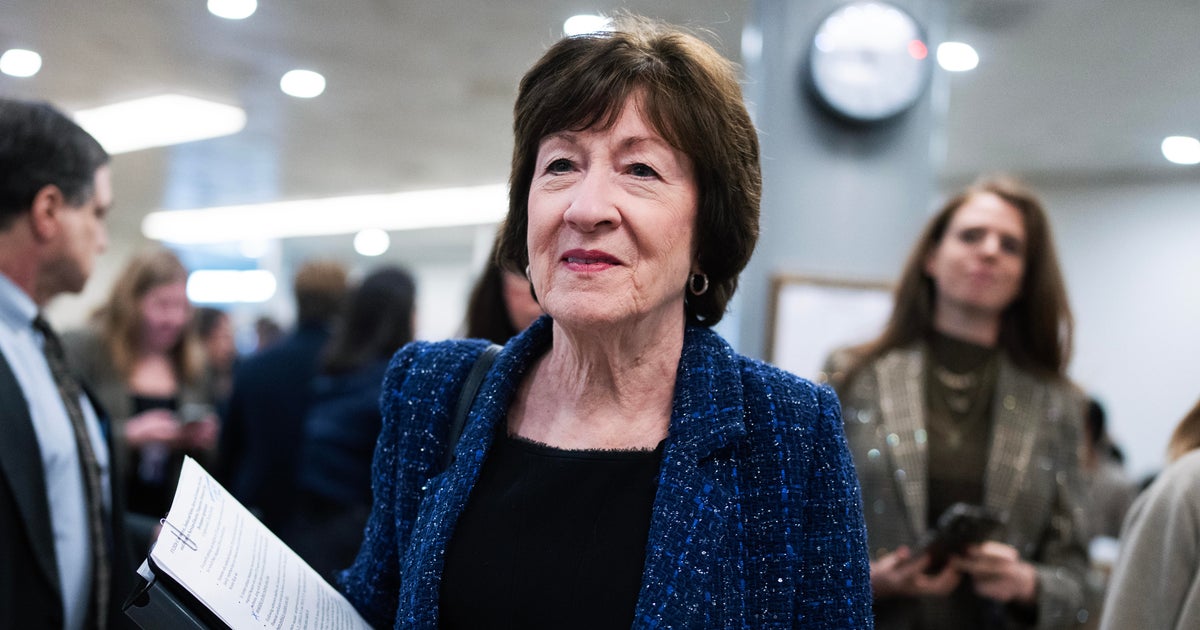

Senator Susan Collins Announces 2026 Reelection Bid in Maine’s Pivotal Senate Race
A Veteran Senator Steps Up for Another Term
Senator Susan Collins of Maine has officially thrown her hat into the ring for the 2026 Senate race, announcing her reelection campaign in a characteristically understated yet memorable fashion. The 73-year-old Republican senator chose an unconventional approach to share her political intentions with voters, posting a brief 15-second video on Tuesday that featured her unboxing a pair of New Balance sneakers—a subtle nod to her home state’s iconic footwear brand and a clever metaphor for hitting the campaign trail. “This is perfect for 2026,” Collins remarked while holding up one of the sneakers, before delivering her punchline: “Because, I’m running.” The announcement wasn’t exactly a surprise to political observers who have been watching Maine’s political landscape closely. Collins, who first took her Senate seat in 1996, is now seeking an unprecedented sixth term in the upper chamber, cementing her status as one of the longest-serving senators from the Pine Tree State. Her decision to run again sets the stage for what many political analysts believe could be one of the most consequential and closely watched Senate races of the 2026 election cycle.
Collins’ Political Legacy and Independent Streak
Over her nearly three decades in the Senate, Susan Collins has carved out a unique position within the Republican Party that has defined her political career and made her both an influential voice and a frequent source of controversy. Currently serving as the chair of the powerful Senate Appropriations Committee, Collins wields significant influence over the nation’s purse strings, helping determine how billions of federal dollars are allocated each year. This committee chairmanship represents one of the most prestigious and impactful positions in the Senate, giving her considerable leverage in negotiations and the ability to shape national policy through the budgetary process. However, what truly distinguishes Collins from many of her Republican colleagues is her reputation for independence and willingness to break ranks with her party on critical votes. She has become known as one of the most moderate and independent-minded members of the GOP conference, frequently crossing the aisle to work with Democrats on various issues and occasionally casting deciding votes that have frustrated conservative hardliners. This centrist approach has earned her both praise from constituents who value bipartisanship and criticism from party loyalists who view her occasional defections as disloyalty. Most notably, Collins has become a particular target of President Trump’s criticism, with their contentious relationship reaching a boiling point last month when the president publicly declared that Collins “should never be elected to office again”—a stunning rebuke from the leader of her own party that underscores the deep divisions within Republican ranks.
The Democratic Challenge and Party Divisions
While Collins has successfully navigated several Democratic challenges throughout her Senate career, the 2026 race presents unique obstacles that could test her political durability in ways previous contests have not. The political landscape in Maine has shifted considerably, as evidenced by the fact that Vice President Kamala Harris carried the state by nearly seven percentage points in the 2024 presidential election. This margin suggests that Maine voters are increasingly leaning Democratic in national races, potentially creating headwinds for Collins’ reelection effort. The Democratic side of the race, however, is shaping up to be a complicated affair, with a divisive primary that has exposed fault lines within the party. In October, Maine Governor Janet Mills entered the race after substantial recruitment efforts by Democratic Party leadership. The 78-year-old, two-term governor brings name recognition, executive experience, and a proven track record of winning statewide elections to the table, making her the establishment’s preferred candidate. Yet the Democratic primary has become a battleground between the party’s moderate establishment wing and its progressive faction. Progressive Democrats have rallied behind Graham Platner, a political newcomer who brings a compelling personal story as both a military veteran and an oyster farmer. Platner has positioned himself as an anti-establishment candidate, channeling frustration with traditional politics and offering voters what he frames as an authentic alternative to career politicians. This internal Democratic division could prove consequential, potentially weakening whichever candidate emerges from the primary or creating lasting rifts that could benefit Collins in the general election.
National Implications for Senate Control
The Maine Senate race carries implications far beyond state borders, potentially serving as a crucial battleground in the larger fight for control of the United States Senate. The current Senate composition includes 53 Republicans, giving the GOP a slim but workable majority that allows them to set the legislative agenda and control committee assignments. For Democrats to reclaim the majority in the Senate, they face a mathematical challenge that requires both defense and offense. The party would need to successfully defend seats in several competitive states where they currently hold office while simultaneously flipping four Republican-held seats to secure a majority. This makes every competitive race—including Maine’s—potentially decisive in determining which party controls the upper chamber of Congress. A Democratic victory in Maine wouldn’t just represent the loss of one Republican seat; it would represent the defeat of a committee chair with significant institutional knowledge and power, while simultaneously depriving Republicans of a seat they’ve held for three decades. The national parties are likely to pour substantial resources into Maine, recognizing that this race could very well determine whether Democrats can advance their legislative priorities or Republicans maintain their ability to block Democratic initiatives.
The Changing Political Dynamics in Maine
Maine’s political environment has become increasingly complex and difficult to predict in recent election cycles, creating both opportunities and challenges for candidates from both parties. The state has a long tradition of political independence, often defying easy categorization and producing electoral outcomes that don’t neatly align with national partisan trends. Maine voters have shown a willingness to split their tickets, supporting candidates from different parties for different offices, and the state’s ranked-choice voting system adds an additional layer of complexity to electoral strategy. Collins has historically benefited from her centrist reputation and personal brand as an independent voice, qualities that have allowed her to outperform other Republicans in a state that has trended increasingly Democratic in presidential contests. However, the political polarization that has intensified in recent years may be eroding the advantages that moderate candidates once enjoyed. Voters are increasingly making decisions based on national partisan concerns rather than individual candidate characteristics, which could make it harder for Collins to maintain the coalition that has sustained her through previous elections. Additionally, her votes on controversial issues—particularly her decision to support Justice Brett Kavanaugh’s confirmation to the Supreme Court—have galvanized opposition and created a more energized Democratic base eager to defeat her.
Looking Ahead to 2026
As the 2026 election cycle begins to take shape, the Maine Senate race stands out as a contest that will test fundamental questions about American politics in the current era. Can a moderate Republican still win in a state that has become increasingly Democratic in national elections? Will voters prioritize bipartisan credentials and seniority, or will they vote primarily based on party affiliation? Can an establishment Democrat fend off a progressive challenge, or will the party’s activist wing succeed in nominating a candidate more aligned with their values? These questions will be answered over the coming months as the campaigns take form and voters begin to engage more seriously with the choice before them. Collins’ announcement marks the official start of what promises to be an expensive, hard-fought, and closely watched campaign. Both parties recognize the stakes, and Maine voters can expect to see their state become a focal point of national political attention. The outcome of this race could reverberate far beyond Maine’s borders, potentially determining the balance of power in Washington and shaping the legislative landscape for years to come. As Collins laces up those New Balance sneakers and hits the campaign trail, she faces perhaps the most challenging race of her long political career—one that will test whether her brand of moderate Republicanism can still resonate with voters in an increasingly polarized political environment.