


Defense Team Seeks Removal of Top Justice Officials from White House Dinner Shooting Case
Conflict of Interest Claims Take Center Stage
In a bold legal maneuver that raises serious questions about prosecutorial impartiality, defense attorneys representing Cole Allen—the man accused of opening fire near the White House Correspondents’ Dinner—have filed a motion asking a federal judge to remove several top Justice Department officials from his case. The request specifically targets U.S. Attorney for D.C. Jeanine Pirro and acting Attorney General Todd Blanche, arguing that their presence at the dinner during the shooting transforms them from neutral prosecutors into potential victims and witnesses. This extraordinary situation has created what legal experts are calling an unprecedented conflict of interest in a high-profile case that has already captured national attention. The defense team’s argument hinges on a simple but compelling question: How can justice be served when those prosecuting a crime were themselves potentially targeted by the alleged perpetrator?
The motion filed Thursday evening opens with a powerful quote from FBI Director Kash Patel, who spoke at a press conference just two days after the frightening incident. Standing alongside Blanche and Pirro, Patel acknowledged the personal nature of the case by saying, “This one hits a little differently. We were all there.” Those five words—”We were all there”—now form the cornerstone of the defense’s argument that the prosecution team cannot maintain the objectivity required to ensure Allen receives a fair trial. Allen faces extremely serious charges including attempting to assassinate President Trump, assaulting a federal officer with a deadly weapon, and two gun-related counts. He has not yet entered a plea to any of these charges, and his legal team is clearly laying the groundwork for what promises to be a contentious legal battle that will test the boundaries of prosecutorial ethics and the American justice system’s commitment to fairness even in the most emotionally charged cases.
The Personal Connections That Complicate Justice
Allen’s attorneys have built their disqualification argument on two main pillars: the officials’ status as potential victims and their personal relationships with others involved in the case. Federal prosecutors have accused Allen of attempting to kill “high-ranking government officials” at the dinner—language that defense lawyers argue could easily encompass both Blanche and Pirro given their positions and presence at the event. But the conflict runs even deeper than their physical presence that night. The defense motion specifically highlights Pirro’s longstanding friendship with President Trump, a relationship that spans years and has been well-documented in media reports. This personal connection to the primary alleged target creates another layer of potential bias that the defense team argues makes it impossible for Pirro to approach the case with the dispassionate objectivity that justice demands.
Furthermore, Allen’s lawyers point to Pirro’s own words as evidence that she views herself as a victim of Allen’s alleged actions. In a CNN interview following the incident, Pirro described her harrowing experience in dramatic terms, stating she was “in that combat zone.” This characterization—using military language typically reserved for war scenarios—demonstrates how personally affected Pirro was by the events of that night. The defense team argues that such strong emotional reactions, while entirely understandable from a human perspective, are fundamentally incompatible with the prosecutorial duty to seek justice rather than vengeance. When a prosecutor sees themselves as having been in a “combat zone” created by the defendant, can they truly evaluate evidence fairly, make impartial charging decisions, and recommend appropriate sentences? These are the uncomfortable questions at the heart of this motion.
What Federal Rules Say About Recusal
The defense filing doesn’t rely solely on common sense arguments about fairness—it also cites specific Justice Department regulations that govern when prosecutors must step aside from cases. Internal DOJ rules explicitly direct employees to recuse themselves from criminal investigations where they may have a conflict of interest or maintain a personal relationship with people involved in the case. These rules exist precisely to prevent situations like this one, where the prosecutor’s personal involvement might cloud their judgment or create even the appearance of impropriety. The legal system recognizes that justice must not only be done but must also be seen to be done, and the presence of victim-prosecutors threatens public confidence in the proceedings. Allen’s attorneys are essentially asking the court to enforce the Justice Department’s own ethical standards, arguing that Pirro and Blanche have clear conflicts under the department’s rules yet have failed to voluntarily recuse themselves as those regulations require.
The motion poses questions that extend far beyond this single case, challenging fundamental assumptions about how the American justice system operates. “As this case proceeds closer to trial, the country and the world will continue to wonder—how can the American justice system permit a victim to prosecute a criminal defendant in a case involving them?” Allen’s lawyers wrote. They continued: “Or even—how can one of the victim’s closest friends prosecute the alleged perpetrator of the offense?” These aren’t merely rhetorical questions designed to score points in a legal filing. They cut to the core of what Americans expect from their justice system: fairness, impartiality, and the separation between victims and those who prosecute crimes on behalf of society as a whole. The prosecution of crimes is supposed to be undertaken by the state, not by individuals seeking personal justice for wrongs done to them. When those lines blur, the legitimacy of the entire process comes into question.
The Disturbing Details of the Alleged Attack
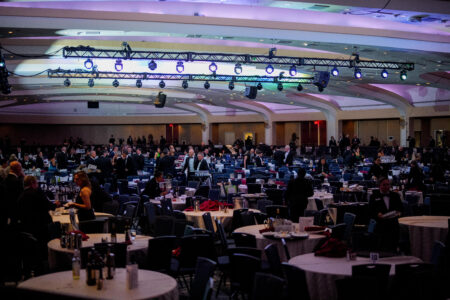
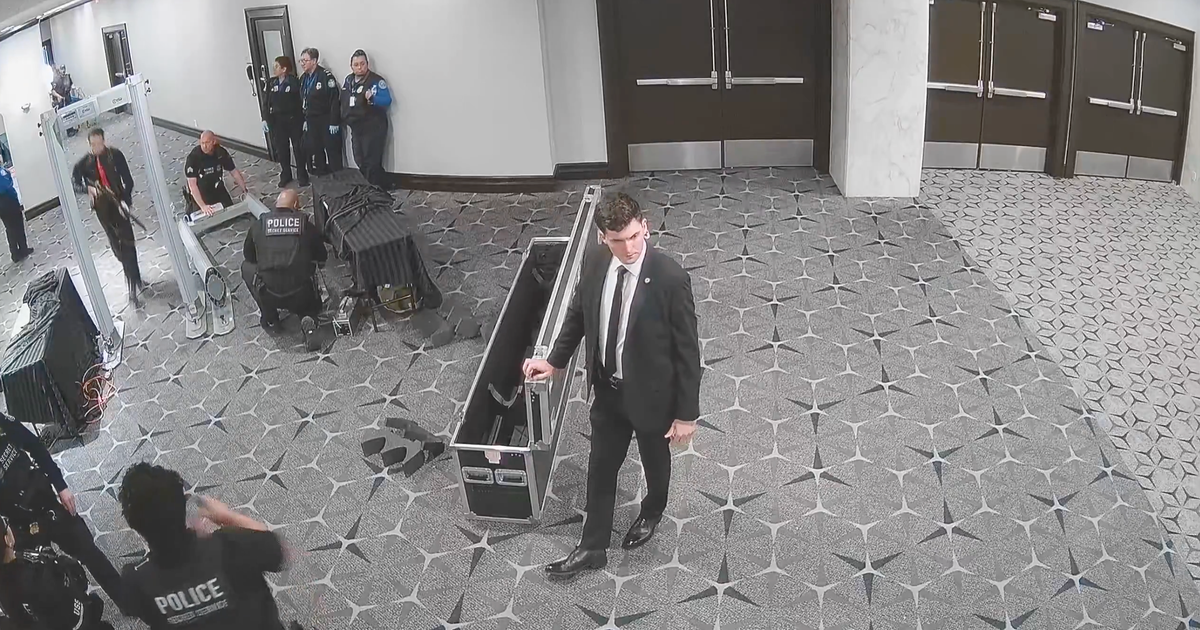
The charges Allen faces stem from what prosecutors describe as a terrifying sequence of events that unfolded during one of Washington’s most prominent annual gatherings. According to the government’s account, the 31-year-old Allen sprinted through a security checkpoint located one floor above where the White House Correspondents’ Dinner was taking place, armed with an alarming arsenal that included a handgun, a shotgun, and several knives. The situation quickly turned violent when Allen allegedly fired his shotgun at a security officer, with the blast striking the officer’s protective vest—a vest that very likely saved that officer’s life. The officer returned fire five times but didn’t hit Allen before other security personnel were able to take him into custody. The fact that no one was killed in this exchange appears to be more a matter of luck and protective equipment than any lack of deadly intent on Allen’s part.
Perhaps even more chilling than the attack itself is what prosecutors say they discovered afterward: an email Allen allegedly sent to family members on the night of the dinner that laid out his murderous intentions in disturbing detail. In this message, Allen purportedly claimed he planned to target Trump administration officials beyond just FBI Director Patel, with victims “prioritized from highest-ranking to lowest.” This suggests a calculated plan rather than an impulsive act of violence—a premeditated plot to systematically kill government leaders based on their position in the administration’s hierarchy. The dinner itself was attended by an extraordinary concentration of high-level targets, including President Trump himself, much of his Cabinet, and numerous other senior federal officials, all gathered in one ballroom for an event that combines politics, media, and entertainment. For someone with murderous intent toward the administration, it represented a target-rich environment unlike almost any other occasion on the political calendar.
The Path Forward and Broader Implications
As this case moves forward through the legal system, the Justice Department now faces a difficult decision about how to respond to the defense motion. CBS News has reached out to the DOJ for comment, but as of the filing, no response had been provided. The department’s options are limited and each carries significant consequences. They could agree to have Pirro, Blanche, and potentially other affected officials recuse themselves, bringing in prosecutors from outside Washington or from other parts of the Justice Department who had no connection to the dinner. This would address the conflict of interest concerns but might be seen as the department admitting the defense has a valid point. Alternatively, they could fight the motion, arguing that senior officials can separate their personal experiences from their professional duties, or that their supervisory roles don’t constitute direct enough involvement to require recusal. However, this approach risks creating an appearance of bias that could taint any eventual conviction and provide grounds for appeal.
The resolution of this motion will likely set important precedents for how the justice system handles cases where government officials are both victims and prosecutors. It forces uncomfortable but necessary conversations about the limits of prosecutorial involvement and whether the normal rules that apply in typical cases should be modified when the alleged crime targets the very officials responsible for prosecuting it. Beyond the legal technicalities, this case touches on something deeply human: whether people who have experienced trauma and feared for their lives can truly set aside those emotions when making decisions that will determine another person’s fate. Allen’s defense team is betting that most people—including the judge who will rule on this motion—will answer that question with a resounding no. They’re arguing that asking Pirro and Blanche to prosecute the man accused of threatening their lives isn’t just legally problematic; it’s asking something that goes against human nature itself. As the case proceeds, it will test whether America’s justice system can live up to its ideals of fairness and impartiality even when those principles prove most difficult to uphold.