


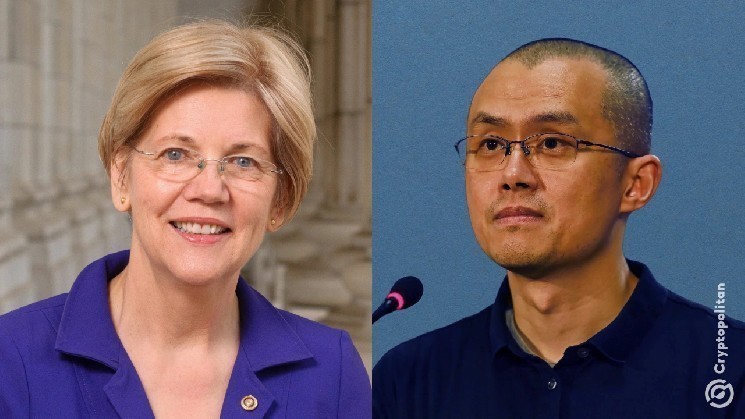

Senators Demand Independent Investigation Into Binance’s Compliance With 2023 Settlement
Growing Concerns Over Cryptocurrency Exchange’s Adherence to Anti-Money Laundering Agreement
A coalition of Democratic senators has raised serious questions about whether Binance, the world’s largest cryptocurrency exchange, is living up to its promises made in a landmark 2023 legal settlement. Led by Senator Elizabeth Warren, eleven lawmakers have formally requested that Attorney General Pam Bondi and Treasury Secretary Scott Bessent launch a comprehensive and impartial review of the company’s operations. Their concerns center on troubling reports suggesting that despite paying over $4 billion in penalties and pledging to reform its practices, Binance may have slipped back into the very behaviors that got it into trouble in the first place. The senators are particularly worried that the company’s close connections to the Trump family and the current administration’s generally favorable stance toward cryptocurrency might prevent a truly independent investigation from taking place. This situation highlights the ongoing tension between the rapidly evolving crypto industry and lawmakers who believe stronger oversight is necessary to prevent financial crimes.
The Background: Binance’s Massive Settlement and Broken Promises
To understand why senators are sounding the alarm now, it’s important to look back at what happened in 2023. That year, Binance reached a historic settlement with U.S. authorities after admitting to serious failures in preventing money laundering on its platform. The exchange agreed to pay more than $4 billion in fines—one of the largest penalties ever imposed on a financial services company. As part of that agreement, Binance didn’t just write a check and move on. The company specifically committed to allowing U.S. government officials to monitor its operations to ensure it was following proper anti-money laundering protocols and complying with sanctions laws. This oversight was meant to be a safeguard, a way to rebuild trust and demonstrate that Binance was serious about cleaning up its act.
However, according to the senators’ letter, recent reports paint a very different picture. These reports suggest that approximately $1.7 billion in digital assets may have moved through Binance’s platform to Iranian entities, including some groups that have been designated as terrorist organizations by the United States government. Specifically, the senators cite concerns about transactions linked to the Houthis and the Islamic Revolutionary Guard Corps—both groups that U.S. sanctions are explicitly designed to cut off from the international financial system. If these allegations are true, they would represent not just a violation of Binance’s settlement terms, but potentially serious breaches of national security regulations. The sheer scale of the alleged transactions—$1.7 billion—suggests this wasn’t a matter of a few transactions slipping through the cracks, but potentially a systemic problem with how the exchange monitors and controls the flow of money across its platform.
Binance’s Forceful Denial and Claims of Industry-Leading Compliance
Binance has responded to these allegations with strong denials and detailed explanations of its compliance efforts. When the Wall Street Journal published an article alleging that Binance had fired employees who raised concerns about approximately $1 billion in Iranian-linked transactions, the company’s CEO Richard Teng and its legal team at the law firm Withers Bergman immediately pushed back hard. They described the WSJ article as “defamatory” and “categorically false,” arguing that the newspaper had ignored detailed corrections and factual information that Binance had provided before publication. This wasn’t just a casual disagreement—Binance’s lawyers sent a formal letter to the WSJ editorial board challenging the accuracy of the reporting.
Beyond simply denying the allegations, Binance has also tried to demonstrate its compliance efforts with concrete numbers. The company states that between January 2024 and January 2026, it reduced its direct exposure to major Iranian cryptocurrency exchanges by more than 97.3%—a dramatic decrease that, if accurate, would suggest the company has been actively working to cut ties with problematic entities. Binance also explains that while public blockchain technology means anyone can technically attempt to send cryptocurrency to any address, the company’s responsibility is to monitor these transactions and block or freeze funds when appropriate. The exchange claims it is doing this “better than any of their global peers,” positioning itself as a leader rather than a laggard in compliance.
To back up these claims, Binance points to massive investments in its compliance infrastructure. The company says it has spent “hundreds of millions of dollars” building out systems to detect and prevent illegal transactions. Perhaps most notably, Binance’s compliance team has grown to include over 1,500 people—roughly 25% of the company’s entire global workforce. This is a significant commitment of resources, suggesting that at least on paper, compliance has become a central focus of the business. However, the senators’ concerns suggest that spending money and hiring people may not be enough if the company’s culture and actual practices haven’t fundamentally changed.
The Trump Connection: Why Democrats Fear Political Interference
What makes this situation particularly sensitive is the web of connections between Binance and the Trump family, which has led Democratic lawmakers to question whether any investigation can truly be impartial. The most prominent of these connections is President Trump’s decision in October 2025 to grant a “full and unconditional pardon” to Changpeng Zhao, Binance’s founder and former CEO. Zhao had been serving a prison sentence for failing to maintain adequate anti-money laundering controls at Binance—the very issue that led to the 2023 settlement. He had only served four months when Trump pardoned him, describing the prosecution as part of a “war on cryptocurrency” waged by the previous administration.
Senator Warren and her colleagues view this pardon as deeply problematic. From their perspective, it sends a dangerous message: that wealthy cryptocurrency executives can violate serious financial laws and, as long as they have the right political connections, receive forgiveness from the very administration that’s supposed to be enforcing those laws. The pardon wasn’t granted based on new evidence of innocence or because Zhao’s sentence was considered unjust by legal experts—it appeared to be a political decision aligned with the Trump administration’s generally pro-cryptocurrency stance.
But the pardon is just one piece of a larger puzzle. Reports indicate that Binance has become a major supporter of World Liberty Financial, a cryptocurrency venture that President Trump and his sons have backed. The exchange has reportedly used its influence with its massive user base—some 275 million people worldwide—to promote the $USD1 stablecoin associated with this venture. Even more eyebrow-raising are reports that an Emirati fund used this very stablecoin to make a $2 billion investment in Binance itself. This creates a circular financial relationship that could potentially generate millions of dollars annually for the Trump family through interest and other returns. When the people responsible for investigating a company have such close financial and political ties to that company, it’s natural to question whether they can be objective. This is precisely why the senators are demanding that Attorney General Bondi and Treasury Secretary Bessent provide assurances that any investigation will be conducted fairly and without political interference. They’ve set a deadline of March 13, 2026, for these officials to explain what steps they’re taking to review Binance’s conduct.
Expanding Investigations: Senator Blumenthal Digs Deeper
The concern about Binance isn’t limited to Senator Warren’s group. Senator Richard Blumenthal has launched his own inquiry through the Senate’s Permanent Subcommittee on Investigations, which has broad powers to examine potential wrongdoing. Blumenthal’s investigation is focusing on specific aspects of how money may have moved through Binance’s platform in ways that violated U.S. sanctions. In particular, he’s seeking records related to two Hong Kong-based entities that were allegedly used as conduits to funnel money toward Iran. Hong Kong has long been a financial hub, but it has also been identified as a location where sanctions can be evaded through complex corporate structures that obscure the true origin and destination of funds.
By focusing on these specific entities, Blumenthal’s investigation could uncover the detailed mechanisms of how sanctioned transactions might have occurred. Were these Hong Kong companies legitimate businesses that were exploited without their knowledge, or were they specifically created to help move money in ways that bypassed sanctions? How did Binance’s monitoring systems—which the company claims are industry-leading—fail to flag these transactions if they were indeed problematic? These are the kinds of questions that a thorough investigation should answer. The fact that multiple senators are pursuing different angles of investigation suggests this issue has become a significant priority for Democrats in Congress, who view cryptocurrency regulation as an important area where the Trump administration may be too lenient.
What This Means for Cryptocurrency Regulation and Accountability
This developing situation represents much more than just questions about one company’s compliance with a settlement agreement. It goes to the heart of how cryptocurrency will be regulated in the United States and whether powerful companies in this space will be held to the same standards as traditional financial institutions. Banks and other conventional financial services companies face strict requirements around anti-money laundering and sanctions compliance, with severe penalties for violations. If cryptocurrency exchanges can avoid these same standards—or can violate them and then receive political pardons and favorable treatment—it creates an uneven playing field and potentially opens dangerous loopholes for money laundering, terrorist financing, and sanctions evasion.
The senators’ demands for an impartial investigation reflect a broader concern that the cryptocurrency industry’s political influence may be undermining enforcement of financial crimes laws. When a company pays $4 billion in fines and makes commitments to reform, but then allegedly returns to problematic practices with little consequence, it suggests that penalties alone aren’t enough—there needs to be consistent, politically-independent oversight. The March 13, 2026 deadline that senators have given to the Attorney General and Treasury Secretary will be an important moment. How these officials respond will signal whether the Trump administration is willing to enforce cryptocurrency regulations strictly and fairly, or whether political and financial connections will trump law enforcement priorities. For the millions of Americans who are increasingly investing in cryptocurrency, and for the integrity of the U.S. financial system that sanctions help protect, the answer to this question matters enormously. The coming weeks should reveal whether Binance will face genuine scrutiny or whether its connections will shield it from accountability.