


SpaceX Launches Crew 12 to International Space Station on Friday the 13th
A Lucky Launch Despite Superstitions
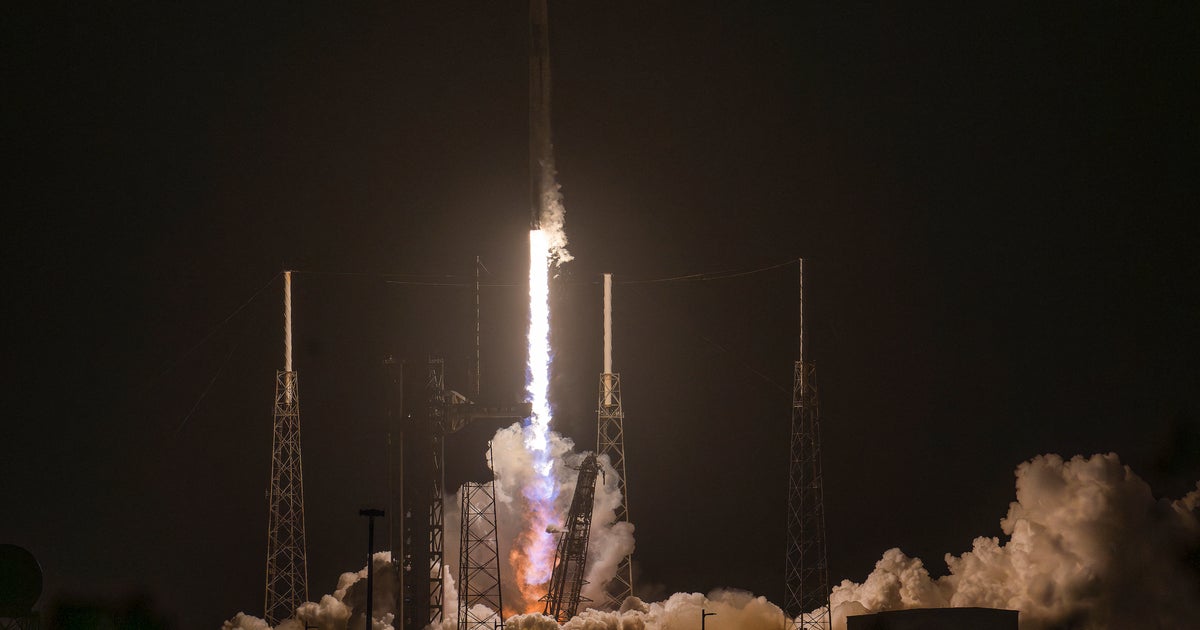
In a mission that proved Friday the 13th can indeed be a fortunate day, SpaceX successfully launched four astronauts to the International Space Station in the early morning hours of February 13, 2026. The Crew 12 mission lifted off from Cape Canaveral Space Force Station at 5:15 a.m. EST, lighting up the pre-dawn Florida sky with a spectacular display as the Falcon 9 rocket streaked northeastward toward orbit. Commander Jessica Meir, pilot Jack Hathaway, European Space Agency astronaut Sophie Adenot, and Russian cosmonaut Andrey Fedyaev are now on their way to boost the station’s crew from three back to its full complement of seven members. The launch proceeded smoothly after weather-related delays earlier in the week, with the crew scheduled to dock with the ISS on Saturday around 3:15 p.m. “It turns out Friday the 13th is a very lucky day,” SpaceX Launch Control radioed to the crew once they reached orbit, to which Commander Meir enthusiastically responded, “That was quite a ride.” The mission comes at a time when NASA’s ambitious Artemis II moon mission remains on hold due to technical challenges, allowing SpaceX to maintain America’s continuous presence in space through reliable crew rotation missions.
Scheduling Changes and Launch Delays
The path to launch for Crew 12 was anything but straightforward, reflecting the complex choreography required for modern space operations. Originally, the mission was scheduled to launch after NASA’s Artemis II crew completed their historic journey around the moon. However, hydrogen fuel leaks discovered during a “wet-dress rehearsal” countdown test on February 2 forced NASA to delay the Artemis II mission to early March, opening a window for Crew 12 to launch earlier than planned. NASA initially moved the Crew 12 launch date up to February 11, but Mother Nature had other plans. High winds in the Atlantic Ocean, where the crew would need to make an emergency splashdown if something went wrong during ascent, prompted mission managers to stand down until Friday when calmer seas and more favorable conditions were forecast. Meanwhile, nearby at Launch Pad 39B, engineers conducted tests on the massive Space Launch System rocket intended for Artemis II, checking new seals designed to prevent the hydrogen leaks that had plagued earlier attempts. Unfortunately, that test didn’t go as planned due to what sources described as a frozen filter in ground equipment, adding another hurdle to overcome before the moon mission can proceed.
An Experienced and Diverse Crew
The Crew 12 mission brings together a fascinating blend of experience and fresh perspectives that exemplifies international cooperation in space exploration. Commander Jessica Meir is a returning space station veteran with a Ph.D. in marine biology who made history during her 2019-20 mission by participating in three all-female spacewalks alongside Christina Koch, who is now preparing for the Artemis II moon mission. Cosmonaut Andrey Fedyaev also brings valuable experience, having previously flown to the station aboard a Crew Dragon in 2023. He joined Crew 12 in December as a replacement for veteran cosmonaut Oleg Artemyev, who was reportedly removed from the mission for violating security restrictions during training at SpaceX’s California headquarters, though the Russian space agency only stated he was “reassigned to other work.” For pilot Jack Hathaway and ESA astronaut Sophie Adenot, this marks their first journey to space, but both bring impressive operational backgrounds. Hathaway is a veteran F/A-18E fighter pilot with more than 500 aircraft carrier landings to his credit, while Adenot is a French Air Force helicopter test pilot with over 3,000 hours of flight time. She’s also an accomplished sky and SCUBA diver and a certified yoga instructor. Adenot represents only the second French woman to fly in space, following physician Claudie Haigneré who inspired her as a teenager watching from Earth in 1996.
Urgent Mission Following Medical Emergency
The accelerated timeline for Crew 12’s launch wasn’t just about shuffling schedules around the delayed moon mission—it was driven by operational necessity following an unexpected early return of the previous crew. Crew 11, consisting of commander Zena Cardman, co-pilot Mike Fincke, Japanese astronaut Kimiya Yui, and cosmonaut Oleg Platonov, was originally scheduled to return to Earth around February 20 after a proper handover with their replacements. However, NASA ordered them home on January 15 after one crew member experienced an undisclosed medical issue. While all four appeared healthy and in good spirits at their post-flight news conference, their early departure created a staffing crisis aboard the station. NASA astronaut Chris Williams found himself as the sole American crew member operating systems in the U.S. segment of the complex, working alongside Russian commander Sergey Kud-Sverchkov and fellow cosmonaut Sergey Mikaev, who had arrived in November aboard a Soyuz spacecraft. Space Station Program Manager Dina Contella explained the urgency: “What it means is, really, there’s just fewer hands on board to do some of the work. On the U.S. operating segment, if we were to have a major failure, then we would like to have a second USOS crew member to be able to go out and perform a complex spacewalk.” NASA research had essentially come to a standstill, making the arrival of Crew 12 critical to restoring full operations.
Scientific Research and Life Aboard the Station
During their approximately eight-month stay aboard the International Space Station, the Crew 12 astronauts will conduct a wide-ranging program of scientific research aimed at enabling longer space missions and improving life on Earth. The experiments span multiple disciplines, from studying how microgravity affects bone and muscle health to examining blood flow changes and imaging astronauts’ brains before and after flight to understand structural changes that occur in space. One particularly interesting focus involves vision changes that some long-duration astronauts experience, apparently caused by alterations to the shape of the eye over time. Commander Meir has personal experience with this phenomenon—she needed glasses before her first flight but her vision improved to an impressive 20-15 during her time in space. “Pretty interesting for me, it actually turned out to be quite advantageous,” she noted, while emphasizing the importance of collecting more data to ensure no long-term damage occurs. The crew will also test new exercise equipment developed by the European Space Agency designed to help astronauts stay fit during future missions to the moon and Mars, and they’ll work with landing simulator software to understand how microgravity might affect astronauts setting down on other worlds. Sophie Adenot and Jessica Meir will participate in an experiment called Relax Pro that examines how meditation and mindfulness can benefit astronauts during long-duration missions—research that could prove valuable for the mental health challenges of future deep space exploration.
Personal Connections and Life in Orbit
Beyond the rigorous scientific work, the Crew 12 mission highlights the very human side of space exploration, with astronauts balancing professional duties with personal relationships and the sacrifices required for this extraordinary career. Jessica Meir is particularly excited about the possibility of a ship-to-ship call with the Artemis II crew, as her spacewalking partner Christina Koch is aboard, along with her astronaut classmate Victor Glover and close friends Reid Wiseman and Jeremy Hansen. “We’re all very excited to be all in space at the same time,” she said before the moon mission delay. The crew also plans to bring art and music to the station—Meir is bringing a piccolo while Fedyaev plans to play the harmonica he brought on his first flight. “We used to sing together, and it was like karaoke,” Fedyaev recalled from his previous mission when three guitars were aboard. “We sang different languages, or I would play the guitar, and everybody would sing the words from the song they looked up online.” For Meir, this mission carries different emotional weight than her first flight. She’s now married with a three-year-old daughter, and leaving her child behind adds complexity to the adventure. Yet she remains philosophical: “Everything that we’re doing on board the space station is so exciting, it keeps us going, keeps us invigorated, and it’s easy to not miss things back at home. I hope that what we’re doing will be exciting enough and important enough, noteworthy enough, that one day when she’s old enough, she’ll appreciate that time away.” As the Crew Dragon approaches the International Space Station, these four space travelers carry with them not just scientific instruments and supplies, but the hopes and dreams of those who look skyward and imagine humanity’s future among the stars.