


All Access with Linsey Davis: Stephen A. Smith
The Journey of Sports Broadcasting’s Most Recognizable Voice
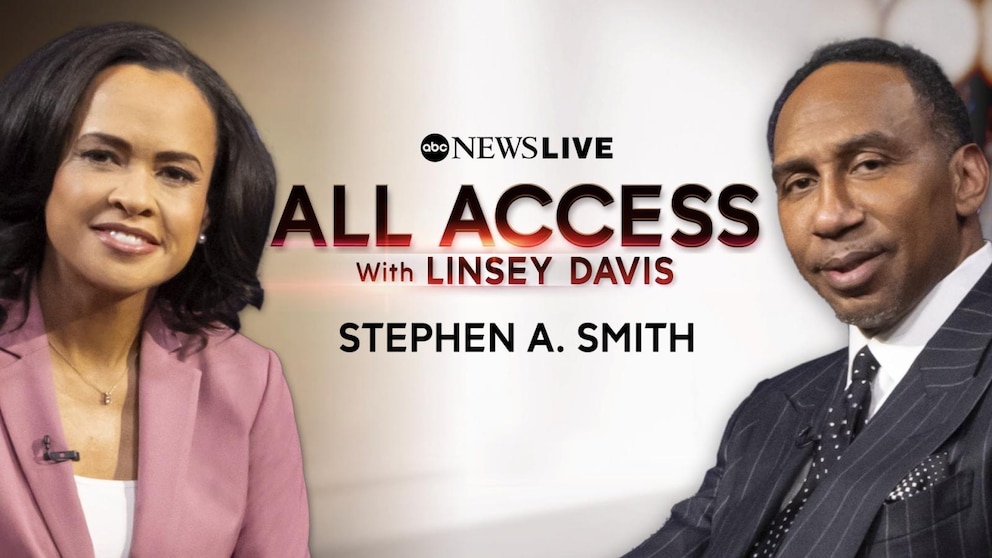
Stephen A. Smith has become one of the most iconic and polarizing figures in sports media today. In an intimate conversation with ABC News anchor Linsey Davis, Smith opened up about his remarkable journey from humble beginnings in Queens, New York, to becoming the face of ESPN’s flagship debate show “First Take” and one of the highest-paid personalities in sports broadcasting. His story is one of perseverance, determination, and an unwavering belief in his own abilities, even when others doubted him. Smith’s rise to prominence wasn’t handed to him on a silver platter – it came through years of hard work, grinding through the ranks of journalism, and developing a unique voice that would eventually make him impossible to ignore. During the conversation, Smith reflected on the challenges he faced growing up, the mentors who shaped his career, and the principles that have guided him through decades in an industry where many flame out after just a few years.
What makes Stephen A. Smith’s story particularly compelling is his authenticity and willingness to embrace both his supporters and his critics. He’s never been one to shy away from controversy or tone down his opinions to make others comfortable. This boldness, which has become his trademark, actually stems from deep-rooted values instilled in him during his upbringing. Smith spoke candidly with Davis about growing up in the Hollis section of Queens, where he learned early on that survival required both mental toughness and the ability to communicate effectively. His mother, in particular, played a crucial role in his development, encouraging him to pursue education and to never settle for mediocrity. Those early lessons about self-advocacy and the importance of being heard would later become the foundation of his broadcasting style. Smith also discussed how witnessing economic struggles in his community fueled his ambition to create a better life for himself and his family, driving him to excel academically and eventually earn a basketball scholarship to Winston-Salem State University, a historically Black college in North Carolina.
From Print Journalism to Broadcasting Dominance
Smith’s path to television fame began in the world of print journalism, a foundation he credits with making him the broadcaster he is today. After college, he worked his way through various newspapers, eventually landing at the Philadelphia Inquirer, where he covered the Philadelphia 76ers during some of the franchise’s most interesting years. It was during this time that Smith developed his reporting chops, learning how to cultivate sources, break stories, and develop the insider knowledge that would later set him apart from other talking heads on television. Unlike many of today’s media personalities who jump straight to social media or broadcasting, Smith spent years doing the unglamorous work of beat reporting – attending practices, building relationships with players and coaches, and writing daily game coverage. This experience gave him credibility that pure entertainers in sports media simply don’t possess. When he eventually transitioned to television, Smith brought with him a reporter’s instincts and a deep understanding of the games and athletes he discussed. He shared with Davis that this journalism background has been invaluable, especially when critics dismiss him as merely a provocateur. Smith can point to actual reporting experience and genuine relationships built over decades as evidence that his opinions are informed by real knowledge, not just designed to generate clicks or controversy.
The transition from respected print journalist to television personality wasn’t entirely smooth, however. Smith discussed with Davis the challenges of adapting his skills to a visual medium and learning how to be entertaining while maintaining journalistic integrity. Early television appearances were sometimes awkward, and he had to develop his on-camera presence through trial and error. But Smith possessed something that couldn’t be taught – an authentic passion for sports and an ability to articulate complex ideas in ways that resonated with average fans. His breakthrough came with “Quite Frankly with Stephen A. Smith,” his first show on ESPN2, which ran from 2005 to 2007. While that show was eventually canceled, it provided Smith with valuable experience and exposure. The cancellation could have ended his television career, but instead, Smith used it as a learning experience. He continued to appear on various ESPN programs, steadily refining his craft and building his audience. The launch of “First Take” alongside Skip Bayless gave Smith the perfect platform to showcase his debate skills, passionate delivery, and encyclopedic sports knowledge. The chemistry between Smith and Bayless created must-see TV for sports fans, and the show’s success transformed Smith from a recognizable sports journalist into a cultural phenomenon.
Embracing Controversy and Building a Brand
One of the most fascinating aspects of Stephen A. Smith’s career is his relationship with controversy. In his conversation with Linsey Davis, Smith addressed the criticism he’s received over the years for his bombastic style, occasionally inflammatory statements, and what some perceive as hot takes designed purely for ratings. Smith doesn’t deny that he’s opinionated or that he sometimes makes provocative statements, but he pushes back against the notion that he’s simply a shock jock without substance. He explained that his passionate delivery reflects genuine beliefs and that he’s built his career on being willing to say what others won’t. Smith also acknowledged that he’s made mistakes over the years – comments that missed the mark or statements he wishes he could take back. However, rather than hiding from these moments, he’s used them as opportunities for growth and reflection. What separates Smith from many other media personalities is his willingness to apologize when he’s wrong and to engage with criticism rather than dismissing it entirely. This combination of confidence and accountability has actually strengthened his brand over time, as audiences appreciate someone who stands by their convictions while also demonstrating humility when necessary.
Smith also discussed the business side of building his personal brand with Davis, offering insights into how he’s leveraged his platform into broader opportunities. Beyond “First Take,” Smith has expanded into podcasting, appearing on various ESPN platforms, and even exploring opportunities outside of sports commentary. He’s become a sought-after voice on cultural and social issues, often being asked to weigh in on topics far beyond the basketball court or football field. This evolution reflects Smith’s understanding that modern media personalities need to be multi-dimensional and adaptable. He’s also been strategic about salary negotiations, reportedly becoming one of the highest-paid personalities at ESPN with a contract worth approximately $12 million per year. Smith spoke about the importance of knowing your worth and being willing to advocate for yourself in business dealings, lessons that extend beyond the sports media world. For young journalists and aspiring broadcasters, Smith’s trajectory offers a masterclass in personal branding – finding your authentic voice, staying consistent with your values, doubling down on what makes you unique, and never apologizing for demanding what you’ve earned.
Life Lessons and the Responsibility of Influence
Throughout the conversation with Linsey Davis, Stephen A. Smith reflected on the deeper lessons he’s learned throughout his career and the responsibility that comes with having a massive platform. With millions of viewers and social media followers, Smith recognizes that his words carry weight, particularly in communities of color where he’s seen as a successful Black man in an industry that hasn’t always been welcoming to diversity. Smith discussed his commitment to using his platform responsibly, even as he maintains his provocative style. He’s been outspoken about social justice issues, racial inequality, and the challenges facing Black Americans, often bringing these perspectives to sports conversations in ways that make some viewers uncomfortable but spark necessary dialogue. Smith also talked about his role as a mentor to younger journalists, particularly young Black reporters trying to break into the industry. He’s keenly aware that his success opens doors for others and takes that responsibility seriously, offering advice and support to up-and-coming talent. At the same time, Smith refuses to be constrained by others’ expectations of how he should use his platform, maintaining that authenticity is more valuable than being a perfect role model.
The conversation also touched on Smith’s personal life and how he balances the demands of being a public figure with maintaining privacy and normalcy. Despite his fame, Smith has managed to keep much of his personal life out of the spotlight, a deliberate choice in an era when many celebrities share every detail on social media. He spoke about the importance of having spaces where he can just be Stephen and not “Stephen A. Smith, the character,” and how that separation helps maintain his mental health and relationships. Smith also reflected on loss and adversity, including the deaths of loved ones and professional setbacks that tested his resilience. These experiences have given him perspective that informs how he approaches his work and life. Rather than becoming bitter or cynical, Smith has channeled difficult experiences into motivation, using pain as fuel for continued success. This vulnerability and willingness to discuss life’s challenges made the conversation with Davis particularly powerful, showing a side of Stephen A. Smith that audiences don’t always see during his spirited debates on “First Take.” It’s a reminder that behind the big personality and strong opinions is a thoughtful person who’s lived through real struggles and emerged stronger.
Looking Forward: Legacy and What’s Next
As Stephen A. Smith enters what many would consider the peak years of his career, he’s also thinking about legacy and what comes next. In his discussion with Linsey Davis, Smith revealed ambitions that extend beyond sports broadcasting, including potential opportunities in entertainment, business ventures, and continued expansion of his media empire. He’s interested in creating opportunities for others, potentially developing talent and producing content that reflects diverse voices and perspectives often underrepresented in mainstream media. Smith also talked about the evolution of sports media and how he’s adapting to changing consumption patterns, from traditional television to streaming platforms, podcasts, and social media. His ability to remain relevant across multiple platforms demonstrates an understanding that longevity in media requires constant evolution. At the same time, Smith is thinking about how he wants to be remembered – not just as an entertaining personality who generated ratings, but as someone who contributed meaningfully to sports journalism, opened doors for others, and wasn’t afraid to speak truth even when it was unpopular. The conversation revealed a man who’s achieved remarkable success but isn’t content to simply rest on his laurels; instead, he’s looking toward the future with the same hunger and determination that got him here in the first place, proving that even at the top, the journey continues.