


Elite K9 Units Stand Guard at Super Bowl: Meet the Four-Legged Heroes Protecting America’s Biggest Game
When millions of football fans turn their attention to one of the most anticipated sporting events of the year, an elite team of four-legged heroes will be working tirelessly behind the scenes to ensure everyone’s safety. As the Seattle Seahawks and New England Patriots prepare to face off in the Super Bowl, the Bureau of Alcohol, Firearms, Tobacco and Explosives has deployed some of their most highly trained operatives to the Bay Area—and they happen to have wet noses and wagging tails.
The Canine Guardians: Carolina and Belle Lead the Security Effort
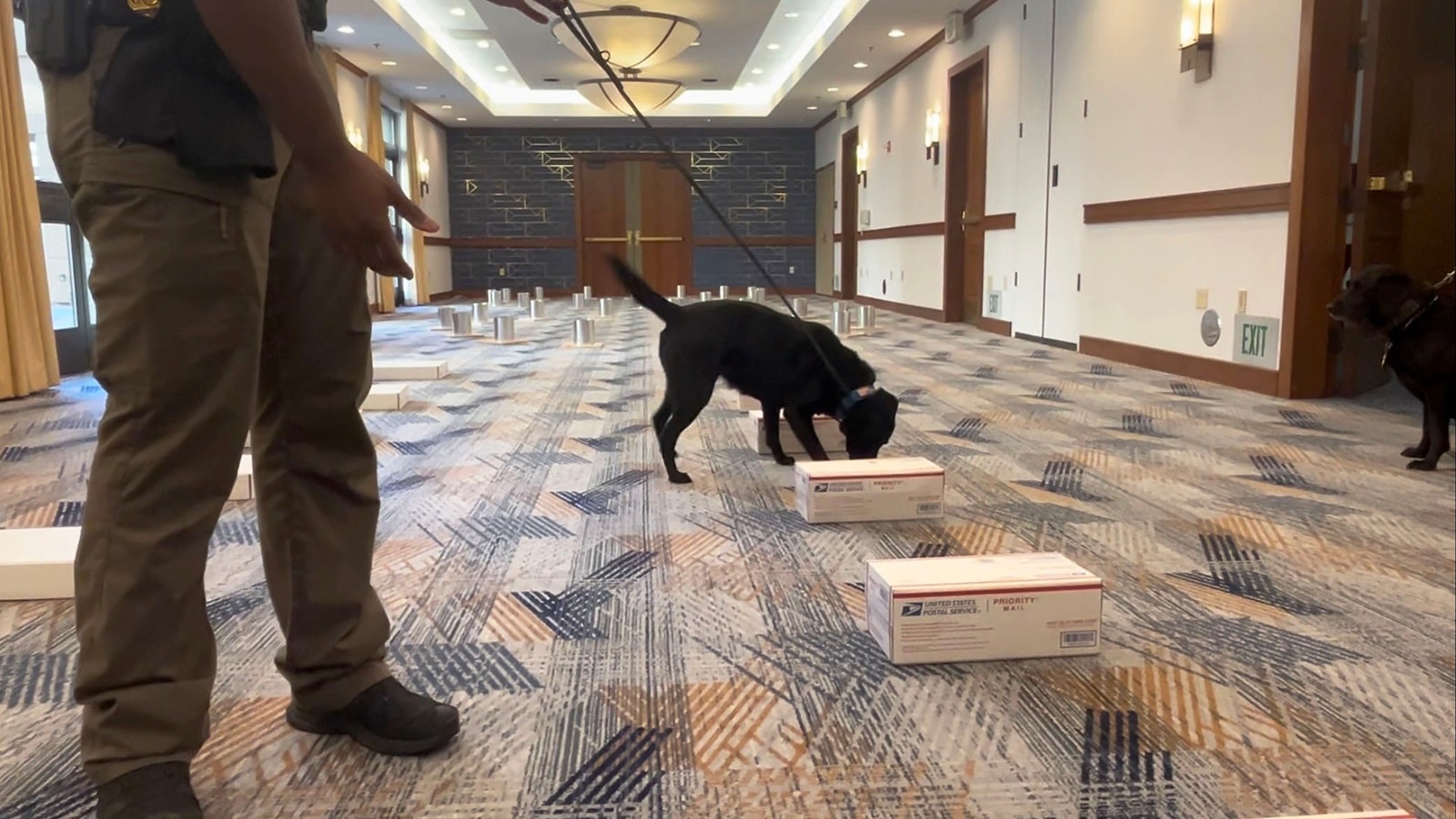
At the forefront of this massive security operation are two exceptional black Labrador retrievers named Carolina and Belle. These aren’t your average family pets—they’re highly specialized bomb-detection experts who represent the pinnacle of K9 training and dedication. Carolina, who is based in Las Vegas, and Belle, stationed in San Francisco, are two of the primary canine units assigned to patrol the Super Bowl venue and surrounding areas. However, they’re not working alone. The ATF has brought in more than five additional bomb-sniffing dogs to support the security efforts across the Bay Area, creating a comprehensive network of canine surveillance that will help protect the tens of thousands of attendees, players, and staff involved in Super Bowl weekend festivities.
These remarkable animals have become an indispensable part of modern security operations, particularly for high-profile events that could potentially be targets for those seeking to cause harm. Their natural abilities, combined with extensive training and the strong bond they share with their handlers, make them uniquely qualified to detect threats that even the most sophisticated technology might miss. The presence of these K9 teams provides both a practical security measure and a reassuring symbol of the comprehensive protective efforts being undertaken to ensure the Super Bowl remains a celebration of athletic excellence rather than a security concern.
The Making of an Elite Bomb-Detection Dog: A Six-Month Journey
What sets dogs like Carolina and Belle apart from ordinary canines is the incredibly rigorous training program they complete before ever setting paw in a high-stakes environment like the Super Bowl. These exceptional animals undergo an intensive 24-week training regimen that transforms them from promising puppies into professional security assets capable of detecting explosive materials in even the most challenging conditions. The training program is carefully structured to build upon each skill progressively, ensuring that by graduation, these dogs are prepared for virtually any scenario they might encounter in the field.
The training begins with fundamental obedience work, establishing the discipline and focus these dogs will need throughout their careers. From there, they progress to specialized bomb detection training, where they learn to identify the scent signatures of various explosive materials, firearms, and ammunition. Their sensitive noses—which can detect scents at concentrations nearly 100,000 times lower than humans can perceive—make them natural candidates for this work, but it takes months of patient, consistent training to channel this ability into reliable, actionable alerts that their handlers can trust implicitly.
The final phase of their preparation involves “advanced training” conducted alongside their designated handlers. This portion of the program is crucial because it develops the communication and trust between dog and handler that makes these teams so effective. During this phase, they learn to work together to respond to complex, real-world situations that might involve crowds, noise, distractions, and the pressure of time-sensitive searches. By the time Carolina, Belle, and their colleagues complete this comprehensive training program, they’ve become part of an elite group—they’re among just 16 dog teams currently operating in the Bay Area, representing a significant investment in specialized security capabilities.
A Massive Undertaking: The Scope of Super Bowl Security Operations
The security operation surrounding the Super Bowl is nothing short of extraordinary in its scale and complexity. According to Alex Buenaventura, ATF assistant special agent in charge of the San Francisco field division, the canine teams will be conducting over 200 searches daily across multiple locations, including both the main venue in Santa Clara and various events and locations in downtown San Francisco. This staggering number illustrates just how thorough security agencies are being in their efforts to protect this high-profile event. Every venue, vehicle, package, and suspicious item must be carefully examined, and the K9 teams play a central role in making this massive undertaking possible.
“Our canines are vital to keeping security for Super Bowl and the corresponding events,” Buenaventura explained to ABC News during a demonstration of Carolina and Belle’s capabilities. “They’re able to detect explosives, and through their rigorous training, they’re very reliable in finding and locating explosives, firearms and ammunition.” This reliability is what makes these K9 teams so valuable—in security work, there’s no room for error, and the consistent performance of these highly trained animals provides a level of assurance that complements technological detection methods and human vigilance.
The ATF’s contribution to Super Bowl security extends well beyond the canine teams, though they certainly represent one of the most visible and effective components. The agency is also providing field intelligence gathering and fire response capabilities, working in concert with numerous other federal, state, and local law enforcement agencies. This collaborative approach ensures that every potential security concern is addressed from multiple angles, creating overlapping layers of protection that make it extremely difficult for any threat to slip through undetected.
Partnerships and Preparation: A Year in the Making
Large-scale security operations like the one surrounding the Super Bowl don’t come together overnight. In fact, the ATF and other federal law enforcement agencies have been coordinating and preparing for this event for over a year, carefully planning every aspect of their response and working out the logistics of bringing together resources from multiple jurisdictions and agencies. This extended preparation period allows security planners to identify potential vulnerabilities, conduct site surveys, establish communication protocols, and train personnel on the specific challenges they’ll face during the event.
“The response required for events such as the Super Bowl is complex and requires partnerships with our law enforcement agencies on the local, state and federal level, and ATF is proud to respond and provide our expertise,” Buenaventura noted. This spirit of cooperation is essential for events designated as National Special Security Events, a classification that triggers enhanced federal involvement and resources. The Super Bowl, with its massive attendance, global television audience, and symbolic significance in American culture, certainly qualifies for this heightened security status.
The collaboration involves careful coordination between agencies that might not typically work together on a daily basis, each bringing their own specialized capabilities and expertise to the table. The ATF contributes its bomb-detection K9 teams and explosives expertise; the FBI brings counterterrorism intelligence and investigative resources; the Secret Service provides protective services experience; and local police departments offer their knowledge of the area and community relationships. Together, these agencies create a security apparatus that’s far more effective than any single organization could achieve on its own.
Unsung Heroes: The Dedication Behind the Badges and Wagging Tails
While the players on the field will receive thunderous applause and media attention, dogs like Carolina and Belle will go about their work largely unnoticed by the fans streaming into the stadium. Yet their contribution to the success of the event is immeasurable. These remarkable animals, along with their dedicated handlers, represent a commitment to public safety that extends far beyond this single game. As Buenaventura affirmed, “ATF will continue to respond to national special security events and do our part. We’re happy to be here.”
The handlers who work alongside these K9s deserve recognition as well. They’ve invested countless hours in training, building the trust and communication that makes these teams effective. They’ve learned to read the subtle signals their dogs provide—a change in breathing, a slight hesitation, increased interest in a particular area—that might indicate the presence of explosives or other dangerous materials. This human-animal partnership represents one of the most effective security tools available, combining the dog’s superior sensory capabilities with human judgment and decision-making. Together, they form a team that’s greater than the sum of its parts, capable of protecting thousands of lives through their vigilance and expertise. As fans cheer for their favorite teams this Sunday, they can do so with confidence, knowing that Carolina, Belle, and their fellow K9 heroes are on duty, ensuring that the biggest story of the day remains what happens on the field.