
United Airlines Emergency Landing: Passengers Safely Evacuated After Engine Fire at LAX
A Frightening Start to What Should Have Been a Routine Flight
It was supposed to be just another cross-country flight from sunny Los Angeles to Newark, New Jersey. But for the hundreds of passengers aboard United Airlines Flight 2127 on Monday morning, what began as a routine departure quickly turned into a harrowing experience they won’t soon forget. Shortly before noon local time, the Boeing 787 Dreamliner lifted off from Los Angeles International Airport, carrying 256 passengers who expected an uneventful journey to Newark Liberty International Airport. Instead, within just minutes of takeoff, they found themselves in the middle of an aviation emergency that would see smoke billowing from the aircraft’s engine and passengers evacuating via emergency slides onto the LAX tarmac. Thanks to the quick thinking of the flight crew and the professionalism of everyone involved, what could have been a catastrophic situation ended with all passengers safe, though undoubtedly shaken by their ordeal.
The Terrifying Moments When Everything Went Wrong
Passenger Harry Gestetner was seated in the emergency exit row when he first sensed something was seriously wrong. “A few minutes after takeoff there was sort of this — very bumpy feeling,” he later described in an interview, his words conveying the confusion and concern that must have rippled through the cabin in those initial moments. But what came next transformed concern into outright fear. Looking out the window on the left side of the aircraft, passengers could see flames shooting from one of the engines—a sight that no airline passenger ever wants to witness. “One of the engines was on fire on the left-hand side,” Gestetner confirmed, describing a scene straight out of travelers’ worst nightmares. Inside the cabin, panic began to set in as the reality of the situation became clear. Gestetner recalled hearing a flight attendant’s voice, stripped of the usual calm professionalism that crew members maintain, repeating in what sounded like genuine shock: “Oh my God, oh my God, I’ve never seen this before. This is really bad.” Those words, coming from someone trained to handle emergencies, must have sent chills through every passenger within earshot, driving home just how serious their situation had become.
Professional Response Amid Crisis
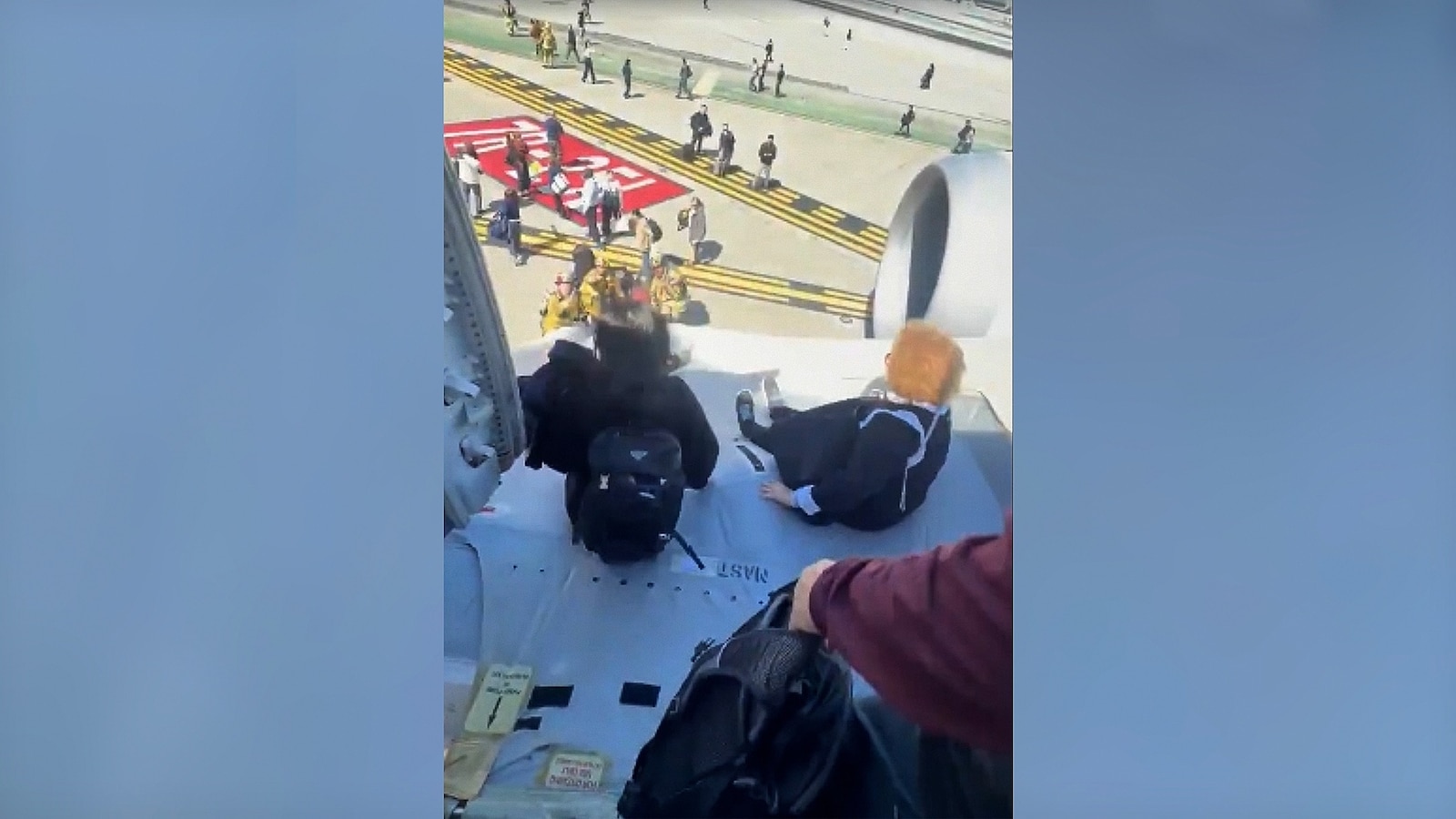
While passengers grappled with their fear, the flight crew sprang into action with the training and professionalism that such emergencies demand. According to air traffic control audio captured during the incident, the pilots calmly communicated their situation to controllers on the ground, reporting “one engine shutdown” and requesting priority handling for their return to LAX. As the aircraft made its way back to the airport, continued fire warnings in the cockpit prompted the crew to request an immediate evacuation upon landing. Videos obtained by ABC News showed the aftermath of the landing, with smoke clearly visible billowing from the troubled engine—dramatic footage that illustrated just how serious the situation had been. The plane touched down safely, and flight attendants immediately began directing the evacuation process. With clear, authoritative instructions, they told all 256 passengers to leave their belongings behind—a standard safety protocol that ensures the fastest possible evacuation. There would be no time wasted retrieving carry-on bags or personal items from overhead bins. The priority was getting everyone off the aircraft as quickly as possible, using both the emergency slides and airstairs that had been positioned at the plane’s exits.
Safe Evacuation and Minimal Injuries
The evacuation of Flight 2127 proceeded remarkably well, all things considered. Passengers slid down the emergency chutes onto the taxiway, a jarring but necessary exit from an aircraft in distress. Others descended via airstairs, and soon all 256 passengers found themselves standing on the tarmac at LAX, safe but surely processing the traumatic experience they’d just endured. United Airlines confirmed in a statement to ABC News that the evacuation resulted in remarkably few injuries—a testament to both the effective response of the crew and perhaps a measure of good fortune. Aside from a couple of passengers who sustained minor cuts that required nothing more than bandages, everyone emerged from the ordeal without serious physical harm. Once all passengers had been evacuated from the stricken aircraft, buses arrived to transport them to the terminal, where they could collect themselves and make arrangements for continuing their journey. The incident prompted a temporary ground stop at Los Angeles International Airport, a standard procedure that allows emergency responders to do their work without the complication of other aircraft movements in the area.
Gratitude and Next Steps for Stranded Passengers
In their official statement, United Airlines expressed gratitude for their crew’s performance under pressure. “We are grateful to our pilots and flight attendants for their quick actions to keep our customers safe,” the carrier said, acknowledging the professionalism that had prevented what could have been a far worse outcome. The airline moved quickly to minimize disruption to passengers’ travel plans, arranging for a different aircraft to transport the passengers to their intended destination of Newark. While this replacement flight would certainly arrive much later than originally scheduled, it at least offered passengers a path to completing their journey rather than being left stranded in Los Angeles indefinitely. For many of the passengers, the delay was likely a minor inconvenience compared to the relief of being safely on the ground. The experience of watching flames shoot from their aircraft’s engine, hearing the fear in a flight attendant’s voice, and evacuating via emergency slides would stay with them far longer than any frustration about arrival times or missed connections.
Investigation Ahead as Aviation Safety Comes Into Focus
The Federal Aviation Administration has announced it will investigate the incident, a standard procedure following any significant aviation emergency. Investigators will want to understand exactly what caused the engine failure, why it resulted in fire, and whether any maintenance issues, mechanical defects, or other factors contributed to the problem. The Boeing 787 Dreamliner involved in the incident will undoubtedly undergo thorough examination as part of this investigation. For United Airlines and Boeing, the incident serves as a reminder of both the risks inherent in air travel and the importance of the multiple safety systems and procedures designed to protect passengers when things go wrong. Modern aircraft are designed with redundancy built into critical systems—a twin-engine aircraft like the 787 can fly safely on a single engine, which is why the flight crew was able to return safely to LAX even after shutting down the troubled engine. The quick response of the pilots, the effective evacuation procedures, and the minimal injuries all demonstrate that while engine failures are serious events, the aviation industry’s safety culture and training protocols continue to protect passengers even when mechanical systems fail. For the passengers of Flight 2127, Monday’s emergency landing was undoubtedly one of the most frightening experiences of their lives, but it’s also a story with the best possible ending: everyone went home safe, with nothing worse than a few bandages and a dramatic story to tell about the day their plane caught fire over Los Angeles.