



A Landmark Moment for Civil Rights: Understanding the Supreme Court’s Transgender Athlete Case
The Case That Has America Talking
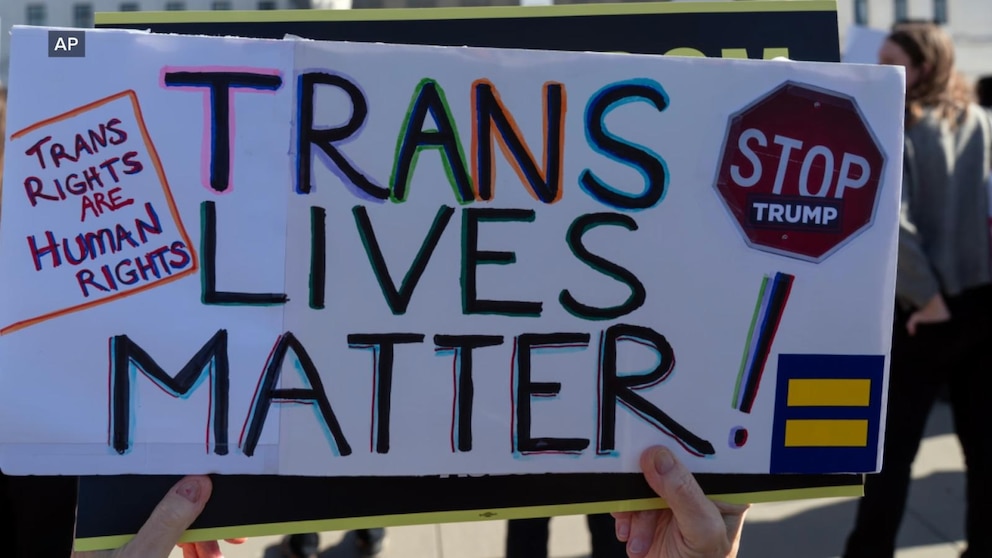
The Supreme Court of the United States recently heard arguments that could fundamentally reshape how transgender youth participate in school sports across the nation. At the center of this heated debate is West Virginia’s ban on transgender athletes, which prohibits transgender girls from competing on girls’ sports teams in public schools. The case has ignited passionate responses from civil rights advocates, legal experts, and communities nationwide. ABC News’ Linsey Davis sat down with Cathryn Oakley, the Senior Director of Legal Policy at the Human Rights Campaign, to discuss the implications of these arguments and what they mean for transgender rights in America. Oakley’s perspective cuts through the political noise with a fundamental reminder: “Constitutional rights are for everybody.” This statement encapsulates the core argument being presented before the nation’s highest court – that the rights guaranteed by the Constitution don’t come with exceptions based on gender identity or any other characteristic that makes someone different from the majority.
The conversation comes at a critical juncture in American civil rights history. Over the past several years, more than twenty states have enacted legislation restricting transgender students’ participation in school sports, claiming these measures protect fairness in competition and preserve opportunities for cisgender girls. Supporters of these bans argue that biological differences give transgender girls unfair advantages in athletic competitions. However, opponents, including major medical associations, civil rights organizations, and the families directly affected by these policies, contend that these laws discriminate against some of society’s most vulnerable young people, denying them the same opportunities for personal growth, teamwork, and community that sports provide to their peers.
The Constitutional Question at the Heart of the Matter
During her interview, Oakley emphasized that this case isn’t simply about sports – it’s about whether the government can single out transgender people for differential treatment under the law. The legal arguments presented to the Supreme Court centered on the Equal Protection Clause of the Fourteenth Amendment, which guarantees that no state shall “deny to any person within its jurisdiction the equal protection of the laws.” This constitutional provision has been the foundation for many of the most significant civil rights victories in American history, from ending school segregation to securing marriage equality. Now, it’s being invoked to protect transgender youth from what advocates describe as discriminatory policies that exclude them from full participation in public education.
The Human Rights Campaign and other organizations supporting the challenge to West Virginia’s ban argue that when states categorically exclude transgender students from sports teams consistent with their gender identity, they’re engaging in sex-based discrimination that violates both Title IX and the Constitution. Title IX, the landmark 1972 federal law, prohibits sex discrimination in educational programs receiving federal funding. Oakley pointed out during the interview that courts have increasingly recognized that discrimination against transgender people is inherently a form of sex discrimination because it treats people differently based on their failure to conform to sex-based expectations. The question before the Supreme Court, therefore, is whether these legal protections that have long prohibited sex discrimination also extend to protect transgender students.
The Real-World Impact on Young Lives
Beyond the legal technicalities and constitutional theories, Oakley brought the conversation back to the human beings at the center of this controversy – transgender children who simply want to play sports with their friends. She highlighted how participation in athletics provides far more than just physical exercise; it teaches young people valuable life lessons about teamwork, perseverance, handling both victory and defeat, and building confidence. For many students, being part of a team creates a sense of belonging and community that’s particularly crucial during the challenging adolescent years. When transgender students are categorically banned from participating on teams consistent with their gender identity, they’re not just losing the opportunity to play a game – they’re being sent a devastating message by their government that they don’t fully belong, that they’re somehow less deserving of the same opportunities afforded to their peers.
The interview touched on the stories of young transgender athletes who have become the faces of this legal battle, though often not by choice. These students and their families have found themselves thrust into the national spotlight, their most personal experiences dissected in courtrooms, legislative chambers, and media outlets across the country. Many have spoken about the psychological toll of having their identities debated as abstract political questions rather than recognized as fundamental aspects of who they are. Oakley emphasized that the medical and mental health communities overwhelmingly support affirming approaches to transgender youth, recognizing that acceptance and inclusion lead to significantly better outcomes for these young people. Conversely, rejection and exclusion – like being banned from participating in sports – correlate with higher rates of depression, anxiety, and other mental health challenges among transgender adolescents.
Navigating Complex Arguments and Misconceptions
During the Supreme Court arguments, justices grappled with questions about competitive fairness, biological differences, and how to balance various interests. Oakley addressed some of the common misconceptions that fuel support for transgender athlete bans. One frequent claim is that transgender girls dominate girls’ sports wherever they’re allowed to participate, but the actual evidence doesn’t support this narrative. Despite transgender athletes being allowed to compete in many states and athletic conferences for years, there hasn’t been an epidemic of transgender athletes sweeping competitions or displacing cisgender athletes from scholarships and opportunities. In fact, most transgender student-athletes perform at levels comparable to their cisgender peers, sometimes excelling and sometimes not, just like any other group of athletes.
Oakley also discussed how many of the laws banning transgender athletes were enacted without evidence of any actual problems in those states. Legislators often couldn’t point to any instances of issues arising from transgender participation in their own states’ school sports programs, suggesting that these laws were solutions in search of a problem rather than responses to genuine concerns. Furthermore, existing athletic organizations already have policies in place to address competitive fairness, often including various eligibility criteria and, at higher levels of competition, requirements related to hormone levels. These nuanced, individualized approaches stand in stark contrast to the categorical bans being challenged, which exclude all transgender girls regardless of their individual circumstances, physical characteristics, or how long they’ve been receiving gender-affirming care.
The Broader Implications for Civil Rights
This case extends beyond the specific question of sports participation to touch on broader issues of how America treats its transgender citizens, particularly its most vulnerable transgender youth. Oakley emphasized that the Supreme Court’s decision in this case will send a powerful signal about whether the constitutional promise of equal protection truly applies to everyone or whether states can carve out exceptions for politically unpopular minorities. The outcome will likely influence not only sports policies but also other areas where transgender rights are being contested, including access to appropriate healthcare, the ability to use facilities matching one’s gender identity, and protection from discrimination in employment and housing.
The interview highlighted how this case fits into a longer historical pattern of civil rights struggles in America. Every expansion of equal rights has faced resistance from those who argued that extending protections to a new group would somehow harm others or undermine important institutions. Similar arguments were made against racial integration, against allowing girls into previously all-male educational programs and sports, and against recognizing same-sex relationships. Each time, American society ultimately recognized that expanding the circle of dignity and equal treatment didn’t diminish anyone else’s rights but instead strengthened the nation’s commitment to its foundational principles. Oakley suggested that future generations will likely look back on the current debates about transgender rights with the same puzzlement that many today feel when encountering historic arguments for segregation or gender discrimination.
Looking Forward: What’s at Stake
As the Supreme Court deliberates on this consequential case, the stakes couldn’t be higher for transgender youth across America. Oakley concluded the interview by returning to her central message: constitutional rights aren’t special privileges to be granted or withheld based on political winds or public opinion polls; they’re fundamental protections that belong to every person. The question before the Court is whether it will uphold this principle by recognizing that transgender students deserve the same opportunities to participate fully in their educational experiences, including athletics, as their cisgender peers.
Regardless of how the justices ultimately rule, this case has already succeeded in bringing national attention to issues facing transgender youth and the discrimination they encounter in their daily lives. It has sparked important conversations in communities, schools, and families about inclusion, fairness, and what we owe to all young people as they navigate the challenging journey to adulthood. For the transgender students at the center of these debates, the outcome will determine whether they can continue to pursue their athletic aspirations and experience all the benefits that sports participation offers, or whether they’ll be sidelined by laws that treat them as problems to be solved rather than young people deserving of support and opportunity. As Oakley powerfully reminded us, how we answer these questions will reflect not just legal interpretations but our values as a society and our commitment to ensuring that constitutional rights truly are for everybody.