
Noah Elliott’s Remarkable Journey: From Second Amputation to Paralympic Silver
A Champion’s Unwavering Spirit
Noah Elliott’s story is one that transcends sports and touches the very essence of human resilience. The American Paralympic athlete has demonstrated that setbacks, no matter how devastating, don’t have to define your future. When most people face a single life-altering challenge, they struggle to find their footing again. Noah has faced two such challenges—two separate amputations—and each time, he’s risen stronger, more determined, and more focused on his goals. His recent achievement of earning a silver medal at the Paralympic Winter Games stands as a powerful testament to his unwavering spirit and refusal to accept limitations. This isn’t just a story about winning a medal; it’s about the incredible strength of the human spirit and what becomes possible when someone refuses to give up, no matter what obstacles life places in their path.
Noah’s journey began long before his Paralympic triumph, rooted in a love for sports and an active lifestyle that seemed destined for great things. However, his path took an unexpected turn that would test his resolve in ways he never imagined. His first amputation was already a monumental challenge to overcome, requiring countless hours of physical therapy, mental adjustment, and relearning how to navigate the world with a prosthetic limb. Just when he had adapted and found his rhythm again, fate dealt him another devastating blow with a second amputation. For many, this would have been the breaking point, the moment where dreams are abandoned and replaced with mere survival. But Noah Elliott isn’t like most people. Where others saw impossibility, he saw a new challenge to conquer. His determination to not just participate in adaptive sports but to excel at the highest level became his driving force.
The Road to Recovery and Reinvention
The journey following Noah’s second amputation was anything but straightforward. Physical rehabilitation was only one aspect of his recovery; the psychological and emotional toll of facing yet another major medical setback required immense inner strength. Noah had to rebuild not just his body but his entire approach to athletics. Each day presented new challenges—learning to balance differently, adjusting to new prosthetics, dealing with phantom pain, and confronting the mental barriers that come with such profound physical changes. His support system, including family, friends, coaches, and medical professionals, played a crucial role in his recovery, but ultimately, the decision to push forward came from within.
What makes Noah’s story particularly inspiring is that he didn’t just aim to return to his previous level of performance—he aimed to surpass it. He threw himself into training with a focus and intensity that amazed those around him. Early mornings, late nights, setbacks, small victories, and incremental progress became the rhythm of his life. He worked with specialists to optimize his prosthetics for competitive skiing, spent countless hours strengthening his body to compensate for his physical differences, and developed mental strategies to maintain focus and confidence during competition. The Paralympic Winter Games became his target, a goal that seemed impossibly distant after his second amputation but grew closer with each day of dedicated effort.
Paralympic Glory and What It Represents
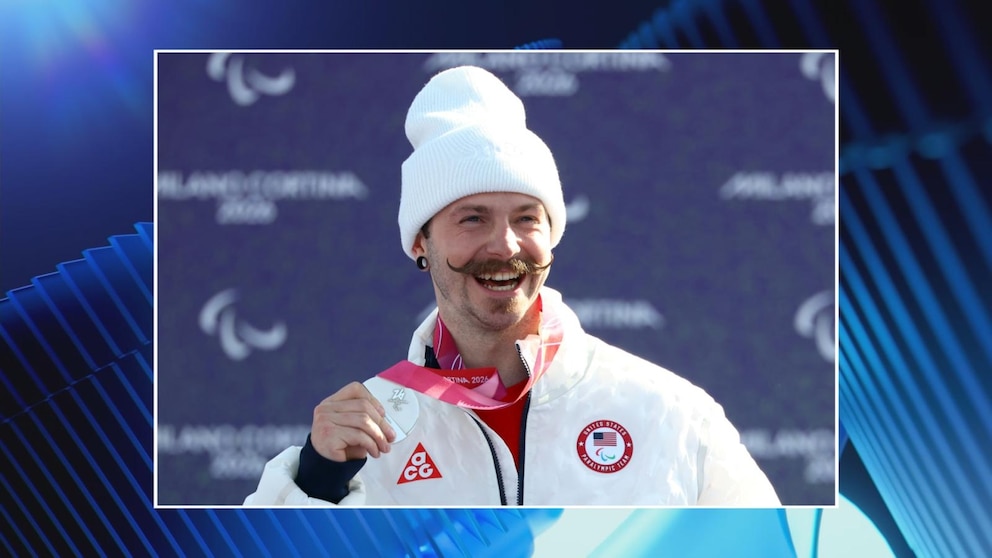
When Noah Elliott took to the slopes at the Paralympic Winter Games, he carried with him not just his own dreams but the hopes of countless others facing seemingly insurmountable challenges. His performance throughout the competition showcased not just athletic ability but the culmination of years of perseverance, sacrifice, and absolute determination. Every turn, every gate, every second on the course represented thousands of hours of preparation. When he crossed the finish line and secured the silver medal, it was a moment of pure triumph—not just over his competitors, but over every doubt, every painful moment of recovery, and every person who might have thought his dreams were finished after his second amputation.
The silver medal hanging around his neck represents so much more than second place in a sporting event. It symbolizes the power of the human spirit to overcome adversity, the importance of setting goals even when they seem unreachable, and the truth that our limitations are often more mental than physical. For Noah, standing on that podium was validation of every difficult decision he made, every time he chose to push through pain, every moment he refused to accept defeat. But perhaps even more importantly, his achievement has become a beacon of hope for others. Young athletes with disabilities, individuals facing their own medical challenges, and anyone dealing with setbacks now have a powerful example of what’s possible when you refuse to give up.
Impact Beyond the Medals
Noah Elliott’s influence extends far beyond the Paralympic venues and into communities around the world. His story has been shared across media platforms, inspiring coverage that highlights not just his athletic achievements but his personal journey. Schools have used his example to teach students about perseverance and overcoming obstacles. Rehabilitation centers have shared his story with patients facing their own amputations, providing them with tangible proof that life after amputation can still include extraordinary achievements. Adaptive sports programs have seen increased interest and participation, partly inspired by athletes like Noah who demonstrate what’s possible.
He has also become an advocate for Paralympic sports, working to raise awareness about the incredible level of competition and athletic ability displayed by Paralympic athletes. Too often, adaptive sports are viewed through a lens of inspiration alone, rather than being recognized for the elite-level competition they truly represent. Noah’s performance at the Paralympic Winter Games—competing at speeds and with techniques that would challenge any able-bodied skier—helps shift that perception. He’s showing the world that Paralympic athletes are elite performers who deserve recognition for their athletic prowess, training dedication, and competitive achievements, not just their ability to overcome adversity.
Looking Forward: Legacy and Continued Impact
As Noah Elliott continues his athletic career, his goals remain ambitious. The silver medal, while an extraordinary achievement, is not the end of his journey but rather a milestone along a longer path. He continues to train, to improve, and to set new goals for himself. His competitive spirit remains as fierce as ever, and those who know him well say that the silver medal has only fueled his desire to achieve even more. Future Paralympic Games are already in his sights, and he’s working with the same dedication that got him to the podium in the first place.
Beyond his personal athletic goals, Noah has embraced a role as a mentor and motivational figure. He regularly speaks to groups about his experiences, sharing the lessons he’s learned about resilience, goal-setting, and mental toughness. His message resonates with diverse audiences because it’s authentic—he doesn’t minimize the difficulties he’s faced or pretend that positive thinking alone carried him through. Instead, he talks honestly about the dark moments, the times he questioned whether he could continue, and the strategies he used to push through those barriers. This honesty makes his ultimate success even more powerful and relatable. Noah Elliott has shown us all that our greatest limitations are often self-imposed, that setbacks can become setups for comebacks, and that with enough determination, support, and effort, extraordinary things become possible. His silver medal shines brightly not just as a personal achievement but as a symbol of hope for anyone facing their own mountains to climb.