


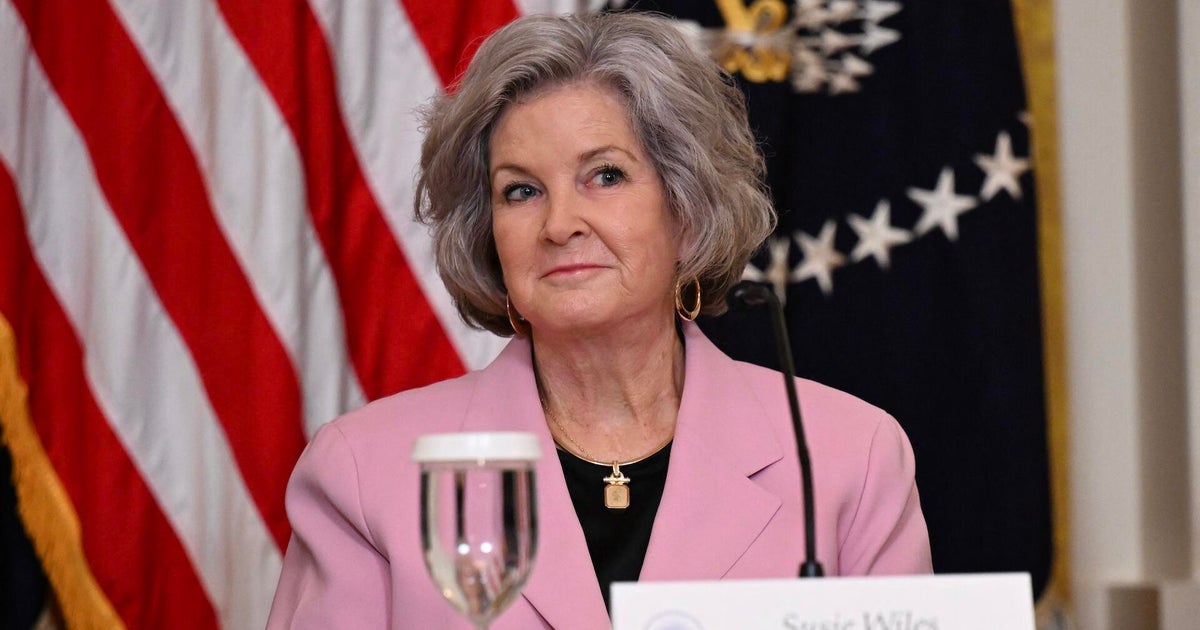

Susie Wiles Faces Breast Cancer Diagnosis While Serving as White House Chief of Staff
A Diagnosis Shared with Strength and Transparency
In a moment that resonates with countless women across America, White House Chief of Staff Susie Wiles publicly announced on Monday that she has been diagnosed with an early stage of breast cancer. At 68 years old, Wiles joins the ranks of nearly one in eight American women who will face this challenging diagnosis during their lifetime. Her announcement was marked by both vulnerability and determination, as she acknowledged the reality of her situation while emphasizing her commitment to continue serving in her historic role. In her statement, Wiles reflected on the resilience of women facing similar battles, noting how they continue to “raise their families, go to work, and serve their communities with strength and determination.” Her words not only acknowledged her own journey ahead but also paid tribute to the millions of women who navigate cancer treatment while maintaining their daily responsibilities and professional commitments.
The diagnosis comes at a significant time in Wiles’ career, as she serves as the first woman ever to hold the position of White House Chief of Staff. This groundbreaking achievement in her professional life now intersects with a deeply personal health challenge, one that she has chosen to face publicly while continuing to fulfill the demanding responsibilities of one of the most important positions in American government. Her decision to share this diagnosis openly demonstrates both courage and an understanding of the platform she holds, potentially offering inspiration and solidarity to other women facing similar health battles.
Presidential Support and Continued Service
President Trump has expressed his full support for Wiles as she prepares to undergo treatment, making it clear that she will remain in her position throughout this period. In a post on Truth Social, the President offered reassuring words about her medical prognosis, stating that “She has a fantastic medical team, and her prognosis is excellent!” His comments emphasized not only his confidence in her medical care but also his appreciation for her dedication to continuing her work during treatment. The President noted that Wiles would be spending “virtually full time at the White House” during her treatment period, which he indicated brings him satisfaction as it ensures continuity in his administration’s leadership.
During a Kennedy Center event on Monday where Wiles was present, President Trump publicly acknowledged her situation, referring to her as “an amazing person, an amazing fighter.” He characterized her health challenge as “a minor difficulty, which will be in good shape,” and reassured attendees that “she’ll be around for a long time,” describing her prognosis as “excellent, beyond excellent.” These public statements of support underscore the working relationship and mutual respect between the President and his Chief of Staff, while also sending a message about the administration’s confidence in her ability to manage both her health and her professional responsibilities simultaneously.
White House Press Secretary Karoline Leavitt also offered words of support through social media, describing Wiles as someone who “epitomizes what it means to be a strong leader” while also noting her personal qualities, calling her “one of the nicest people I’ve ever met.” Leavitt’s statement reflected the sentiments of the entire White House team, expressing that everyone is “praying for Susie and rallying behind her as she prepares to fight this battle against breast cancer.” This outpouring of support from colleagues highlights the respect and admiration Wiles has earned within the administration.
Understanding Breast Cancer in America
The diagnosis that Wiles faces is one that affects hundreds of thousands of American women annually. According to the National Cancer Center, over 300,000 women in the United States were diagnosed with breast cancer in 2025 alone, representing more than 15% of all cancer diagnoses that year. These statistics paint a picture of just how prevalent this disease is and why Wiles’ statement about joining the ranks of these women carries such weight. Breast cancer remains one of the most common cancers affecting women, making research, early detection, and treatment advances critically important public health priorities.
Despite the serious nature of any cancer diagnosis, there is reason for optimism in Wiles’ case and for breast cancer patients generally. The National Cancer Center reports that the five-year survival rate for breast cancer is over 91%, a testament to the significant advances in detection and treatment that have been made in recent decades. Early detection, which appears to be the case with Wiles’ diagnosis, significantly improves outcomes and expands treatment options. Modern medicine has developed increasingly effective and less invasive treatment approaches, allowing many women to continue their normal activities, including demanding professional roles, during and after treatment.
The public nature of Wiles’ diagnosis also serves an important purpose in raising awareness about breast cancer screening and early detection. When high-profile figures share their health challenges, it often encourages others to prioritize their own health screenings and medical care. Her decision to continue working while undergoing treatment also helps normalize the experience of managing serious health conditions while maintaining professional commitments, potentially reducing stigma and demonstrating that a cancer diagnosis, while serious, does not necessarily mean stepping away from meaningful work.
A Historic Career in Political Strategy
Susie Wiles’ current position as the first female White House Chief of Staff represents the pinnacle of a long and distinguished career in political strategy and campaign management. Her journey to this historic role has been marked by numerous successful campaigns and a reputation for strategic brilliance in the complex world of electoral politics. President Trump has credited her with playing instrumental roles in both his 2016 and 2024 election victories, recognizing her as a key architect of his successful campaigns. Prior to becoming Chief of Staff, Wiles served as co-chair of Trump’s 2024 campaign, where her strategic guidance and management skills were on full display.
Her political career in Florida has been particularly notable, demonstrating her ability to navigate the state’s complex political landscape and deliver results for her candidates. After Trump’s 2016 victory, Wiles, who had served as chief strategist for his Florida campaign, was dispatched to assist Ron DeSantis with his 2018 gubernatorial bid. Her work contributed to DeSantis’ successful election, though the relationship between Wiles and DeSantis later deteriorated, leading to her departure. She subsequently returned to manage Trump’s 2020 Florida campaign, demonstrating her loyalty to Trump and her continued influence in Florida politics, one of the nation’s most important swing states.
Beyond her work with Trump, Wiles has an impressive resume of political victories in Florida. In 2010, she played a crucial role in helping Rick Scott win his election against Democrat Bill McCollum, showcasing her ability to navigate competitive races. Her work as a political consultant in Florida has earned her a reputation as one of the state’s most effective political operatives. Following Trump’s 2020 campaign, she led the Save America PAC before taking on the role of co-campaign manager for the 2024 campaign, ultimately leading to her appointment as White House Chief of Staff, a position where she now manages the day-to-day operations of the executive branch.
A Legacy Rooted in Political Excellence
Susie Wiles’ background provides insight into how she developed the skills and temperament that have made her such an effective political strategist. A native of New Jersey, she is the daughter of the late Pat Summerall, the renowned NFL kicker who became one of America’s most beloved sports broadcasters. Growing up in such a prominent family likely provided Wiles with early exposure to public life and the demands of high-pressure situations. After graduating from the University of Maryland, she embarked on her political career by working for Ronald Reagan’s presidential campaign, an experience that introduced her to national politics and laid the foundation for her future success.
This early experience with the Reagan campaign proved formative, connecting her with the Republican political establishment and providing her with invaluable experience in national campaign operations. From there, she eventually focused her efforts on Florida politics, where she would build her reputation as a master strategist capable of winning difficult races. Her ability to understand voter dynamics, manage complex campaign operations, and maintain focus under pressure has been consistently demonstrated throughout her career. These skills have served her well in her current role, where managing the White House staff and coordinating the President’s agenda requires similar strategic thinking and organizational capabilities.
The combination of her political acumen, her historic achievement as the first female White House Chief of Staff, and now her public battle with breast cancer creates a complex portrait of a leader facing both professional demands and personal challenges. Her education, family background, and decades of political experience have prepared her for high-stakes situations, though a cancer diagnosis certainly presents a different kind of challenge than electoral politics. Nevertheless, her response to this diagnosis—characterized by transparency, determination, and a commitment to continuing her work—reflects the same qualities that have made her successful throughout her career.
Moving Forward with Determination and Hope
As Susie Wiles begins her cancer treatment while continuing to serve as White House Chief of Staff, her situation highlights the reality that millions of working women face when dealing with serious health challenges. Her decision to remain in her position during treatment sends a powerful message about the capabilities of women to manage multiple demanding situations simultaneously. While the specific details of her treatment plan have not been disclosed, the emphasis on her excellent prognosis and strong medical team provides reason for optimism about her recovery. The support she has received from President Trump, her White House colleagues, and presumably from her family and friends, will undoubtedly be important as she navigates the months ahead.
The broader implications of her public announcement extend beyond her individual situation. By sharing her diagnosis openly, Wiles contributes to important conversations about women’s health, workplace accommodations for serious illnesses, and the normalization of continuing professional activities during medical treatment when appropriate. Her visibility in this role means that her experience will be observed by many, potentially influencing how other organizations and workplaces think about supporting employees facing similar challenges. The fact that the highest levels of government are accommodating her treatment while retaining her in this crucial position may set precedents or at least provide examples for other workplaces considering how to support valuable employees during health crises.
Ultimately, Susie Wiles’ announcement represents a moment where personal vulnerability meets public service, where a historic professional achievement intersects with a common human challenge, and where determination and resilience are tested in new ways. As she moves forward with treatment while continuing to help lead the nation’s executive branch, she embodies the strength and perseverance she noted in her initial statement about the many women who continue their daily lives while facing breast cancer. Her prognosis is excellent, her support system is strong, and her commitment to her work remains unwavering—all factors that point toward a positive outcome both for her health and for her continued service in this groundbreaking role. The coming months will undoubtedly test her resilience, but based on her decades of success in high-pressure political environments, she has demonstrated time and again that she possesses the strength and determination to face whatever challenges come her way.