
ISIS-Inspired Terror Plot Foiled at New York City Protest
Federal Terrorism Charges Filed After Explosive Devices Discovered
A terrifying incident unfolded outside New York City’s Gracie Mansion this past Saturday when two homemade explosive devices were brought to a heated protest, leading to federal terrorism charges against two Pennsylvania men. According to New York Police Commissioner Jessica Tisch, investigators are treating this as “an act of ISIS-inspired terrorism.” The suspects, identified as 19-year-old Ibrahim Kayumi from Newton, Pennsylvania, and 18-year-old Emir Balat from Langhorne, Pennsylvania, now face serious federal charges that could result in significant prison time. What makes this case particularly chilling is that both young men allegedly pledged allegiance to ISIS while in police custody, with one even expressing a desire to orchestrate an attack surpassing the devastation of the 2013 Boston Marathon bombing, which claimed three lives and injured over 500 people. The incident has sent shockwaves through the city, reminding New Yorkers of the persistent threat of homegrown terrorism while simultaneously highlighting the complex intersection of free speech, religious intolerance, and radicalization in modern America.
The Volatile Nature of the Explosive Devices
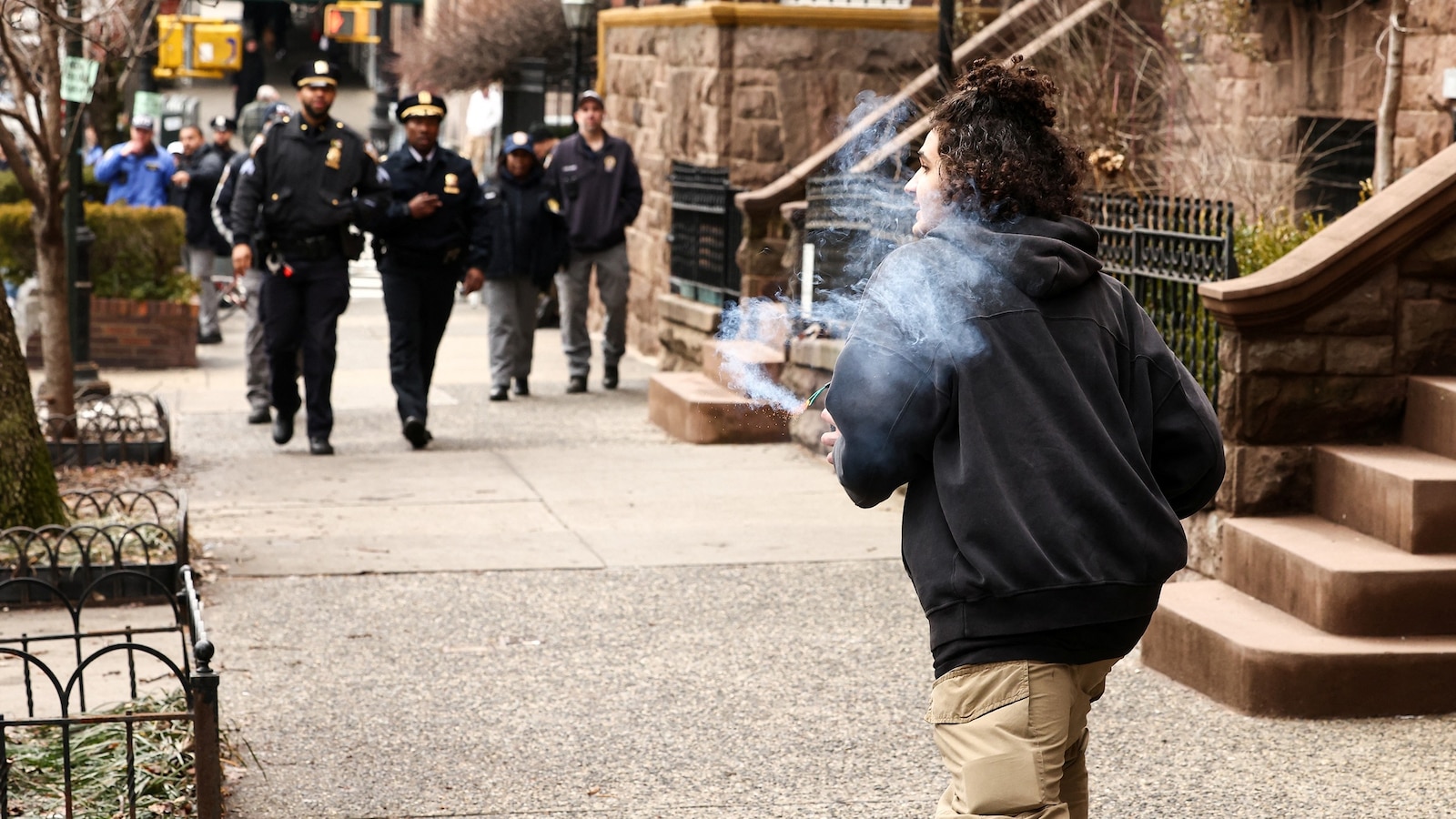
The devices recovered from the scene weren’t amateur fireworks or simple smoke bombs—they were genuine improvised explosive devices containing TATP (triacetone triperoxide), an extremely volatile and dangerous substance favored by terrorists due to its relative ease of manufacture and devastating potential. Commissioner Tisch was emphatic in her description, stating these devices were specifically “made to injure, maim or worse.” Two of these devices were actually deployed during the protest: one was ignited and thrown at protesters in a crosswalk at the intersection of East End Avenue and East 87th Street, while another detonated nearby. The swift response by law enforcement prevented what could have been a catastrophic loss of life. Following the arrests, police discovered a third suspected explosive device inside the suspects’ black 2010 Honda with New Jersey license plates, parked on Manhattan’s Upper East Side near Gracie Mansion. This discovery prompted an immediate evacuation of nearby homes as a precautionary measure, though fortunately this third device tested negative for explosives. All recovered devices have been transported to the FBI laboratory in Quantico, Virginia, for comprehensive forensic analysis that will help investigators understand the full scope of the planned attack and potentially identify any connections to broader terrorist networks.
The Legal Proceedings and Evidence Against the Suspects
The federal criminal complaint against Kayumi and Balat reads like something from a terrorism thriller, filled with disturbing details about their alleged intentions and allegiances. Both men face five serious federal counts: attempting to provide material support and resources to ISIS, use of a weapon of mass destruction, transportation of explosive materials, interstate transportation and receipt of explosives, and unlawful possession of destructive devices. During their initial appearance in Manhattan federal court on Monday afternoon, both suspects arrived in shackles and were ordered held without bail—they did not enter pleas to the charges. The evidence against them appears substantial and self-incriminating. According to the federal complaint, Kayumi was captured on NYPD body-worn camera footage responding to a question from someone in the crowd about why he attempted to bomb the protest with a single chilling word: “ISIS.” Meanwhile, Balat waived his Miranda rights and provided a written statement in which he “pledge[d] allegience [sic] to the Islamic State,” even misspelling the word in his haste to declare his loyalty to the terrorist organization. Perhaps most disturbing, Balat allegedly told investigators that he and his co-defendant “wanted to carry out an attack bigger than the Boston Marathon bombing,” dismissively noting that the 2013 attack had caused “only ‘three deaths.'” Kayumi similarly waived his rights and allegedly admitted to being affiliated with ISIS, watching ISIS propaganda on his phone, and being partly inspired by the terrorist group to carry out the attack.
The Context: Anti-Muslim Protest Meets Counterprotest
The explosive incident occurred at what was already a volatile situation—a clash between protesters and counterprotesters with diametrically opposed viewpoints. The original demonstration was organized by Jack Lang, described by officials as a far-right, anti-immigrant provocateur, who called his event “Stop the Islamic Takeover of New York City.” This inflammatory gathering drew a strong counterprotest response from those who called their demonstration “Run Nazis Out of New York City.” Authorities believe that Balat and Kayumi attended as part of the counterprotest opposing the anti-Muslim demonstration, though their methods allegedly went far beyond peaceful protest into the realm of terrorism. The timing of this incident is particularly significant given that New York City recently elected Zohran Mamdani as its first Muslim mayor. Neither Mamdani nor his wife, Rama Duwaji, were present at Gracie Mansion when the explosive devices were deployed, but the symbolism wasn’t lost on anyone—an anti-Muslim protest outside the home of the city’s first Muslim mayor, met with a violent response allegedly inspired by an extremist interpretation of Islam. This created a tragic irony where hatred from different extremes collided on New York City streets, threatening the safety of everyone present regardless of their beliefs or backgrounds.
Mayor Mamdani’s Response: Defending Free Speech While Condemning Violence
In a news conference held Monday outside Gracie Mansion, Mayor Mamdani delivered remarks that walked a careful but principled line between condemning terrorism and defending constitutional freedoms. “Anti-Muslim bigotry is nothing new to me, nor is it anything new for the one million or so Muslim New Yorkers who know this city as our home,” Mamdani stated, acknowledging the painful reality of religious intolerance. However, he went on to make a powerful statement about democratic values: “While I found this protest appalling, I will not waver in my belief that it should be allowed to happen. Ours is a free society, where the right to peaceful protest is sacred. It does not only belong to those we agree with. It belongs to everyone.” This measured response highlighted the complex challenge facing leaders today—how to protect free expression, even when that expression is hateful, while maintaining public safety and condemning violence. Mamdani praised the many counterprotesters who confronted the “display of bigotry” peacefully, and he specifically commended the NYPD officers who responded to the crisis. He singled out Assistant Chief Aaron Edwards and Sergeant Luis Navarro for their “courageous and selfless” actions, saying they “ran towards the danger so that others could run safely.” The mayor made clear that while peaceful protest is a protected right, terrorism is not: “They’re suspected of coming here to commit an act of terrorism. Let me say this plainly: Anyone who comes to New York City to bring violence to our streets will be held accountable in accordance with the law.”
Investigation and Historical Context
The FBI’s Joint Terrorism Task Force is leading the investigation in partnership with the NYPD and the U.S. Attorney’s Office for the Southern District of New York, bringing together the full resources of federal and local law enforcement. This multi-agency approach reflects the seriousness with which authorities are treating this case and their determination to uncover any potential connections to broader terrorist networks or additional conspirators. Commissioner Tisch noted that this was the first incident involving the deployment of an IED in New York City since December 2017, when Akayed Ullah detonated a homemade bomb strapped to his torso in a pedestrian underpass connecting the Port Authority Bus Terminal to the Times Square subway station. Ullah, a Bangladeshi permanent resident living in Brooklyn, carried out that attack on behalf of ISIS but succeeded only in injuring himself. He was convicted on all counts in April 2021 and sentenced to life in prison. The relative rarity of such attacks in New York City since then is a testament to the vigilance of law enforcement and intelligence agencies, though this latest incident serves as a sobering reminder that the threat hasn’t disappeared. The case raises troubling questions about radicalization of young people—Balat is reportedly still a high school senior, and Kayumi is just 19—and how extremist propaganda continues to find audiences online despite years of counterterrorism efforts. As the investigation continues and the devices undergo forensic examination at Quantico, authorities will be working to understand how these young men became radicalized, whether they acted alone, and what can be done to prevent similar incidents in the future.