
The Sacred Mystery of Buddhist Relics: Faith, Wonder, and Ancient Traditions
A Personal Connection to the Buddha
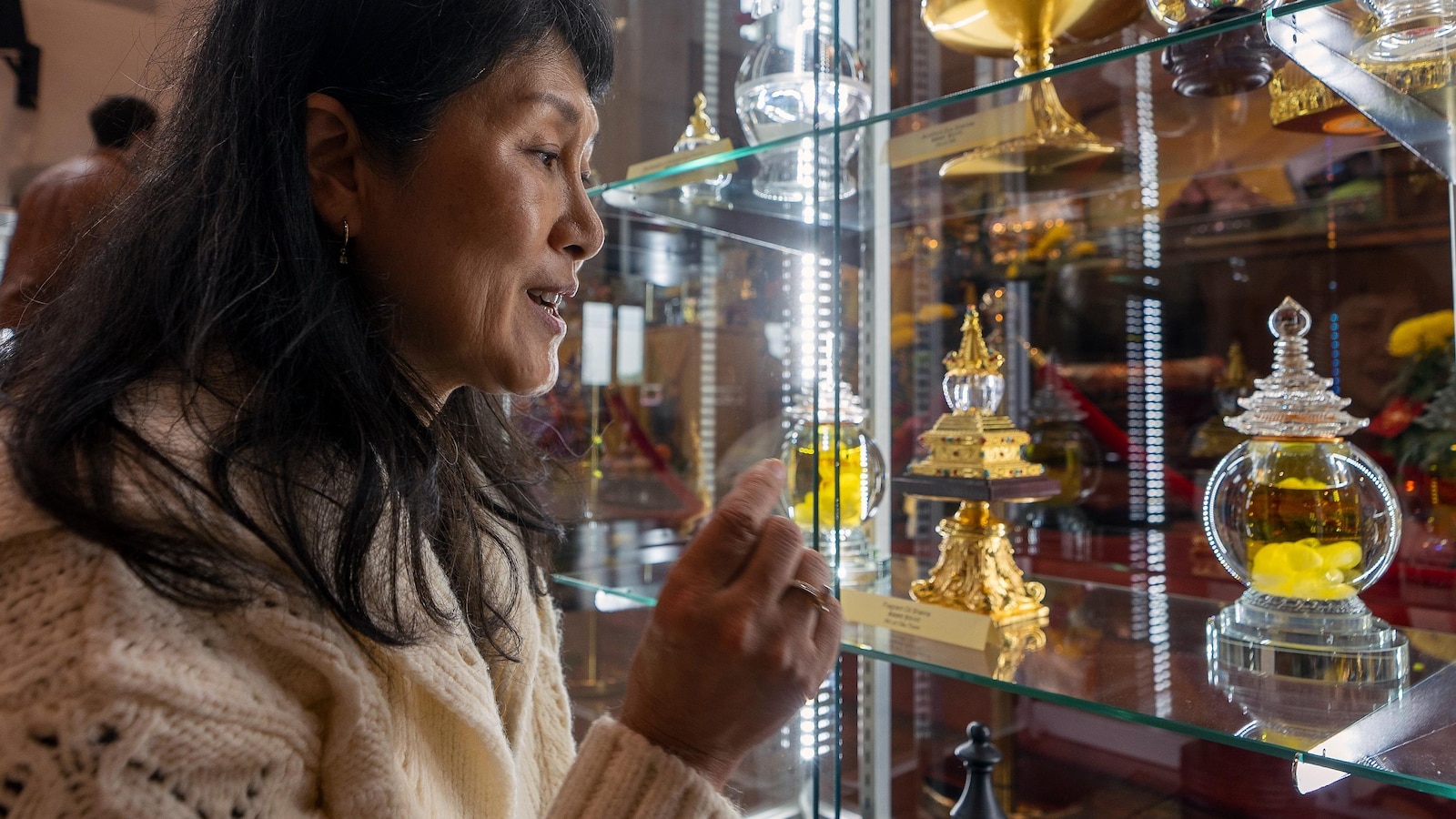
In the quiet, reverent atmosphere of the Wei Mountain Temple in Rosemead, California, Katherine Nguyen stood in peaceful contemplation before something extraordinary—relics believed to have belonged to Shakyamuni Buddha himself, the enlightened teacher who founded Buddhism approximately 2,500 years ago in India. With her hands folded and head respectfully bowed, Nguyen described the profound spiritual significance of the moment: “To be able to see the Buddha, to get close to him and feel the energy — it’s very special for a Buddhist.” This simple yet powerful statement captures what draws thousands of believers to witness these sacred objects each year during Lunar New Year celebrations. The temple’s collection, known as the “10,000 Buddha Relics,” actually contains far more than that number, according to the temple’s founder, Master YongHua. Housed in glass display cases and miniature stupas (traditional dome-shaped reliquaries), the collection features bones and teeth attributed to the Buddha, his family members, and his closest disciples. Perhaps most intriguing are the numerous shariras—colorful, pearl-like or crystal-like objects that Buddhists believe emerge from the cremated ashes of enlightened masters and the Buddha himself, possessing supernatural qualities and serving as tangible connections to the divine.
Understanding the Nature and Purpose of Buddhist Relics
Buddhist relics occupy a unique position in religious practice that differs significantly from similar traditions in other faiths. While Catholic and Orthodox Christian relics are venerated as sacred links to saints or Christ, Buddhist relics are understood as something more dynamic—they’re considered living, active sources of blessings with supernatural properties. According to Buddhist belief, these relics can spontaneously appear, grow in size, and even multiply over time, which explains why so many relics attributed to the Buddha exist throughout the world despite the impossibility of one person’s remains being distributed so widely. The relics at the Rosemead temple demonstrate this mysterious quality. The tooth and finger bone relics on display are notably larger than what would be found in an average human body. Master YongHua attributes this to the relics having “grown” over the years—a phenomenon he presents not as metaphor but as literal fact. He claims the tooth relic produces “baby shariras,” the multicolored crystals that have allegedly multiplied to fill several containers in the exhibit. This concept of self-generating sacred objects challenges conventional understanding but represents core Buddhist beliefs about the nature of enlightenment and its physical manifestations.
The Global Presence and Controversies Surrounding Sacred Relics
The reverence for Buddhist relics extends across every country where Buddhism has established deep historical roots—from India and Nepal to Japan, Myanmar, Singapore, Sri Lanka, Taiwan, and Thailand. In temples and monasteries worldwide, the authenticity of these sacred objects is typically accepted without question. Spiritual leaders generally avoid subjecting relics to scientific testing, concerned that empirical analysis might somehow diminish or destroy the extraordinary qualities that make them spiritually significant. However, this faith-based approach to authentication has created opportunities for fraud and deception. Over the years, markets in Asia and online shopping platforms have been flooded with fake tooth and bone relics, along with manufactured acrylic shariras, often accompanied by falsified certificates of authenticity. One prominent example that sparked international discussion occurred at Singapore’s Buddha Tooth Relic Temple and Museum, which houses what it claims is a tooth recovered from the Buddha’s funeral pyre, enshrined in an enormous stupa made from 705 pounds of gold. In 2007, dental experts examined photographs and pointed out that the 3-inch tooth’s characteristics were incompatible with human dental anatomy and most likely belonged to a large animal such as a cow or buffalo. The temple’s abbot, Venerable Shi Fazhao, responded with a statement that perfectly encapsulates the Buddhist approach to relics: he had never questioned the tooth’s authenticity and believed that “if you believe it’s real, it’s real.” This perspective prioritizes faith and spiritual experience over empirical verification, viewing the relics’ power as residing in their ability to inspire devotion rather than in their material origins.
The Spiritual Power of Relics as Witnessed by Believers
For Master YongHua of the Rosemead temple, the relics donated to his institution about 14 years ago by a collector serve a clear purpose: to inspire faith and connection to the Buddhist tradition. He expresses no doubt about their supernatural nature, claiming to have personally witnessed their extraordinary properties. “I have seen them multiply with my own eyes,” he states. “They move on their own, they levitate. … I’ve seen people get cured of various ailments just by being in their presence.” These claims of miraculous healing and physical impossibilities might sound fantastical to skeptics, but they represent genuine experiences for believers and underscore the relics’ importance in Buddhist practice. Academic scholars like John Strong, professor emeritus of religion at Bates College, provide historical context for understanding these beliefs. Strong, who authored “Relics of the Buddha” in 2004, explains that the earliest accounts of Buddha’s funeral appear in Pali texts from approximately the 2nd century B.C.E. Later commentaries describe the relics that emerged from the Buddha’s cremated remains as glittering jewels—some as tiny as mustard seeds, others resembling gems or golden nuggets. Strong notes that while theories abound about what generates these relics and why, they undeniably serve the crucial function of connecting Buddhists to the Buddha, who is “essentially absent” because achieving enlightenment meant liberation from the cycle of birth, death, and reincarnation. The relics, therefore, provide a physical anchor to a teacher whose ultimate spiritual achievement paradoxically removed him from the material world.
Contemporary Accounts of Relic Formation
Modern testimonies continue to add to the body of relic stories within Buddhist communities. Geshe Tenzin Zopa, a Tibetan monk and educator, considers relics “the most precious, most sacred, most powerful holy objects in our understanding.” He shared his personal experience witnessing what he believes was the spontaneous generation of relics during the cremation of his teacher, Geshe Lama Konchog, who was recognized as a realized yogi by the Dalai Lama before his death in October 2001. According to Zopa, as the cremation proceeded, pearl-like relics began emerging from the crematorium “like popcorn.” Senior monks advised that the structure be sealed and left undisturbed for three days. When disciples returned, Zopa reports they found hundreds of relics and, astonishingly, the guru’s intact heart, tongue, and eyes. “I’d never seen anything like that in my life. It was truly a miracle,” Zopa recalled. The relics are believed to have multiplied subsequently and are now enshrined in a memorial stupa at Kopan monastery in Nepal. For students of spiritual masters, Zopa explains, searching for relics in cremated remains isn’t morbid curiosity but an expression of unwavering faith and the expectation that their teacher would leave behind a message—a physical confirmation of their spiritual realization. These relics aren’t considered easy to produce; according to Zopa, “We believe that the relics are left behind due to the kindness of these holy gurus for the sake of us sentient beings to collect merit and purify ourselves. One has to make very strong and extensive prayers and preserve pure morality for many lifetimes in order to create the causes that produce relics.”
Balancing Relic Veneration with Buddhist Teachings
Not all Buddhist leaders emphasize relics equally, with some attempting to redirect focus toward the Buddha’s core teachings. At the U.S. headquarters for the Fo Guang Shan Buddhist order in Southern California, Venerable Hui Ze explained that their founder, Venerable Master Hsing Yun, taught followers not to fixate solely on physical relics. “Our venerable master emphasized Humanistic Buddhism—how we can bring Buddha’s teachings into our daily lives with good thoughts, words and actions,” Hui Ze said. “He instructed us that relics should not distract us from the path to liberation.” Despite this philosophical stance, the order’s headquarters in Taiwan houses a Buddha tooth relic that was gifted to Hsing Yun by Kunga Dorje Rinpoche, a lama who carried the sacred object as he fled Tibet in 1968 and protected it for three decades. Hui Ze admits that seeing the relic moved him deeply: “I had this really intimate experience and felt like I had connected with the Buddha who was here 2,600 years ago, and that connection is priceless.” In a poignant final instruction before his death in February 2023 at age 95, Hsing Yun specifically told his disciples not to search for relics in his ashes. Yet following his cremation, disciples sifted through the cremains and discovered several colorful, pearly relics. Honoring their master’s wishes while acknowledging what they found, the order decided the relics would remain in the ashes rather than being separately enshrined. These ashes, containing the relics, will be distributed across the order’s dozen centers spanning five continents and will be enshrined at the Southern California headquarters during a ceremony on March 21. This approach represents a middle path—acknowledging the relics’ appearance while maintaining focus on the teachings and humanitarian values the master championed, demonstrating how contemporary Buddhism continues to navigate the balance between ancient traditions and evolving spiritual understanding.