

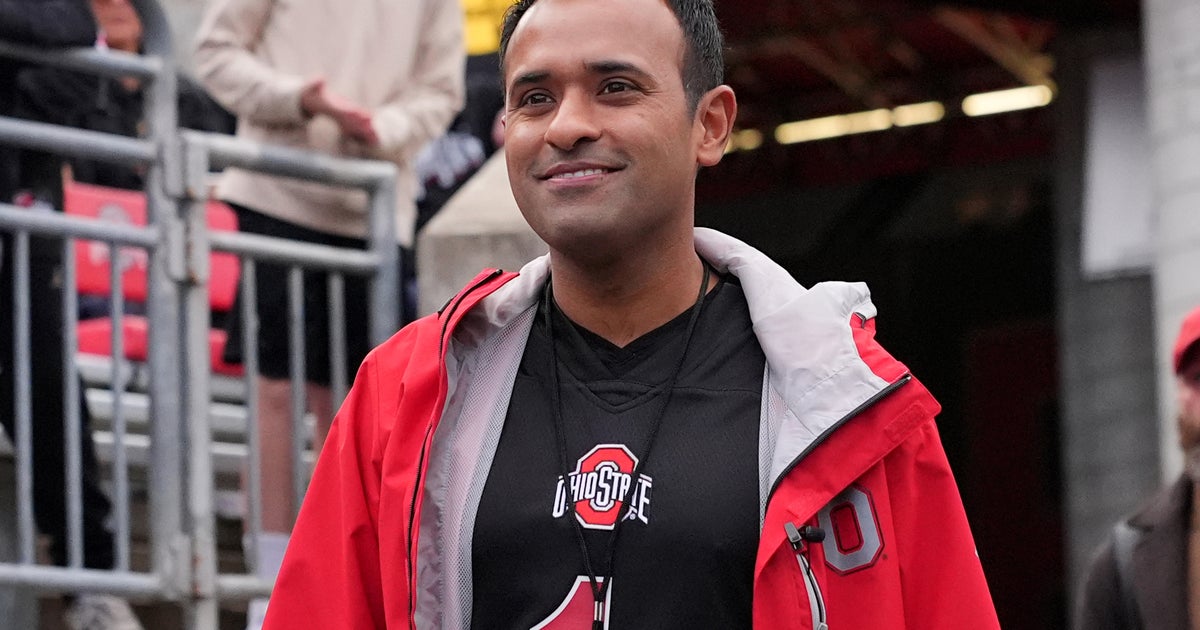

Vivek Ramaswamy Secures Republican Nomination for Ohio Governor
A New Political Chapter Begins
The political landscape in Ohio has shifted dramatically as Vivek Ramaswamy clinched the Republican nomination for governor in Tuesday’s primary election, according to CBS News projections. The biotech entrepreneur and former presidential candidate will now square off against Democrat Amy Acton this November in what promises to be a closely watched gubernatorial race. Acton, who previously served as the director of the Ohio Department of Public Health, ran unopposed in the Democratic primary, setting the stage for a head-to-head battle that will determine who leads the Buckeye State for the next four years. This race comes at a pivotal moment, as current Republican Governor Mike DeWine has reached his term limit and cannot run for reelection, leaving the governor’s mansion up for grabs in a state that President Trump won decisively by 11 points in 2024.
An Unexpected Path to the Nomination
The road to Ramaswamy’s nomination looked vastly different just months ago. Political insiders initially expected a more crowded and competitive Republican field, with Ohio Attorney General Dave Yost positioned as a frontrunner and former Ohio State University football coach Jim Tressel also considering a run. However, the political calculus changed dramatically when both the Ohio Republican Party and President Trump threw their weight behind Ramaswamy. This powerful endorsement prompted Yost to drop out of the race, recognizing the uphill battle he would face against a Trump-backed candidate in a state where the former president holds considerable sway. Tressel ultimately decided not to enter the race at all, effectively clearing the field for Ramaswamy and making his path to the nomination significantly smoother than it might have been otherwise.
In the primary itself, Ramaswamy faced competition from Casey Putsch, a small business owner who campaigns under the catchy nickname “The Car Guy.” Additionally, Morgan County school board member Heather Hill’s name appeared on the ballot, though her candidacy became complicated when her running mate withdrew from the race. The Ohio Supreme Court subsequently ruled that any votes cast for Hill would not be counted, citing state law requirements that candidates for governor and lieutenant governor must run together as a team. This legal technicality effectively eliminated Hill from contention, though it highlighted some of the procedural complexities that can arise during primary elections and the importance of understanding state election laws.
From Presidential Hopeful to Gubernatorial Candidate
Ramaswamy’s journey to this moment has been nothing short of remarkable. The biotech billionaire burst onto the national political scene in 2024 when he mounted an unsuccessful bid for the Republican presidential nomination. Though he didn’t secure the top spot, his campaign raised his national profile considerably and demonstrated his appeal to a segment of the Republican base attracted to his business background and outsider status. Following the 2024 election, Ramaswamy aligned himself closely with President Trump, becoming a trusted ally in the new administration. This relationship led to his initial appointment as co-leader of the Department of Government Efficiency, commonly known as DOGE, alongside tech mogul Elon Musk. The department’s mission focused on identifying and eliminating government waste and streamlining federal operations.
However, Ramaswamy’s tenure with DOGE was remarkably brief. Just one day after President Trump’s inauguration, he departed from the position, with a spokesperson explaining that he wanted to concentrate on running for elected office. This swift exit suggested that Ramaswamy had been planning his gubernatorial bid for some time and was eager to get his campaign off the ground. His decision to leave a prestigious federal appointment so quickly underscored his serious commitment to pursuing the Ohio governorship and his belief that this path better aligned with his political ambitions and personal goals.
Following the Money Trail
When it comes to campaign finances, Ramaswamy has demonstrated formidable fundraising capabilities and a willingness to invest heavily in his own political future. According to campaign finance filings, he raised an impressive $5 million during the first three months of 2026 from various donors and supporters. Beyond that, he loaned himself a staggering $25 million from his personal fortune, bringing his total cash on hand to $30 million as of April. This substantial war chest gives him significant resources to deploy for television advertising, ground operations, and all the other costly components of a modern statewide campaign. In a 2025 interview with Fox News, Ramaswamy indicated he was prepared to donate $30 million to his own campaign, demonstrating that he’s willing to put his considerable personal wealth on the line to win the governor’s office.
His Democratic opponent, Amy Acton, has also shown strong fundraising ability, though not at quite the same level as Ramaswamy. She raised $5.1 million over the same three-month period, with $3 million cash on hand. While this is less than Ramaswamy’s total resources, it’s still a significant amount that will allow her to run a competitive campaign. The financial disparity between the candidates will be something to watch as the general election approaches, as Ramaswamy’s ability to self-fund could give him an advantage in reaching voters through paid media. However, money alone doesn’t win elections, and Acton’s experience in state government and her background in public health may resonate with Ohio voters concerned about healthcare access and other quality-of-life issues.
Political Endorsements and Electoral Outlook
Ramaswamy’s campaign has benefited from some high-profile endorsements that will likely help him with Republican base voters. Vice President JD Vance, who calls Ohio home, publicly announced on Tuesday that he voted for Ramaswamy in the primary. This endorsement carries particular weight given Vance’s own political journey from author to senator to vice president, and his continued popularity among Ohio Republicans. Having the vice president in your corner provides both symbolic validation and practical benefits, as Vance could potentially campaign for Ramaswamy and help energize conservative voters across the state.
Looking ahead to the November general election, Ramaswamy enters the race with some significant advantages. Ohio has trended increasingly Republican in recent election cycles, with President Trump’s 11-point victory in 2024 demonstrating the state’s rightward shift from its previous status as the ultimate swing state. However, statewide races can be unpredictable, and Acton will undoubtedly work to mobilize Democratic voters, independents, and moderate Republicans who may be uncomfortable with Ramaswamy’s more controversial statements and positions. The gubernatorial race will test whether Ohio has become a reliably red state or whether Democrats can still compete in statewide elections with the right candidate and message. Issues such as the economy, education, healthcare, and the overall direction of the state will likely dominate the campaign discourse as both candidates make their case to Ohio voters about why they should be trusted to lead the state for the next four years.