



U.S. Military Redirects Ships Through Safer Route as Iran Mines Threaten Strait of Hormuz
A Critical Waterway Under Threat
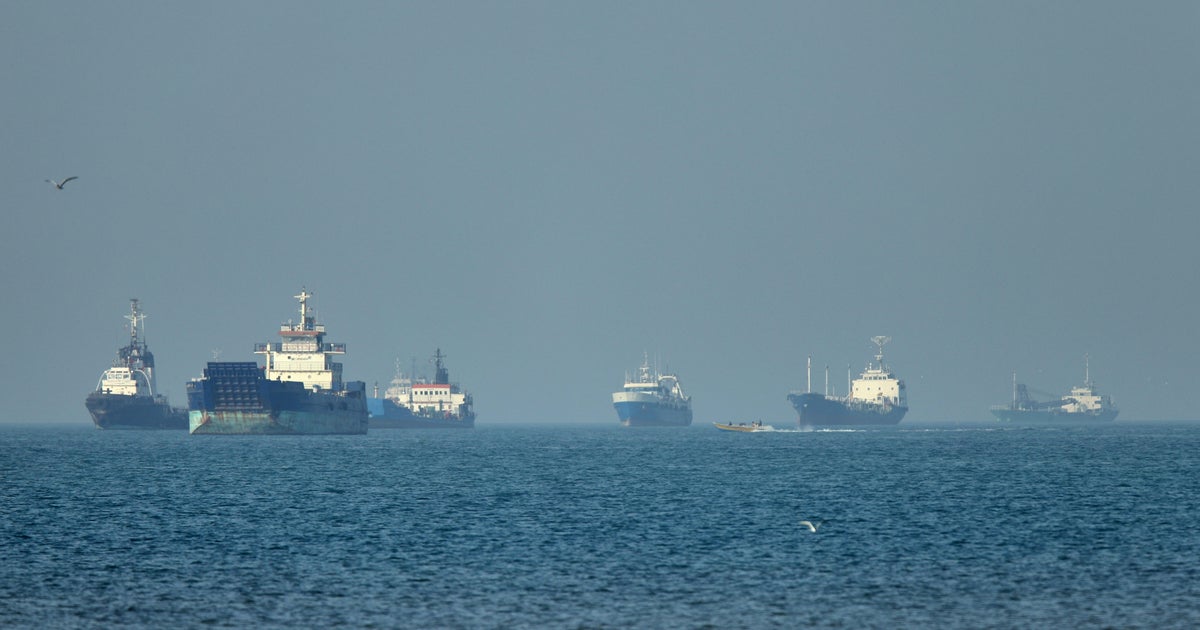
The United States military has issued urgent guidance to commercial shipping vessels, directing them away from their normal transit routes through the Strait of Hormuz and toward a specially cleared pathway that sits farther from Iranian waters. This dramatic shift comes as American naval forces work around the clock to address what officials describe as an “extremely hazardous” situation created by mines that Iran has planted throughout this vital international waterway. The strait, which serves as one of the world’s most important oil transit chokepoints, has become a focal point of escalating tensions between the United States and Iran, with the safety of civilian maritime traffic hanging in the balance. The U.S. Navy has spent several weeks methodically clearing mines and establishing what they hope will be a secure corridor for the hundreds of commercial vessels currently trapped in the Persian Gulf, unable to safely navigate their way to open waters.
Project Freedom: A Military Operation to Clear the Waters
In response to this maritime crisis, the United States has launched an ambitious initiative called Project Freedom, designed to reopen at least portions of the Strait of Hormuz to commercial shipping. Under this operation, military forces operating under U.S. Central Command are working in close coordination with commercial vessels to guide them safely through the cleared pathway. The Pentagon has provided visual evidence showing that Iran laid additional mines in the strait as recently as April 23, adding to the roughly dozen Iranian mines that were already reported in the waterway back in March. To tackle this complex and dangerous challenge, the military has deployed sophisticated MQ-9 Reaper drones to conduct mine sweeping support operations throughout the critical passage. These unmanned aerial vehicles provide essential surveillance and detection capabilities that help identify threats before ships enter dangerous waters. Additionally, the National Geospatial-Intelligence Agency, which specializes in collecting and analyzing satellite imagery and geographical data for the Defense Department, has been brought into the effort to assist with mine hunting operations, according to anonymous U.S. officials who spoke about these sensitive national security matters.
Mixed Messages and Evolving Acknowledgments
The communication from U.S. officials regarding the mine threat has evolved considerably over recent weeks, reflecting what appears to be an initial reluctance to acknowledge the full scope of the danger followed by a more transparent approach as the situation became undeniable. When reports first surfaced in March that Iran had been laying mines in the strait, President Trump publicly dismissed the claims, stating that “we have no reports of them doing so.” The Pentagon similarly downplayed the threat at that time, indicating there was “no clear evidence” that mines had actually been deployed in these waters. However, in recent days, as the scale of the problem became impossible to ignore, the administration has changed its tune and now openly acknowledges the presence of Iranian mines in the strait. Captain Tim Hawkins, serving as spokesman for U.S. Central Command, confirmed to reporters that while Iran has indeed laid mines throughout the Strait of Hormuz, the deployment has not been extensive. He emphasized that American forces have been actively addressing this threat over the past several weeks, including the successful clearing of an effective pathway that ships can now use for safer transit, and promised that the military would continue taking necessary steps to ensure vessels can complete their journeys without incident.
International Outrage and Ceasefire Violations
The international implications of Iran’s actions have drawn strong condemnation from top U.S. officials, who characterize the mine-laying operation as both illegal and outrageously reckless. Secretary of State Marco Rubio expressed his frustration during a White House briefing, emphasizing the severity of Iran’s actions by pointing out that “any country would try to fire at, to sink commercial vessels or put mines in the water — both of these things are illegal.” The violation of international maritime law represented by these mines threatens not just American interests but global commerce and the safety of civilian mariners from nations around the world. Defense Secretary Pete Hegseth had previously issued a stern warning to Iran on April 24, making clear that laying additional mines would constitute a violation of the ceasefire agreement between the two nations. He stated unequivocally that if Iran attempted to “recklessly and irresponsibly” lay more mines, the United States would take action, as such behavior would represent a clear ceasefire violation. When questioned again about the mine threat during a more recent briefing, Hegseth attempted to project confidence in the situation, noting that if additional mines are identified, various U.S. military units or international forces could address them, while emphasizing that a secure lane for commercial shipping has been established and is currently operational.
The Slow Movement of Stranded Vessels
Despite the launch of Project Freedom and the establishment of what officials describe as a safe passage route, the actual movement of commercial vessels through the strait has been painfully slow. So far, only two U.S. commercial ships have successfully departed the Persian Gulf since the operation began—a discouragingly small number when measured against the massive backlog of vessels awaiting passage. General Dan Caine, Chairman of the Joint Chiefs of Staff, revealed that approximately 1,550 commercial vessels from various nations have been stuck in the Gulf, unable to safely transit due to the mine threat. While Defense Secretary Hegseth optimistically stated that “hundreds more ships from nations around the world are lining up to transit” the cleared pathway, neither he nor General Caine would commit to specific projections about how many vessels they expect to successfully navigate through in the coming days or weeks. Both military leaders have been careful to characterize Project Freedom as a “defensive operation” that is “temporary in duration,” making clear distinctions between this mine-clearing effort and the separate bombing campaign known as Operation Epic Fury, which Secretary of State Rubio confirmed has now “concluded.” This distinction appears aimed at signaling to Iran and the international community that the United States is focused on defensive measures to protect commercial shipping rather than offensive military operations.
The Broader Context of Escalating Tensions
The mining of the Strait of Hormuz represents just one element of a larger confrontation between the United States and Iran that has seen dangerous escalation in recent months. Iranian officials have stated publicly that their decision to threaten the strait with mines and other measures is a direct response to American military actions, specifically the bombing campaign, and that these countermeasures will continue until the United States ends what Iran describes as a blockade on Iranian ports. This standoff places global commerce in a precarious position, as roughly one-fifth of the world’s petroleum passes through the Strait of Hormuz under normal circumstances, making it one of the most strategically important waterways on the planet. The current crisis affects not just American interests but has far-reaching implications for the global economy, energy markets, and international shipping. With hundreds of vessels still trapped and waiting for safe passage, the pressure on U.S. military planners to expand the cleared corridor and accelerate the transit process continues to mount. The situation remains fluid and potentially volatile, with the success of Project Freedom depending not only on the Navy’s ability to detect and clear existing mines but also on Iran’s willingness to refrain from laying additional explosives that could once again render the strait impassable for civilian shipping.