
The Closure of the Strait of Hormuz: A Global Economic Nightmare Unfolding
The Nightmare Scenario Becomes Reality
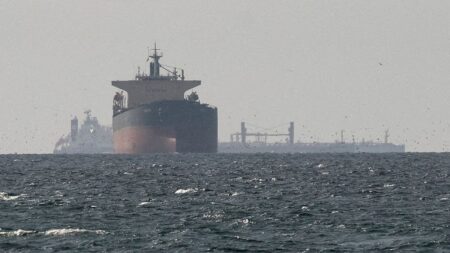
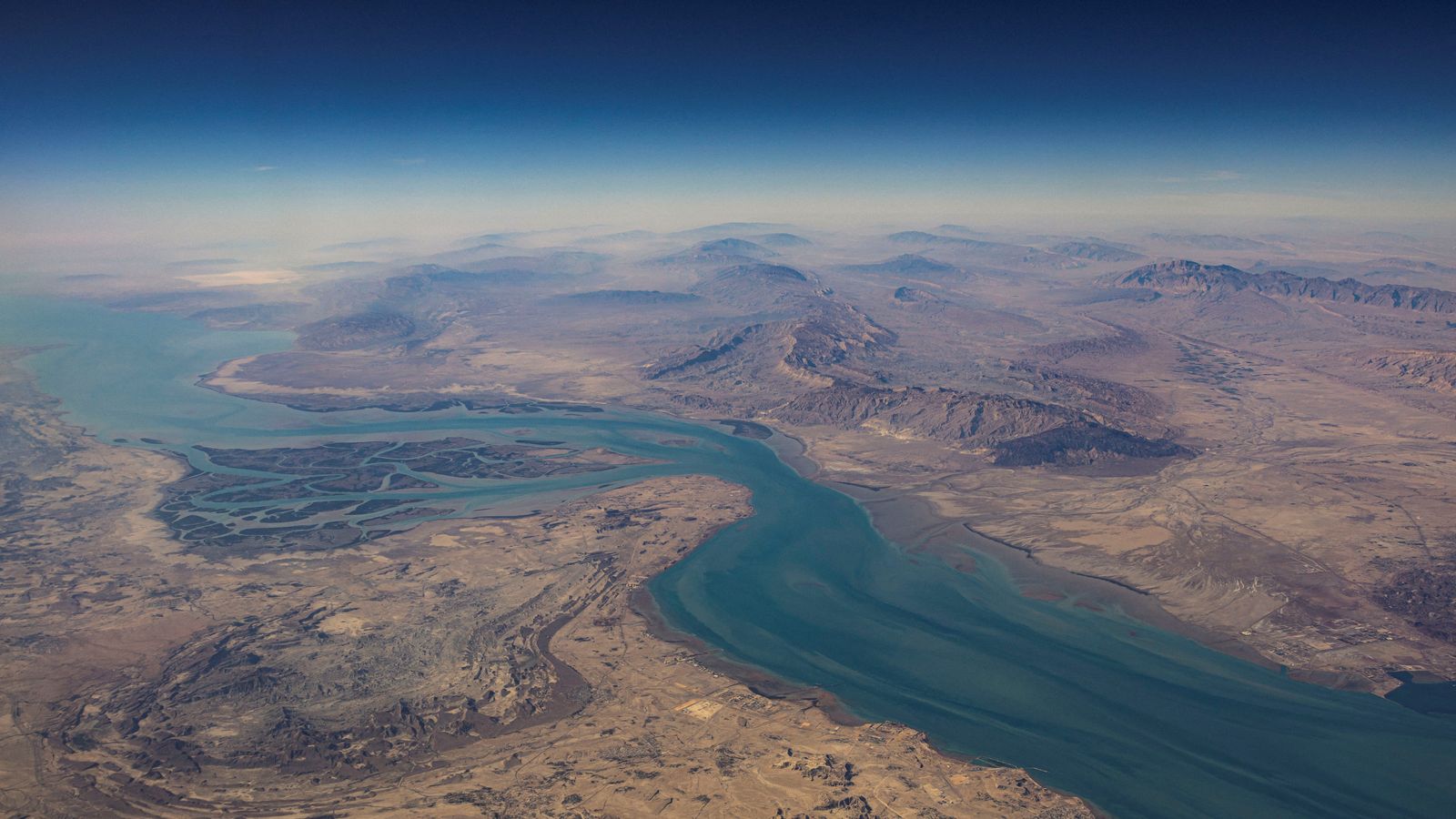
For decades, economists and geopolitical experts have consistently identified one scenario as among the most terrifying potential disruptions to the global economy: the closure of the Strait of Hormuz. This narrow waterway, which serves as the critical gateway to the Persian Gulf, has long been recognized as one of the world’s most strategically important chokepoints. Now, what was once merely a theoretical worst-case scenario has become our reality. Shipping traffic through this vital channel has virtually disappeared, dropping to nearly zero. The world’s worst energy nightmare has materialized before our eyes, and the implications are only beginning to unfold.
Interestingly, the initial market reaction has been surprisingly muted, creating a false sense of security that belies the severity of the situation. Major stock indices like America’s S&P 500 have remained relatively stable, barely registering the magnitude of this disruption. The UK’s FTSE 100 has experienced some decline but remains higher than its position just a month ago. This curious market stability has led some observers to question whether the feared catastrophe might not be as devastating as experts had predicted. However, this apparent calm is deceptive. Those with deep knowledge of energy markets and the economic geography of the Gulf region paint a starkly different picture. While the full impact may take time to manifest across the global economy, the consequences could prove utterly destabilizing, not only for the Gulf nations themselves but for the entire interconnected world economy that depends on the free flow of energy through this critical passage.
The Coming Wave of Inflation and Energy Crisis
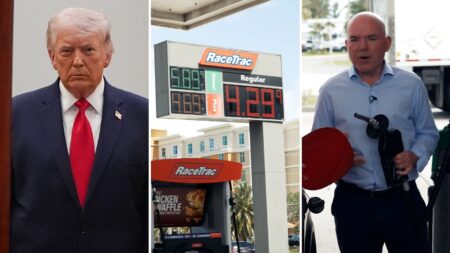
The most immediate and visible consequence of the Strait’s closure is the sharp spike in natural gas prices, which serves as a clear warning signal of higher inflation looming on the horizon in the coming months. For years, nations like the United Kingdom and others across Europe and Asia had counted on Qatar as one of the most dependable suppliers of liquified natural gas (LNG) in the world. This reliance made strategic sense given Qatar’s massive reserves and historically stable production. Now, however, this entire supply chain has been severed. The LNG tankers that once transported Qatari gas to markets around the world can no longer access the Persian Gulf to load their cargo. Even more critically, the Qatari gas fields themselves have ceased operations, cutting off the supply at its source.
The ramifications of this supply disruption are particularly catastrophic for numerous Asian economies. Countries including India, Pakistan, South Korea, and Taiwan find themselves facing a dire energy crisis. Unlike some Western nations, most of these countries maintain little to no strategic stockpiles of natural gas, leaving them dangerously vulnerable to supply interruptions. In the coming weeks and months, these nations will be forced to scramble desperately to secure sufficient methane supplies to keep their power stations generating electricity and their heating systems functioning, especially critical as seasonal demands fluctuate. This frantic search for alternative supplies will inevitably drive prices upward in markets around the globe, creating a bidding war for available LNG supplies.
Europe, still reeling from its own energy crisis following the reduction of Russian pipeline gas after the invasion of Ukraine, will also feel the pressure intensify. European nations had increasingly turned to LNG imports to fill the gap left by reduced Russian supplies, and the loss of Qatari gas will force them into direct competition with Asian buyers for the world’s remaining available supplies. The fundamental equation is brutally simple: the longer the Strait of Hormuz remains closed and the longer Qatar’s gas fields remain offline, the deeper and more painful this global energy crisis will become, with cascading effects on inflation, economic growth, and social stability.
Beyond Gas: The Ripple Effects on Critical Industries
The disruption extends far beyond natural gas, affecting numerous other critical materials that most people never think about but which underpin modern civilization. Qatar alone is responsible for producing approximately one-third of the world’s helium supply. While helium might seem like a trivial concern—perhaps associated in most people’s minds with party balloons—it is actually critical for advanced medical and technological applications. Without adequate helium supplies, MRI scanners in hospitals cannot function properly, potentially compromising diagnostic capabilities for millions of patients worldwide. Certain cutting-edge quantum computers also depend on helium to cool their sophisticated magnets and circuits to the extremely low temperatures required for quantum operations. The loss of this supply could significantly hamper both medical care and technological advancement.
Furthermore, the Gulf region as a whole produces approximately half of the world’s sulphuric acid, a chemical compound that most people rarely consider but which is absolutely fundamental to modern industry. Sulphuric acid is essential for manufacturing explosives used in mining and construction, and it’s equally critical for the refining of copper, a metal that has become even more important in our increasingly electrified world. Without adequate supplies of sulphuric acid, industries ranging from mining to electronics manufacturing will face serious disruptions. These examples merely scratch the surface of the Gulf’s role in global supply chains. As each day passes with the Strait closed, we can expect these disruptions to spread and multiply, creating shortages and price increases for products that seem entirely unrelated to Middle Eastern geography. The interconnected nature of modern global commerce means that a disruption in one critical chokepoint creates ripples that eventually touch nearly every sector of the economy.
The Crisis Trapped Inside: Oil Without Exit
While the world outside the Gulf faces rising prices and shortages, the situation for those trapped inside the Persian Gulf is even more severe and immediate. In an ideal world, the oil-producing nations of the region would have sufficient pipeline infrastructure to transport their petroleum products overland, bypassing the need for maritime shipping through the Strait of Hormuz. However, the reality falls far short of this ideal. The existing pipeline capacity is nowhere near adequate to handle the massive volumes of oil that these nations produce daily. The consequence is stark: without tankers able to enter the Gulf and load crude oil, the petroleum that continues to flow from beneath the ground in Saudi Arabia, Kuwait, Iraq, and Abu Dhabi literally has nowhere to go.
These nations maintain some strategic storage capacity for excess oil production, but this storage is finite and limited. This creates an unprecedented crisis that will reach a critical point within just days once storage facilities reach maximum capacity. At that point, these oil-producing nations will face an impossible choice between two terrible options. They could shut down their oil fields entirely to stop the flow of crude with nowhere to go, but this solution carries its own severe risks. Oil fields are complex geological and engineering systems, and shutting them down abruptly can cause permanent damage to the reservoir, potentially reducing future production capacity even after the crisis ends. The alternative is equally unthinkable: burning off the excess oil as it emerges from the ground, or potentially even allowing it to spill, creating both an environmental catastrophe and an enormous economic loss. Neither option is acceptable, yet one will soon become necessary if the situation continues. This represents not just a temporary disruption but potentially permanent damage to the world’s energy infrastructure and the environment.
Questions About Society and the Gulf Model
Beyond the immediate energy and economic concerns, the closure raises profound questions about the social and demographic structure of Gulf societies themselves. The economies of nations like the United Arab Emirates, Qatar, Kuwait, and Saudi Arabia are built on a unique model that depends heavily on immigrant labor and expertise. Massive numbers of workers from South Asia, the Philippines, Western nations, and elsewhere have relocated to the Gulf, attracted by employment opportunities and often generous compensation packages. These expatriates form the backbone of everything from construction and hospitality to finance and technology sectors in Gulf cities. However, most of these immigrant workers never anticipated living under the threat of aerial bombardment or being trapped in a region cut off from normal maritime commerce and potentially subject to military conflict.
As the situation deteriorates and the sense of danger increases, a very reasonable question emerges: what happens when these immigrant workers decide to leave? If significant numbers of expatriates choose to evacuate for their own safety, returning to their home countries, what does this mean for the Gulf economic model that depends so heavily on their labor and expertise? Cities like Dubai, Abu Dhabi, and Doha could face not just an energy crisis but a human capital crisis, with critical positions in both essential services and advanced industries left vacant. The construction projects, tourism infrastructure, financial services, and technological development that have transformed the Gulf in recent decades could grind to a halt. This potential exodus raises existential questions about whether the Gulf’s modern economic model can survive a prolonged crisis, or whether the region might face a broader collapse of the social and economic systems built over the past several decades.
The Urgency of Resolution
None of the scenarios outlined above offer any comfort or grounds for optimism. Every question posed leads to answers that range from concerning to catastrophic. The implications for the global economy are uniformly negative, threatening to trigger inflation, shortages, industrial disruptions, and potentially recession in numerous countries simultaneously. The situation is, to put it bluntly, genuinely frightening in its potential scope and severity. The deceptively calm initial market reaction should not fool anyone into complacency—the worst effects are still to come as stockpiles deplete, alternative supplies prove inadequate, and the ripple effects spread throughout interconnected global supply chains.
This is precisely why every reasonable person should hope fervently that the Strait of Hormuz does not remain closed for long. Time is the critical variable in determining whether this crisis becomes a brief disruption or a historic catastrophe. Each additional day that the Strait remains impassable multiplies the damage and deepens the crisis. Energy stockpiles diminish, storage facilities fill, prices rise, and the likelihood of permanent damage to infrastructure and economic systems increases. What might be manageable as a brief interruption could become an uncontrollable disaster if allowed to continue for weeks or months. The world is now in a race against time to resolve whatever conflict or circumstance has closed this critical waterway before the mounting consequences become irreversible and the nightmare scenario becomes even darker than the worst predictions.