
The Hidden Face of Hunger in America: One Family’s Story and a Nation’s Challenge
When Hard Work Isn’t Enough
Shannon Patrick’s story shatters common misconceptions about food insecurity in America. At 33, she embodies what many would consider the American dream in progress – a full-time professional with both a bachelor’s and master’s degree, working as a behavioral technician helping children with autism. Yet every week, she joins the line of shopping carts at Community Food Share near Boulder, Colorado, struggling to feed her three children on a $2,000 monthly salary. After paying rent, student loans, and buying clothes for her growing kids, there’s almost nothing left for groceries. The single mother watches her cart of donated food, knowing it might last a week if she’s careful, especially with her 12-year-old in a growth spurt. “I thought that if I got my bachelor’s degree, if I got my master’s degree, that that would open up so many doors,” she reflects with visible disappointment. “I wouldn’t have to rely on the government. But it just seems like it’s not like that.” Her experience reveals an uncomfortable truth about modern America: education and employment don’t guarantee food security. The shame she feels is palpable, describing the societal stigma that makes her feel “less than” or “dirty” for needing assistance, and the crushing guilt of feeling like she’s failing her children despite working full-time.
The Staggering Scale of American Hunger
The numbers paint a disturbing picture of prosperity alongside deprivation. According to the U.S. Department of Agriculture’s most recent data before the Trump administration discontinued the annual report, nearly 48 million Americans struggle with food insecurity. Perhaps most heartbreaking is that approximately 14 million of those facing hunger are children. The elimination of this annual report, dismissed by the administration as “redundant” and “politicized,” hasn’t made the problem disappear – it’s simply made it harder to track and address. Claire Babineaux-Fontenot, CEO of Feeding America, the nation’s largest hunger relief organization, challenges the notion of “earned hunger” – the belief that people are hungry because they haven’t worked hard enough. “The reality is, that is not manifestly true,” she states firmly. “Hunger happens here oftentimes in spite of a lot of hard work.” Her organization oversees hundreds of food banks and pantries across the country, including Southern Louisiana’s Second Harvest Food Bank, collectively distributing nearly six billion meals last year. Yet even this massive effort falls short of meeting the need, and Babineaux-Fontenot describes the heartbreak of food bank workers who must turn people away despite warehouses that might appear full to outsiders.
Lessons from the Pandemic: Proof That Hunger Can Be Solved
The COVID-19 pandemic brought unprecedented challenges, but it also revealed something remarkable about America’s capacity to address hunger when there’s political will. Babineaux-Fontenot, just two years into her role when the pandemic struck, witnessed an unusual phenomenon: bipartisan congressional engagement on hunger issues. Emergency relief measures and expanded food assistance programs drove food insecurity rates down to one of the lowest levels ever recorded in the United States. Most Americans remain unaware of this achievement, but it stands as concrete evidence that hunger in America is a solvable problem when adequate resources and political commitment align. However, as pandemic-era programs ended, so did much of that progress. “I guess we thought it was done,” Babineaux-Fontenot says, capturing the national tendency to treat hunger as a temporary emergency rather than an ongoing crisis. The pandemic proved that the infrastructure, resources, and knowledge exist to dramatically reduce food insecurity – what’s often missing is sustained commitment. This reality makes the current situation all the more frustrating for those working on the front lines, who know that millions of Americans are going hungry not because the solution is unknown, but because it’s considered too costly or politically inconvenient to maintain.
From Personal Crisis to Purpose: Claire Babineaux-Fontenot’s Journey
Claire Babineaux-Fontenot’s path to leading Feeding America began with her own moment of desperate need. As a first-generation college student putting herself through law school, she found herself standing in her tiny apartment, staring into an empty refrigerator with literally nothing to eat. Decades later, the memory still brings tears to her eyes. “It’s interesting how something can happen that long ago and how it can feel like it’s happening right now,” she reflects. Swallowing her pride, she sought help at the Salvation Army, barely able to speak above a whisper. A kind woman with a warm smile asked, “You need some help, baby?” That single act of compassion left an indelible mark. Babineaux-Fontenot went on to become a successful tax attorney, eventually rising to executive vice president and global treasurer for Walmart – a remarkable achievement by any measure. But in 2015, a breast cancer diagnosis prompted her to reconsider her priorities. She left her prestigious corporate position to dedicate herself to fighting hunger, channeling the lessons learned from both her moment of need and her extraordinary upbringing in a household that embodied radical generosity.
A Family Built on Feeding Others
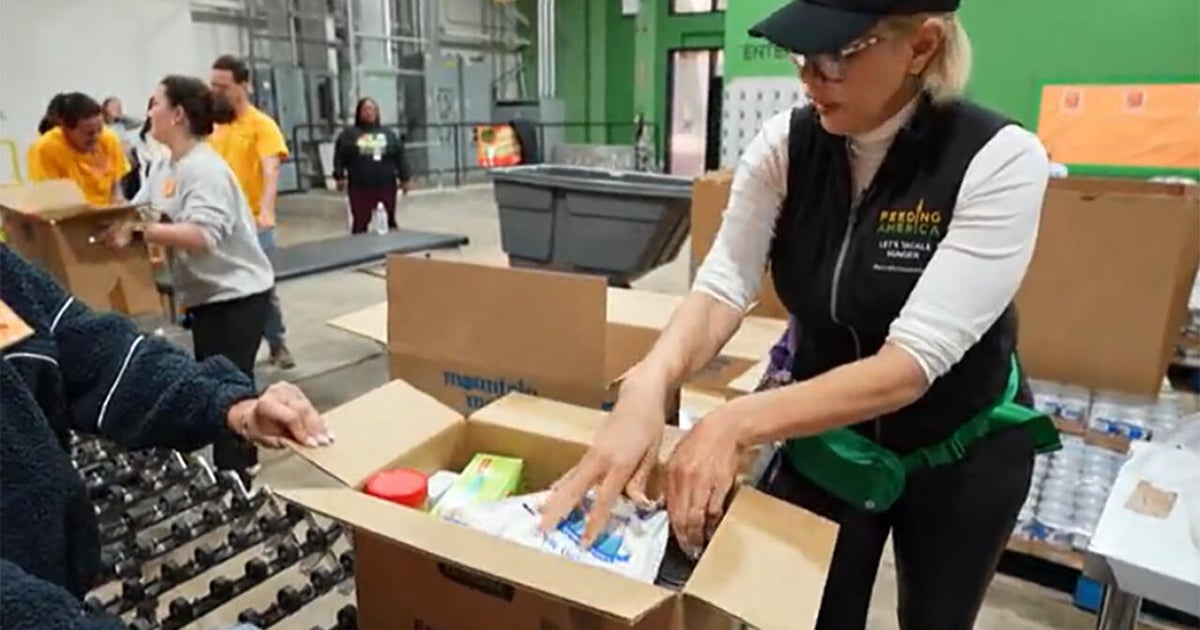
Mary Alice and Warren Babineaux created something remarkable in Opelousas, Louisiana – a family defined not by biology but by love and the refusal to let any child go hungry or unloved. Claire Babineaux-Fontenot grew up with 107 siblings, some biological, some adopted, some fostered, but she refuses to distinguish between them. “I don’t answer that question, mostly because, in the not answering, I get to say this: that is the least important thing about our family,” she explains. Her parents’ reputation for sheltering and feeding neighborhood children became legendary in their community. Her sister Cynthia remembers a young man arriving at their door directly from the hospital, still wearing his hospital gown, because Mrs. Babineaux had told him to come if he was hungry. Without hesitation, Cynthia prepared him a meal. This Christmas, about two dozen Babineaux family members gathered at the old family house to pack food boxes for a nearby senior center, continuing their mother’s tradition. “As long as we do this, we keep the things that she thought were important, we keep those alive,” Claire says. This upbringing taught her to see need wherever it exists, to respond with dignity and warmth, and to recognize that hunger doesn’t discriminate – it can touch anyone, even herself.
The Unfinished Work and an Uncertain Future
After more than seven years leading Feeding America, Claire Babineaux-Fontenot announced she’ll be stepping down next month at age 61, though she’s not entirely sure what comes next. She and her husband, with two grown children, are considering becoming foster parents themselves, bringing her life full circle to her parents’ example. “I am deeply committed to this work, and I will always be committed to this work as long as there’s work to be done,” she promises. Back in Colorado, Shannon Patrick represents that unfinished work. She cares for her children, but who cares for her? She admits there are times she’s gone hungry to ensure her kids are fed. This particular week, there are breakfast burritos for dinner, and everyone seems happy. But next week, the family’s hunger clock will reset to zero, and the struggle begins again. Patrick’s plea is simple but profound: “That doesn’t mean that we’re bad people, or that we’re less worthy. We still should be able to eat. Just because we’re low-income doesn’t mean that we don’t deserve to do the same things as other people.” Her words capture the fundamental injustice of food insecurity in the world’s wealthiest nation – where hard work, education, and full-time employment still can’t guarantee the most basic human need. The elimination of hunger data by the government may make the problem less visible in official reports, but it doesn’t make the empty refrigerators, the skipped meals, or the shame any less real for the millions of Americans who experience it every day.