

Top Intelligence Official Resigns Over Iran War as Congressional Hearing Looms
A High-Profile Resignation Shakes the Intelligence Community
In a stunning development that has sent shockwaves through Washington’s intelligence apparatus, Joe Kent, the director of the National Counterterrorism Center, tendered his resignation on Tuesday evening, just hours before a crucial congressional hearing on global security threats. Kent’s departure represents one of the most significant protests from within the Trump administration’s national security establishment since the United States launched its military campaign against Iran. In his resignation letter addressed directly to President Trump, Kent made clear that his decision was driven by matters of conscience and principle, stating unequivocally that he “cannot in good conscience support the ongoing war in Iran.” His letter went far beyond a simple resignation, offering a scathing critique of the administration’s rationale for military action and raising profound questions about the intelligence and political pressures that led to the conflict.
Kent’s letter pulled no punches in its assessment of the situation, asserting that “Iran posed no imminent threat to our nation” and arguing that the United States initiated hostilities primarily “due to pressure from Israel and its powerful American lobby.” This represents an extraordinary public statement from a senior intelligence official, one that challenges the fundamental justification the administration has provided for its military operations. Kent went further, accusing high-ranking Israeli officials and certain media outlets of conducting a deliberate “misinformation campaign” designed to manipulate the president’s understanding of the threat environment. According to Kent, this coordinated effort was specifically crafted to deceive President Trump “into believing that Iran posed an imminent threat to the United States, and that should you strike now, there was a clear path to a swift victory.” In what may be the most damning portion of his letter, Kent flatly declared: “This was a lie.” He concluded with an appeal to the president to “reflect upon what we are doing in Iran, and who we are doing it for,” suggesting that American military action may be serving foreign interests rather than genuine U.S. national security needs.
The Intelligence Community’s Pre-War Assessment
Kent’s explosive resignation gains additional weight when viewed against the backdrop of the intelligence community’s own assessments of Iran prior to the current conflict. Nearly a year before the United States launched its military campaign against Iran, the annual threat assessment produced by America’s intelligence agencies painted a picture that dramatically contradicts the administration’s current justifications for war. The March 2025 report, which represents the consensus view of all seventeen U.S. intelligence agencies, stated clearly that the intelligence community continued “to assess Iran is not building a nuclear weapon.” Furthermore, the assessment noted that then-Supreme Leader Ali Khamenei had not reauthorized Iran’s nuclear weapons program, “though pressure has probably built on him to do so.” This suggests that whatever nuclear ambitions Iran may have harbored were being kept in check by deliberate policy decisions at the highest levels of Iranian leadership.
The 2025 intelligence assessment also provided insights into Iranian strategic thinking and intentions that seem at odds with the administration’s characterization of an imminent threat. According to the report, “Khamenei continues to desire to avoid embroiling Iran in an expanded, direct conflict with the United States and its allies.” This assessment of Iranian intentions suggests a leadership attempting to avoid precisely the kind of confrontation that ultimately occurred. The timeline of events following this assessment is notable: a few months after the intelligence community’s report, the United States became involved in a twelve-day war between Iran and Israel, during which U.S. forces bombed three Iranian nuclear sites. President Trump subsequently claimed that these strikes had “obliterated” Iran’s nuclear program. The current, more extensive bombing campaign against Iran began on February 28th and resulted in the death of Supreme Leader Khamenei himself. Since that time, President Trump and other administration officials have consistently claimed that the Iranian regime posed an “imminent” threat to the United States, a characterization that appears difficult to reconcile with the intelligence community’s pre-war assessment. The 2025 report did acknowledge Iran’s significant conventional military capabilities, noting that the country had fielded large numbers of ballistic and cruise missiles, as well as unmanned drones capable of striking throughout the region, and that Iran’s forces were “capable of inflicting substantial damage to an attacker, executing regional strikes, and disrupting shipping, particularly energy supplies, through the Strait of Hormuz.”
Gabbard’s Response and the Question of Presidential Authority
Director of National Intelligence Tulsi Gabbard responded to Kent’s resignation letter through a post on the social media platform X, appearing to defend the president’s decision-making while sidestepping the substantive allegations Kent raised. Gabbard’s statement emphasized that “the president is responsible for determining what is and is not an imminent threat,” essentially arguing that the ultimate judgment on such matters rests with the commander-in-chief rather than with individual intelligence officials or even the collective assessment of the intelligence community. She continued by asserting that “after carefully reviewing all the information before him, President Trump concluded that the terrorist Islamist regime in Iran posed an imminent threat and he took action based on that conclusion.” This response is notable for what it doesn’t address: Gabbard made no attempt to refute Kent’s specific allegations about Israeli pressure or the misinformation campaign he described, nor did she engage with the apparent contradiction between the intelligence community’s 2025 assessment and the administration’s claims of an imminent threat.
Gabbard’s framing of the issue places presidential prerogative at the center of the discussion, suggesting that regardless of what intelligence assessments may say, the president has the authority to make his own determination about threats and to act accordingly. This raises fundamental questions about the relationship between intelligence analysis and policy decisions, about the proper role of intelligence professionals in speaking truth to power, and about the circumstances under which national security officials might feel compelled to resign rather than implement policies they believe are based on flawed premises. Her characterization of Iran as a “terrorist Islamist regime” also reflects the administration’s broader rhetorical approach to justifying the conflict, focusing on the nature of Iran’s government rather than engaging with specific questions about the threat it posed to the United States at the time military action was initiated.
A Critical Congressional Hearing Amid Growing Questions
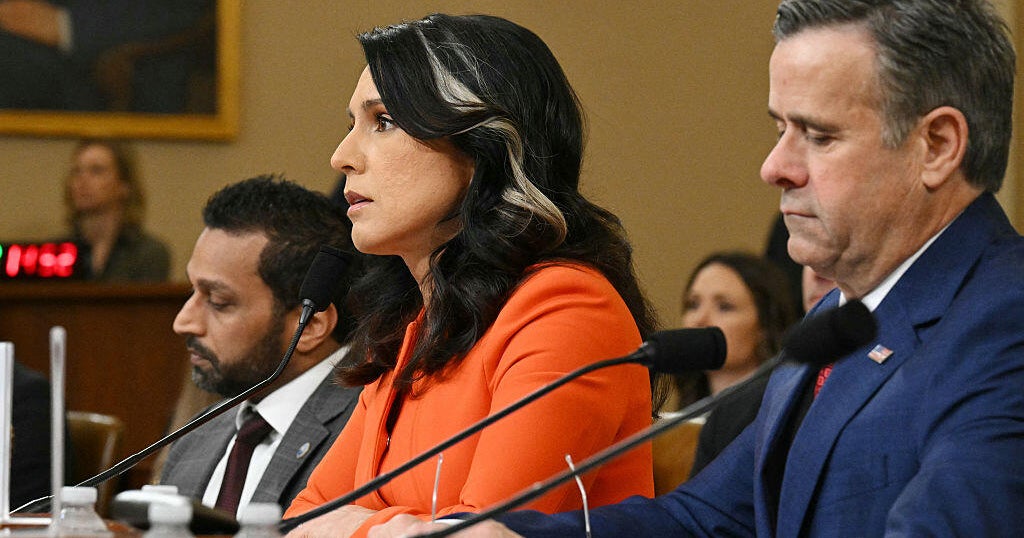
The timing of Kent’s resignation—on the eve of the Senate Intelligence Committee’s annual hearing on global security threats—ensures that his allegations will loom large over the proceedings. President Trump’s intelligence chiefs, including Gabbard herself, CIA Director John Ratcliffe, FBI Director Kash Patel, and military intelligence leaders, are scheduled to testify before the committee. Their appearance comes at a moment when Democratic lawmakers are intensifying their calls for senior administration officials, particularly Secretary of State Marco Rubio and Defense Secretary Pete Hegseth, to provide public testimony about the rationale for the war with Iran and the administration’s strategy for concluding the conflict. However, rather than the State and Defense Department leaders, it will be the intelligence chiefs—Gabbard, Ratcliffe, Patel, Defense Intelligence Agency Director Jeffrey Hartman, and National Security Agency Director Timothy Adams—who will face questioning from senators.
These intelligence leaders will find themselves in an uncomfortable position, testifying at a hearing that typically focuses on threats from China, Russia, and Iran, but now must address questions about an ongoing war with Iran that was apparently not predicted or advocated for in the intelligence community’s own threat assessments. The hearing occurs against a backdrop of mounting concerns: the timeline for ending the war remains unclear, the administration’s justifications for military operations have shifted over time, and U.S. allies have shown notable reluctance to support or participate in the military campaign. The intelligence chiefs will likely face intense questioning about the disconnect between the 2025 threat assessment and the administration’s claims of an imminent threat, about the process by which intelligence was presented to the president, and about whether political considerations or foreign influence improperly shaped the decision to go to war. Last year’s hearing was dominated by controversy over a Signal chat in which Trump officials discussed sensitive details about military strikes in Yemen, demonstrating how quickly these annual proceedings can become focused on immediate controversies rather than long-term strategic threats.
Broader Implications for Intelligence and Policy
Kent’s resignation and the circumstances surrounding it raise profound questions about the health of the relationship between the intelligence community and policymakers, particularly the president. The intelligence community’s role is to provide objective, non-politicized assessments of threats and capabilities, allowing policymakers to make informed decisions. When a senior intelligence official resigns and publicly alleges that the president was deceived by a foreign misinformation campaign, it suggests a catastrophic breakdown in this relationship. Kent’s letter implies either that accurate intelligence was available but was disregarded in favor of information that supported a predetermined policy outcome, or that foreign actors successfully manipulated the intelligence reaching the president. Either scenario represents a serious failure of the system designed to ensure that America’s most consequential national security decisions are based on the best available information.
The situation also highlights tensions that have long existed regarding the influence of foreign governments on U.S. policy, particularly in the Middle East. Kent’s explicit reference to pressure from “Israel and its powerful American lobby” touches on one of the most sensitive topics in American foreign policy discourse. Regardless of one’s views on the U.S.-Israel relationship, Kent’s allegation that Israeli officials conducted a misinformation campaign to push the United States into war with Iran represents an extraordinary claim that demands serious investigation. If true, it would suggest that a foreign government successfully manipulated the President of the United States into launching a major military operation that serves that foreign government’s interests rather than America’s own national security needs. The reluctance of U.S. allies to support the Iran war may indicate that other governments share Kent’s assessment that the conflict is not justified by genuine threats to Western security interests. As the war continues with no clear endpoint in sight, and as the human, financial, and diplomatic costs mount, the questions Kent has raised about who benefited from the decision to go to war are likely to become increasingly central to the national debate about American foreign policy and the proper role of intelligence in shaping it.