


Tragic Niagara Falls Tour Bus Crash Results in Manslaughter Charges
The Devastating Accident That Shook Multiple Communities
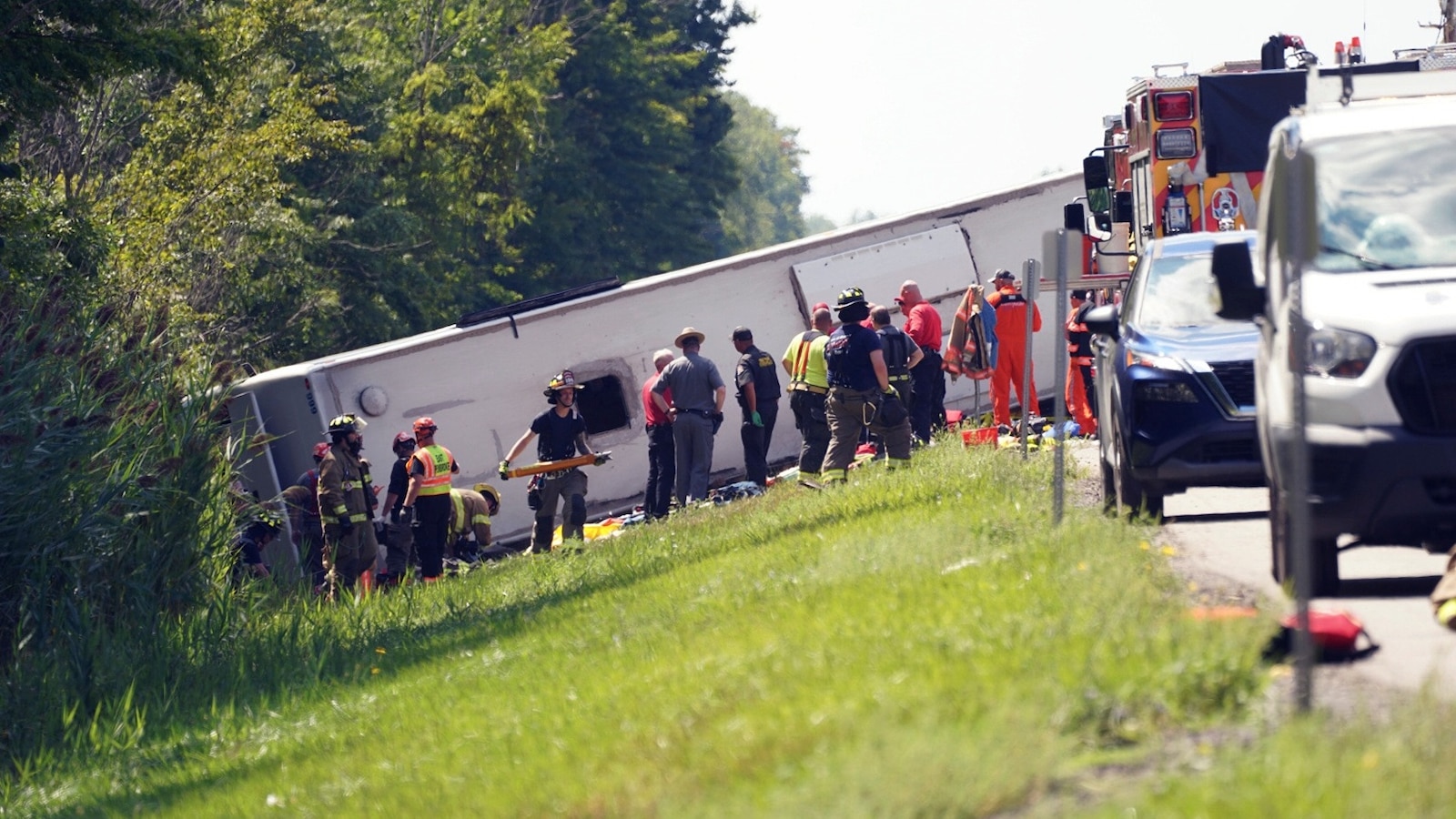
In what authorities have described as a “large-scale and complex incident,” a tour bus returning from a sightseeing trip to Niagara Falls overturned on Interstate 90 in Pembroke, New York, near Buffalo, in August 2025. The catastrophic crash claimed the lives of five people and left dozens more injured, with passengers being violently ejected or thrown around inside the bus as it rolled off the highway. The tragedy affected families across the globe, as the 54 passengers aboard ranged in age from just one year old to 74 years old and hailed from seven different countries. What should have been a pleasant conclusion to a day spent enjoying one of America’s most iconic natural wonders turned into a nightmare that would reverberate through international communities and prompt a months-long investigation by New York State authorities.
The scope of the emergency response underscored the severity of the incident. Hundreds of first responders rushed to the scene to rescue victims and provide medical assistance. All survivors required hospitalization, with injuries varying in severity. First responders worked tirelessly at the chaotic scene, dealing with the challenges of multiple casualties and the technical difficulties of a large commercial vehicle accident. The diverse international makeup of the passenger list complicated notification processes, as authorities had to work with consulates and families across multiple countries to inform loved ones about the tragedy. The crash didn’t just impact those directly involved; it sent shockwaves through immigrant communities across the New York metropolitan area and as far as China and India, where some of the victims called home.
Driver Faces Serious Criminal Charges
Following an extensive investigation that lasted several months, authorities announced on Friday that the bus driver, 56-year-old Bin Shao of Flushing, New York, has been charged in connection with the deadly crash. Shao faces five counts of second-degree manslaughter and five counts of criminally negligent homicide—one of each charge for each of the five people who lost their lives. The indictment was returned at the end of January, though authorities waited until this week to arrest Shao at a business location in Putnam Valley. Captain Dan Howard with the New York State Police’s Bureau of Criminal Investigation announced the charges, marking a significant development in a case that has left many families seeking answers and accountability for their devastating losses.
Shao was arraigned on Friday in Genesee County, where he pleaded not guilty to all ten counts in the indictment. He is currently being held in Genesee County Jail on a $100,000 bond, according to Genesee County District Attorney Kevin Finnell. ABC News has attempted to reach Shao’s attorney for comment, but no statement has been made public at this time. The charges Shao faces are serious and carry significant potential penalties under New York law. Second-degree manslaughter involves recklessly causing the death of another person, while criminally negligent homicide involves causing death through criminal negligence—a failure to perceive a substantial and unjustifiable risk that a reasonable person would have recognized. The fact that prosecutors brought both charges suggests they believe they have evidence of reckless conduct on Shao’s part that went beyond simple negligence.
What Led to the Charges: Decisions and Actions Behind the Wheel
At a press briefing on Friday, District Attorney Finnell provided limited but important details about the basis for the charges. “The charges stem from the decisions made and the actions taken by Mr. Shao as he operated the bus on the New York State Thruway in Pembroke,” Finnell stated. While he declined to go into specifics about the prosecution’s case or the detailed allegations—likely to protect the integrity of the upcoming trial—his words suggest that investigators believe Shao made conscious choices while driving that directly led to the crash. Significantly, Finnell emphasized that there was no evidence of any kind of impairment from drugs or alcohol at the time of the crash, ruling out what might have been the most obvious explanation for such a catastrophic loss of control.
The absence of impairment as a factor raises important questions about what actually caused the crash. Possible factors that investigators might have examined include excessive speed, distracted driving, driver fatigue, improper maneuvering, failure to maintain the vehicle properly, or failure to respond appropriately to road or weather conditions. The fact that multiple people were ejected from the bus suggests either that passengers weren’t properly wearing seatbelts (if the bus was equipped with them) or that the violence of the crash was so severe that restraints failed or people were thrown through windows. The months-long investigation would have included examination of the bus’s mechanical condition, analysis of any available video footage from the bus or nearby vehicles, review of the driver’s logs and rest periods, interviews with survivors, and reconstruction of the accident sequence based on physical evidence at the scene.
Remembering the Five Lives Lost
The human cost of this tragedy cannot be measured simply in legal charges or investigative findings. Five people lost their lives that August day, each leaving behind grieving families and communities. The victims represent the international nature of the tour group and the American immigrant experience. Shankar Kumar Jha, 65, had traveled from as far as Madhu Bani, India. Pinki Changrani, 60, was from East Brunswick, New Jersey. Xie Hongzhuo, just 22 years old, was a student at Columbia University from Beijing, China, with his whole life ahead of him. Zhang Xiaolan, 55, and Jian Mingli, 56, were both from Jersey City, New Jersey, a community with a large Asian-American population that was deeply affected by the tragedy.
Each of these individuals had their own story, their own dreams, and their own circle of loved ones who now must cope with sudden and traumatic loss. For Xie Hongzhuo’s family, the pain is compounded by the loss of a young person just beginning to make his way in the world, pursuing higher education far from home. For the families of the older victims, the crash took away parents, possibly grandparents, and pillars of their communities. The crash occurred during what should have been a joyful outing—a tour to see one of the world’s most spectacular waterfalls. Instead, it became a defining tragedy for multiple families across continents. As Captain Howard noted, the passengers came from seven different countries, truly underscoring “the wide-reaching impact of this tragedy” on communities around the world.
The Legal Road Ahead and Questions of Accountability
As the case against Bin Shao moves forward through the criminal justice system, many questions remain about what will happen next and what justice might look like for the victims’ families. Shao has pleaded not guilty, which means the case will likely proceed to trial unless a plea agreement is reached. The prosecution will need to prove beyond a reasonable doubt that Shao’s actions met the legal standards for manslaughter and criminally negligent homicide. This will likely involve presenting evidence about his driving behavior, any violations of traffic laws or commercial driving regulations, and expert testimony about what a reasonable bus driver should have done in the circumstances leading up to the crash.
Defense attorneys will have the opportunity to challenge the prosecution’s evidence and present alternative explanations for the crash. They may argue that mechanical failure, road conditions, or actions by other drivers contributed to or caused the accident, or that Shao’s actions, while perhaps unfortunate, did not rise to the level of criminal recklessness or negligence. The families of the victims and the survivors will be watching closely as the legal process unfolds, hoping for answers about why their loved ones died or were injured, and seeking some measure of accountability. Beyond the criminal case, there will likely be civil lawsuits seeking damages for the victims and their families. The outcome of this case may also prompt broader discussions about tour bus safety regulations, driver training requirements, and oversight of commercial passenger vehicles. For now, a community continues to grieve while awaiting justice for five lives cut tragically short on what should have been an ordinary summer day.