
President Trump’s $10 Billion Defamation Lawsuit Against BBC Set for Trial
Trial Date Confirmed for Controversial Panorama Episode
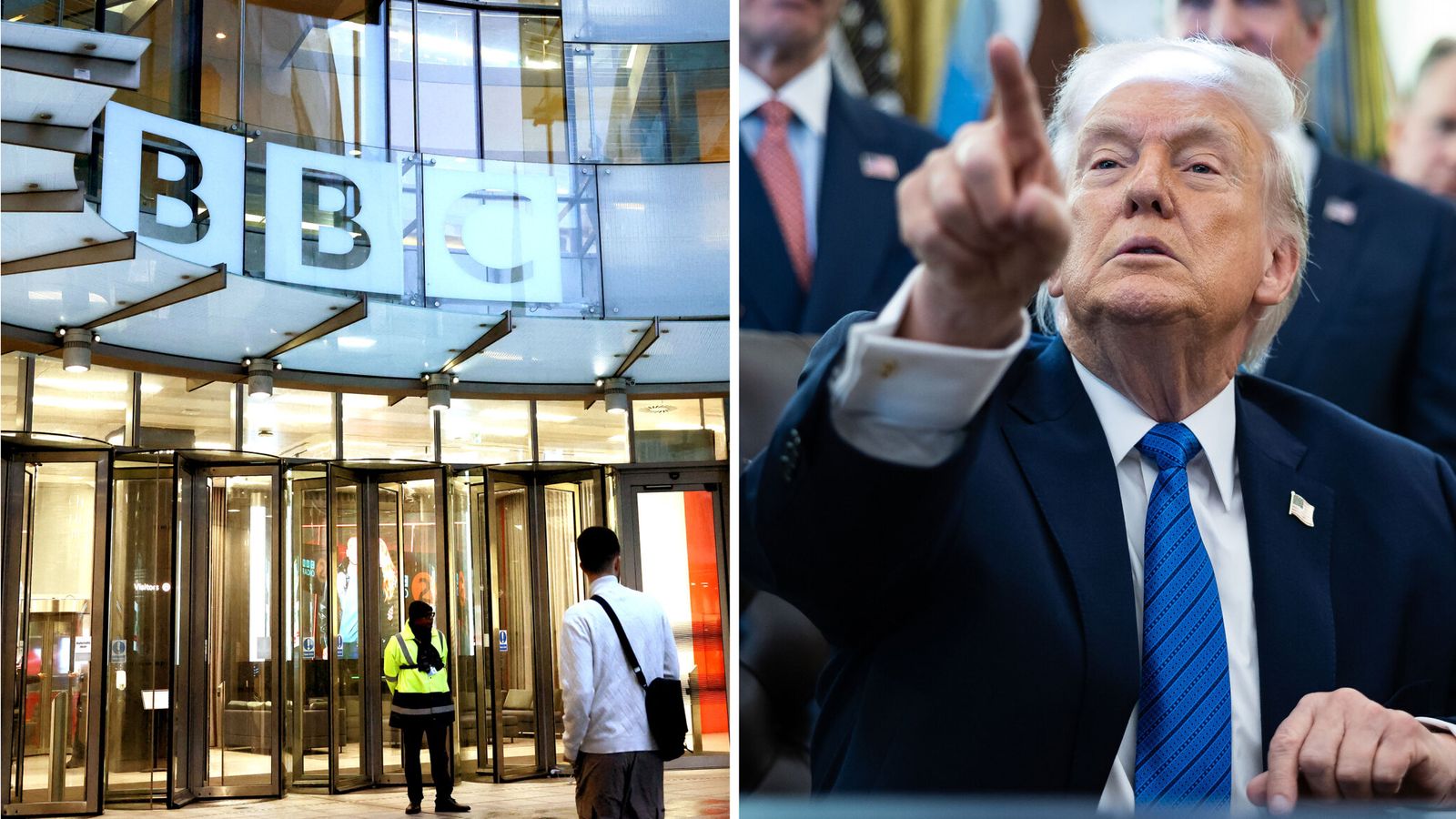
A significant legal battle between former President Donald Trump and the British Broadcasting Corporation is moving forward, with a Florida court scheduling a two-week trial to begin on February 15, 2027, in Miami. The case centers on a 2024 BBC Panorama documentary that aired edited footage of Trump’s speech to supporters on January 6, 2021—the day of the infamous Capitol attack in Washington DC. The lawsuit, seeking a staggering $10 billion (approximately £7.5 billion) in damages, represents one of the most substantial defamation claims brought against a major international news organization in recent years. Judge Roy K. Altman’s decision to move the case forward signals that Trump’s legal team has cleared initial hurdles, despite the BBC’s multiple attempts to have the lawsuit dismissed on various procedural grounds.
The controversy at the heart of this legal dispute revolves around editorial decisions made by the BBC’s investigative journalism program, Panorama. According to court filings, the documentary edited together soundbites from President Trump’s speech that were actually delivered 50 minutes apart. The edited sequence created a statement that appeared to read: “We’re going to walk down to the Capitol… and I’ll be there with you. And we fight. We fight like hell.” Trump’s legal team argues that this editing technique fundamentally misrepresented his words and created a false narrative that he directly incited the violence that followed. The January 6 attack on the Capitol remains one of the darkest days in modern American history, with a Senate report documenting the loss of at least seven lives, including five police officers who were either killed during the incident or died in its aftermath. The gravity of these events makes the context and accurate representation of Trump’s words particularly significant from both historical and legal perspectives.
The BBC’s Apology and Defense Strategy
In what might seem like an unusual position for a defamation defendant, the BBC has already issued an apology acknowledging that their edit gave a “mistaken impression that President Trump had made a direct call for violent action.” This admission represents a significant concession that the editing was problematic and potentially misleading to viewers. However, the broadcasting giant is not backing down from fighting the lawsuit itself. The BBC’s defense strategy appears to rest on several pillars, the most notable being their argument that despite the controversial edit, Trump suffered no actual harm—pointing to the fact that he was ultimately re-elected to the presidency. This defense suggests that even if the broadcast was misleading, it didn’t damage Trump’s reputation or standing with the American public in any measurable way that would justify the massive damages being sought.
Beyond arguing lack of harm, the BBC has attempted multiple legal maneuvers to have the case thrown out entirely. These efforts have included challenging the court’s jurisdiction, arguing that the Panorama episode wasn’t actually available to viewers in Florida or anywhere else in the United States, which would theoretically limit any defamatory impact in American markets. The broadcasting organization has also raised various other procedural objections designed to prevent the case from reaching a jury trial. However, Judge Altman’s recent ruling indicates that these arguments have not been persuasive enough to dismiss the case at this stage. The judge also rejected the BBC’s attempt to delay the “discovery” phase of the litigation—the critical period where both sides exchange evidence and information—calling such a delay “premature.” This decision means the BBC will need to begin providing documents, communications, and other materials related to the Panorama episode’s production relatively soon.
The Financial Stakes and Legal Implications
The $10 billion damage claim breaks down into two separate $5 billion components, reflecting different legal theories. The first $5 billion is sought under traditional defamation law, which requires proving that false statements were made that damaged the plaintiff’s reputation. The second $5 billion is being claimed for “unfair trade practices,” a somewhat unusual addition to a defamation case that suggests Trump’s legal team is arguing the BBC’s actions constituted improper business conduct beyond simple reputational harm. If successful, this would represent one of the largest defamation awards in legal history, though legal experts widely acknowledge that even if Trump prevails, the actual damages awarded are likely to be substantially less than the amount claimed. The astronomical figure appears designed both to emphasize Trump’s view of the severity of the BBC’s alleged misconduct and to generate significant media attention around the case.
The lawsuit raises important questions about journalistic editing practices, particularly in the age of social media and rapid news consumption where context can easily be lost. News organizations routinely edit interviews and speeches for time constraints, but the ethical and legal boundaries of such editing remain subject to debate. When does editing for clarity and brevity cross the line into misrepresentation? The BBC’s own admission that their edit created a “mistaken impression” suggests they recognize they may have crossed such a boundary, but the question of whether this rises to the level of defamation that should result in billions of dollars in damages is what the trial will ultimately determine. The case could potentially set important precedents for how courts evaluate editorial decisions by news organizations, particularly when those decisions involve politically sensitive content about major public figures.
The Historical Context of January 6th
The backdrop to this legal battle is the January 6, 2021 attack on the United States Capitol, an event that shook American democracy to its core and continues to reverberate through the nation’s political landscape. On that day, a mob of Trump supporters stormed the Capitol building in an attempt to prevent the certification of Joe Biden’s electoral victory. The violence resulted in multiple deaths, injuries to numerous law enforcement officers, and significant damage to the Capitol building itself. Congressional proceedings were disrupted for several hours as lawmakers were evacuated to secure locations. The Senate report cited in the lawsuit documents that at least seven lives were lost in connection with the attack, including five police officers, though the exact circumstances and timelines of these deaths have been subjects of ongoing investigation and debate.
Trump’s role in the events of January 6th has been intensely scrutinized, investigated by Congress, and has resulted in various legal proceedings. His speech to supporters earlier that day, which took place at a rally near the White House, has been analyzed word-by-word by investigators, journalists, and legal scholars trying to determine whether his rhetoric directly incited the violence that followed. The question of whether Trump’s words constituted protected political speech or unlawful incitement to violence has profound implications not just for this BBC lawsuit, but for American democracy and the limits of presidential power. This makes the BBC’s editorial choices particularly sensitive—accurately representing what Trump said and in what context is essential for historical record and public understanding of one of the most significant events in recent American history.
Looking Ahead to the 2027 Trial
As the case moves toward the scheduled February 2027 trial date, both sides will be preparing their arguments and gathering evidence during the discovery phase. The BBC has made clear through a spokesperson that they intend to vigorously defend against the lawsuit, stating: “As we have made clear previously, we will be defending this case. We are not going to make further comment on ongoing legal proceedings.” This measured response suggests the organization is taking the lawsuit seriously while being careful not to make statements that could be used against them in court. The two-week trial timeframe indicates the court expects substantial evidence and testimony to be presented by both sides.
For Trump, the lawsuit represents both a legal battle and a continued effort to shape the narrative around January 6th and his role in those events. By challenging the BBC’s characterization of his words, he is effectively arguing that media organizations have unfairly portrayed him as responsible for inciting violence. For the BBC, the case represents a test of journalistic independence and the ability of news organizations to critically examine powerful political figures without facing crushing legal penalties. The international dimension of the case—a British broadcasting organization being sued in American courts by a former and current U.S. president—adds additional complexity. Whatever the outcome, the trial promises to be closely watched by media organizations, legal scholars, and political observers worldwide, as it will likely have implications far beyond the immediate parties involved, potentially influencing how news organizations approach editing and presenting politically sensitive content in the future.