
Navy Secretary John Phelan’s Sudden Departure: What It Means for U.S. Naval Leadership
Immediate Leadership Change at the Navy’s Helm
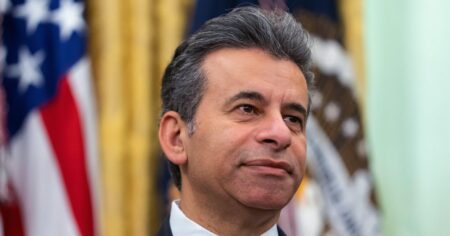
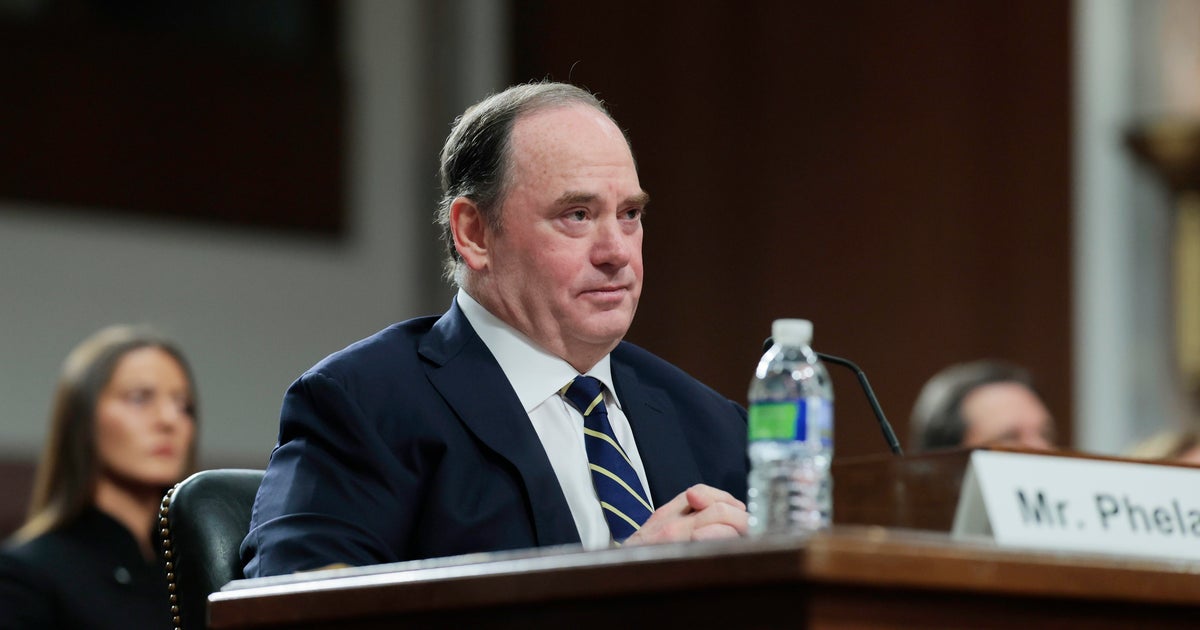
In a surprising development that has sent ripples through Washington’s defense community, Navy Secretary John Phelan has stepped down from his position with immediate effect. The announcement, delivered by chief Pentagon spokesman Sean Parnell on Wednesday, marks another significant shake-up in the military’s top leadership ranks. According to White House insiders who spoke with CBS News, the decision wasn’t entirely Phelan’s own – President Trump and Defense Secretary Pete Hegseth had reached a mutual conclusion that the Navy needed fresh leadership direction. In a gesture of professional courtesy, Hegseth personally informed Phelan of the decision before the news became public knowledge. Taking over the reins as the Navy’s acting civilian leader is Undersecretary Hung Cao, a Navy veteran who recently made headlines during his unsuccessful 2024 Senate campaign in Virginia, where he ran as the Republican nominee against Democratic incumbent Tim Kaine.
A Pattern of High-Profile Departures
Phelan’s exit is far from an isolated incident – it’s part of a broader pattern of leadership changes sweeping through the federal government’s upper echelons in recent months. The turnover has been particularly pronounced within the military establishment, where Defense Secretary Hegseth has been actively reshaping the leadership landscape. Earlier this month, Hegseth requested the resignation of Army Chief of Staff Gen. Randy George, a move that raised eyebrows across military circles. The shake-up didn’t stop there – Army officers who commanded the Transportation and Training Command, along with the Chaplain Corps, were also relieved of their duties. Adding to this trend, Navy Admiral Alvin Holsey, who led the U.S. military’s Southern Command, opted for retirement at the end of last year. Beyond the Pentagon’s walls, the Cabinet has experienced its own exodus, with three secretaries departing since last month: Attorney General Pam Bondi was dismissed, while Secretary of Homeland Security Kristi Noem and Labor Secretary Lori Chavez-DeRemer also left their positions, creating a sense of instability within key government departments.
Leadership Vacuum During Critical Times
The timing of Phelan’s departure couldn’t be more delicate, given the Navy’s central role in ongoing tensions with Iran. The Department of the Navy, which maintains oversight of both naval forces and the Marine Corps, now finds itself without its top civilian official during a particularly volatile period in Middle Eastern affairs. For roughly two weeks, a temporary ceasefire between the United States and Iran has held, offering a fragile peace in the region. However, this pause in hostilities hasn’t translated into a complete stand-down of military operations. At President Trump’s explicit direction, the U.S. Navy continues to enforce a stringent naval blockade on Iranian ports, maintaining pressure on the Islamic Republic despite the ceasefire. The situation remains fluid, with the president and various administration officials floating the possibility of deploying Navy vessels to escort oil tankers through the strategically vital Strait of Hormuz, a narrow waterway that serves as a crucial chokepoint for global energy supplies. This leadership transition at such a critical juncture raises questions about continuity in naval strategy and decision-making during a time when steady hands are particularly valuable.
Phelan’s Background and Brief Tenure
John Phelan brought an unconventional background to the Navy Secretary position, coming from the world of high finance rather than traditional military or government service. Before taking the helm at the Navy, Phelan was a financier who had previously served in a key role helping to manage the family investment office of billionaire Michael Dell, founder of Dell Technologies. His Senate confirmation came in March 2025, with a reasonably solid bipartisan vote of 62-30 – notably, eleven Democrats crossed the aisle to support the Trump nominee, suggesting he had managed to build some measure of cross-party credibility. Despite his relatively short tenure, Phelan oversaw the Navy during several significant operations. Under his watch, Navy forces participated in military strikes targeting suspected drug trafficking vessels operating near Latin America, part of the administration’s hardline approach to narcotics interdiction. The Navy also conducted seizures of oil tankers with alleged links to Venezuela, tightening the economic pressure on that country. Perhaps most dramatically, former Venezuelan President Nicolás Maduro was transported to a U.S. aircraft carrier after being captured by American forces earlier this year, with Phelan playing a coordinating role in this high-profile operation.
The Push for Naval Expansion
One of the more ambitious initiatives during Phelan’s time as Navy Secretary was his involvement in President Trump’s grand vision to dramatically expand America’s naval fleet. The administration unveiled plans to construct as many as 25 new battleships, a massive undertaking that would represent the most significant naval buildup in decades. In a moment that captured the administration’s approach to military branding, Phelan appeared alongside Defense Secretary Hegseth and President Trump at the Mar-a-Lago resort to introduce what the military has officially designated as “Trump-class” battleships. This naming convention, breaking with traditional naval vessel naming practices, reflects the president’s personal stamp on military procurement and development. The battleship initiative represents a substantial investment in naval power projection, signaling the administration’s belief that America’s security and global influence depend heavily on maritime dominance. Phelan’s departure now leaves questions about who will shepherd this ambitious expansion program through the complex processes of design, funding appropriation, contracting, and construction that lie ahead.
Looking Forward: What’s Next for Navy Leadership
As the dust settles on this latest leadership change, attention now turns to acting Secretary Hung Cao and what his stewardship will mean for the Navy’s direction. Cao’s background as a Navy veteran gives him practical understanding of naval operations and military culture, though his recent foray into partisan politics – running as a Republican Senate candidate – may color how some view his appointment. His most immediate challenge will be maintaining operational continuity while the Navy remains on high alert in the Middle East and continues its various missions worldwide. Phelan made his final public appearance on Tuesday at the Sea Air Space Conference in the Washington, D.C. area, a major gathering of naval professionals, defense contractors, and policymakers. Whether this appearance offered any hints about his impending departure remains unclear, but it bookended a tenure that, while brief, coincided with significant naval operations and ambitious expansion plans. As the administration continues its pattern of leadership changes across the military and civilian government, observers will be watching closely to see whether this approach produces the improved results the White House clearly seeks, or whether the constant turnover creates instability that undermines effective governance and national security.