


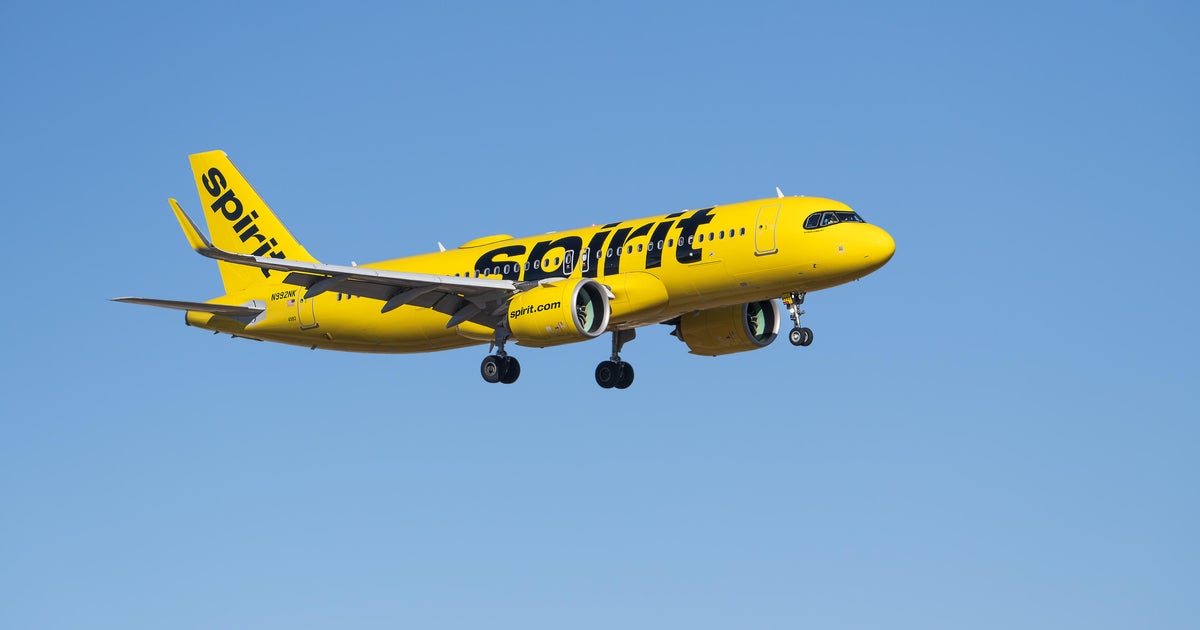

Trump Administration Considers Major Bailout for Spirit Airlines: What It Means for Travelers and the Industry
A Federal Lifeline for a Struggling Carrier
The Trump administration has entered serious negotiations about throwing a financial lifeline to Spirit Airlines, the budget carrier that has become synonymous with bare-bones flying and rock-bottom fares. According to sources close to the discussions who spoke with CBS News, the government is considering a rescue package that could provide up to $500 million in loans to the struggling airline. But this wouldn’t be a simple handout – in exchange for the cash infusion, the federal government would receive warrants that could translate into a significant ownership stake in the Florida-based carrier. Commerce Secretary Howard Lutnick has emerged as one of the strongest voices within the administration advocating for this deal, pushing his colleagues to seriously consider taking a piece of the airline. While the agreement isn’t finalized and details could still shift, sources suggest an announcement could come very soon. The Wall Street Journal was first to break the story, which has since sent ripples through the aviation industry and raised questions about what happens when ultra-low-cost carriers disappear from the skies.
Why the Government is Getting Involved
Government bailouts of airlines aren’t entirely unprecedented – we saw massive federal intervention after the September 11 attacks devastated the travel industry, and again during the COVID-19 pandemic when planes sat grounded and travel ground to a virtual halt. However, those were industry-wide rescue packages designed to keep the entire aviation sector from collapsing. What makes this Spirit situation unusual is that it would represent a targeted bailout of a single carrier, something the federal government rarely does. President Trump himself waded into the debate publicly on Tuesday, suggesting that while he’d prefer to see another airline simply acquire Spirit, he wanted his team to explore what a rescue package might look like. Transportation Secretary Sean Duffy acknowledged the ticking clock, telling CBS News that no final decision had been made but emphasizing the human element: “A lot of people work for Spirit. We care about the people that work for Spirit in this industry.” The real question facing policymakers is whether Spirit can be saved and made viable again, or whether federal money would simply delay the inevitable collapse of a carrier that may no longer have a sustainable business model in today’s competitive aviation landscape.
The Human Cost and Economic Impact
Spirit Airlines isn’t just another company facing financial troubles – it’s the employer of approximately 15,000 people, with roughly 6,000 of those jobs based in Florida, where the company maintains its headquarters in Fort Lauderdale. These are real families depending on Spirit paychecks, from pilots and flight attendants to mechanics, customer service representatives, and corporate staff. Secretary Duffy framed the administration’s dilemma in stark terms: officials need to determine whether intervention can genuinely save Spirit and make it competitive again, or whether taxpayer dollars would merely be postponing an unavoidable liquidation. It’s a question with no easy answers, requiring the administration to balance compassion for workers against fiscal responsibility and market realities. The decision involves complex economic modeling, industry analysis, and ultimately, a judgment call about Spirit’s future viability. Teams within the Transportation and Commerce departments are working to brief the president on options, with the understanding that whatever decision is made will set a precedent for how the government responds when individual carriers face existential threats.
What Happens When Budget Airlines Disappear
The potential loss of Spirit matters for reasons beyond its employees – it has significant implications for air travelers across the country, particularly those who depend on low fares. When ultra-low-cost carriers like Spirit exit a market, something predictable and troubling happens: ticket prices climb, sometimes dramatically. We’ve already seen this pattern play out in real time. When Spirit ended its last two routes at Minneapolis-St. Paul International Airport in December 2025 – both to Delta hub cities Detroit and Atlanta – Delta wasted no time adjusting its pricing strategy. Within days, fares on those routes jumped, with some tickets increasing by as much as 50%. This isn’t an isolated incident but rather a consistent pattern documented by aviation analytics firms. Data from Cirium, which tracks airline pricing and operations, reveals what happens when budget carrier Frontier Airlines departed various markets between 2023 and 2025. In the 149 routes where Frontier stopped flying, average ticket prices increased by 15.5%, translating to about $18 more per ticket. By contrast, in markets where Frontier maintained service, prices rose only about 2.5%, or roughly 93 cents per ticket. Nearly 79% of those abandoned routes saw fares climb the following year, with the trend accelerating more recently: among the 91 routes Frontier exited between 2024 and 2025, a striking 85% experienced fare increases averaging $26 per ticket.
The Competitive Pressure That Keeps Fares Low
Some markets experienced even more dramatic price jumps when budget competition vanished. Flights between Fort Myers, Florida, and San Juan, Puerto Rico, saw fares skyrocket by $127 after Frontier’s departure, while the Cincinnati to Philadelphia route became $83 more expensive. These aren’t abstract statistics – they represent real money coming out of travelers’ pockets, vacation plans that become unaffordable, and family visits that happen less frequently. Henry Harteveldt, an airline analyst with Atmosphere Research Group, explained the dynamic in simple terms: “Budget airlines are like weights when it comes to airfares. They help keep fares down on the airlines that compete with them. When there are no budget airlines on a route, airfares take off faster than the planes themselves.” This competitive pressure is precisely what Spirit and other ultra-low-cost carriers provide to the marketplace. Their bare-bones service model – charging extra for everything from carry-on bags to seat selection – allows them to advertise incredibly low base fares that force traditional carriers to compete on price, at least to some degree. When that competitive pressure disappears, the remaining airlines face less incentive to keep prices down, and market forces push fares upward.
What Comes Next for Spirit and Air Travelers
As the Trump administration weighs its options, travelers and industry observers are watching closely to see whether Spirit will receive its federal lifeline or be allowed to fail. A Spirit Airlines spokesperson declined to comment on the negotiations but emphasized that the carrier continues operating normally for now. The Department of Transportation also declined to provide details about the discussions. Whatever happens in the coming days will have lasting implications far beyond Spirit’s balance sheet. If the government does intervene with a substantial loan and takes an ownership stake, it would mark a significant departure from typical free-market principles and raise questions about which struggling companies deserve federal support and which should be left to market forces. On the other hand, if Spirit is allowed to collapse or liquidate, the immediate impact will be felt by its 15,000 employees and the millions of travelers who have come to depend on its low fares, even while complaining about its service and fees. The broader airline industry would also consolidate further, with fewer competitors and potentially less pressure to keep fares affordable. As Secretary Duffy noted, the clock is indeed ticking, and a decision point is approaching rapidly. Whatever choice emerges from these closed-door negotiations will shape not just Spirit’s future, but the competitive landscape of American aviation for years to come.