
Trump’s Tariff Turmoil: Understanding the Latest Trade Policy Chaos
The Rollercoaster Ride of Tariff Rates
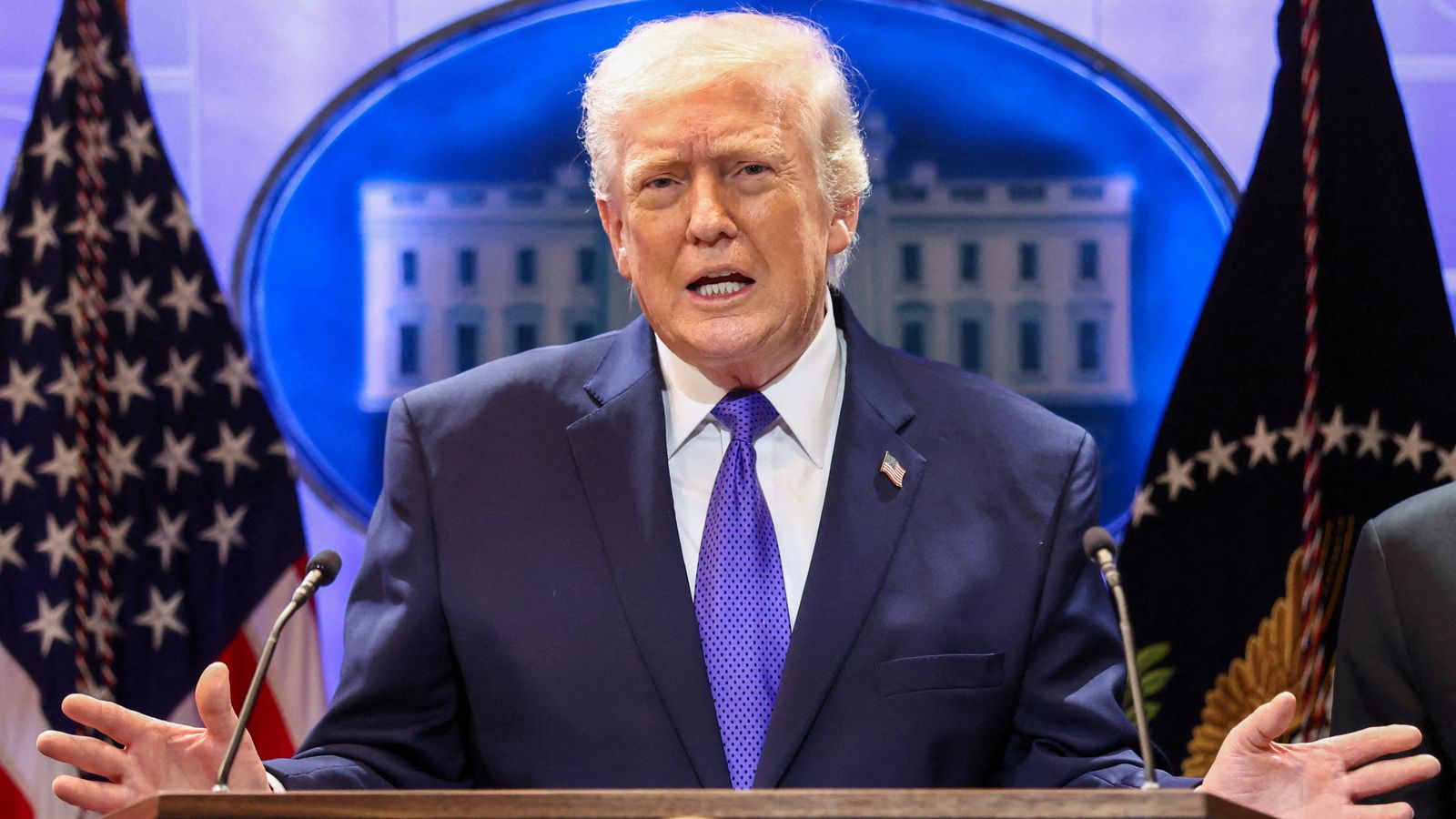
If you’ve been trying to keep up with President Trump’s tariff announcements lately, you’re probably feeling dizzy—and you’re not alone. In what has become a dizzying display of policy flip-flopping, the president just announced a global tariff rate of 15% on Saturday, barely 24 hours after setting it at 10% on Friday. Yes, you read that correctly: the tariff rate increased by 50% in a single day. The announcement came, as has become customary for major policy declarations in the Trump era, via a post on Truth Social just before lunchtime on Saturday. This rapid-fire change has left governments around the world scrambling once again to understand what these tariffs mean for their economies, their trade relationships with the United States, and their own citizens. The confusion isn’t just about the rate itself—it’s about the entire legal framework that’s suddenly shifted beneath everyone’s feet, creating uncertainty in global markets and international relations.
The Supreme Court Strikes Down the Original Tariff Plan
To understand why we’re in this mess, we need to rewind to Friday, when the Supreme Court delivered a crushing blow to Trump’s original tariff strategy. In a six-to-three decision, the highest court in the United States ruled that the president’s methods for imposing tariffs were unconstitutional. This wasn’t just a minor legal setback—it was a fundamental rejection of the legal foundation Trump had been using to wield his tariff weapon since what he called “Liberation Day” last April. The majority of justices determined that the tariffs exceeded the powers that Congress had granted to the president under a 1977 law, which was designed to give the president authority to regulate commerce during national emergencies created by foreign threats. Essentially, the Supreme Court said that Trump had overstepped his constitutional boundaries and was using powers he simply didn’t have. This created an immediate crisis for the administration, as tariffs have been the cornerstone of Trump’s approach to international relations and his vision of reshaping America’s economic relationships with the rest of the world.
Scrambling for a Legal Workaround
With his original tariff authority stripped away by the Supreme Court, President Trump and his team immediately went searching for alternative legal mechanisms to continue imposing tariffs on foreign goods. They found their answer in Section 122 of the Trade Act of 1974, a different statute that gives the president certain powers to impose temporary tariffs. This is the legal avenue he’s now using to justify the new 10% tariff announced on Friday, which he quickly bumped up to 15% on Saturday. However, this new approach comes with significant limitations that didn’t apply to his previous method. The most important constraint is time: these tariffs can only last for 150 days under this particular statute. That’s just five months, after which the president will need to either find yet another legal justification for tariffs, get Congress to grant him new authority, or watch his entire tariff system collapse. This is why his Saturday social media post explicitly mentioned that he would be looking for new ways to levy duties on foreign goods. The administration is essentially buying time while searching for a more permanent solution to replace the system that the Supreme Court just demolished.
Why Tariffs Matter So Much to Trump’s Power
It’s crucial to understand that this isn’t just about trade policy in the traditional sense—tariffs have been the fundamental tool of Trump’s entire approach to wielding presidential power on the global stage. So much of his ability to influence other countries, to force concessions from allies and adversaries alike, and to project American power has been based on his ability to threaten any nation with crippling economic penalties in the form of tariffs. Whether dealing with China, the European Union, Mexico, Canada, or any other trading partner, Trump has consistently used the threat of tariffs as his primary negotiating leverage. Take away that weapon, and his entire foreign policy strategy starts to crumble. This explains the urgency and somewhat panicked nature of the administration’s response to the Supreme Court ruling. They couldn’t afford even a day without tariffs in place, which is why the new 10% rate was announced immediately on Friday, and why the president felt empowered to increase it to 15% just a day later. The tariffs aren’t just an economic policy—they’re the foundation of Trump’s worldview about how America should interact with other nations.
Confusion, Exemptions, and Global Uncertainty
As if the rapid changes in tariff rates and legal justifications weren’t confusing enough, the actual implementation of these new tariffs remains murky and unclear. There are apparently exemptions for certain products, including agricultural goods, steel, and automobiles, but even these exemptions are subject to interpretation and confusion. Governments around the world are desperately seeking clarity about exactly which of their exports will be hit with these new tariffs and which might be exempted. Trade lawyers are working overtime trying to parse the language of the announcements and figure out what their clients can expect. Businesses that rely on international supply chains are in limbo, not knowing whether to rush shipments before new tariffs take effect, whether to absorb costs or pass them on to consumers, or whether to fundamentally restructure their operations to avoid tariff-affected countries. The Supreme Court’s ruling, while decisive in striking down Trump’s original tariff authority, left many questions unanswered—most notably, whether tariffs already collected under the now-unconstitutional system will need to be refunded. This uncertainty alone represents billions of dollars hanging in the balance and creates massive complications for fiscal planning by both businesses and governments.
A World of Mess and What Comes Next
The phrase “a whole world of mess and uncertainty” barely begins to capture the chaotic situation facing global trade right now. Financial markets hate uncertainty above all else, and Trump’s tariff policies have created uncertainty on a scale rarely seen in modern international commerce. Countries that had negotiated trade deals with the United States are wondering if those agreements still hold any meaning. Businesses that made long-term investment decisions based on previous tariff structures are facing potential losses. Consumers are likely to see price increases on imported goods, though exactly which goods and by how much remains unclear. The 150-day clock is now ticking on the current tariff system, meaning we’ll likely see another round of dramatic changes and announcements within the next five months as the administration either finds new legal justification for tariffs or sees them expire. Meanwhile, Congress could potentially step in to either grant Trump the tariff authority he wants or to explicitly limit his powers in this area. The Supreme Court’s ruling has opened a constitutional question about the balance of power between the executive and legislative branches when it comes to regulating international trade. As we move forward, the only thing we can predict with certainty is more volatility, more confusion, and more sudden announcements that force everyone—from government officials to business leaders to ordinary citizens—to scramble to understand the new reality of international trade under Trump’s unpredictable leadership.