
Trump Claims U.S. Strikes on Iran Open Door to Diplomacy After Death of Supreme Leader
A Historic Strike and Its Immediate Aftermath
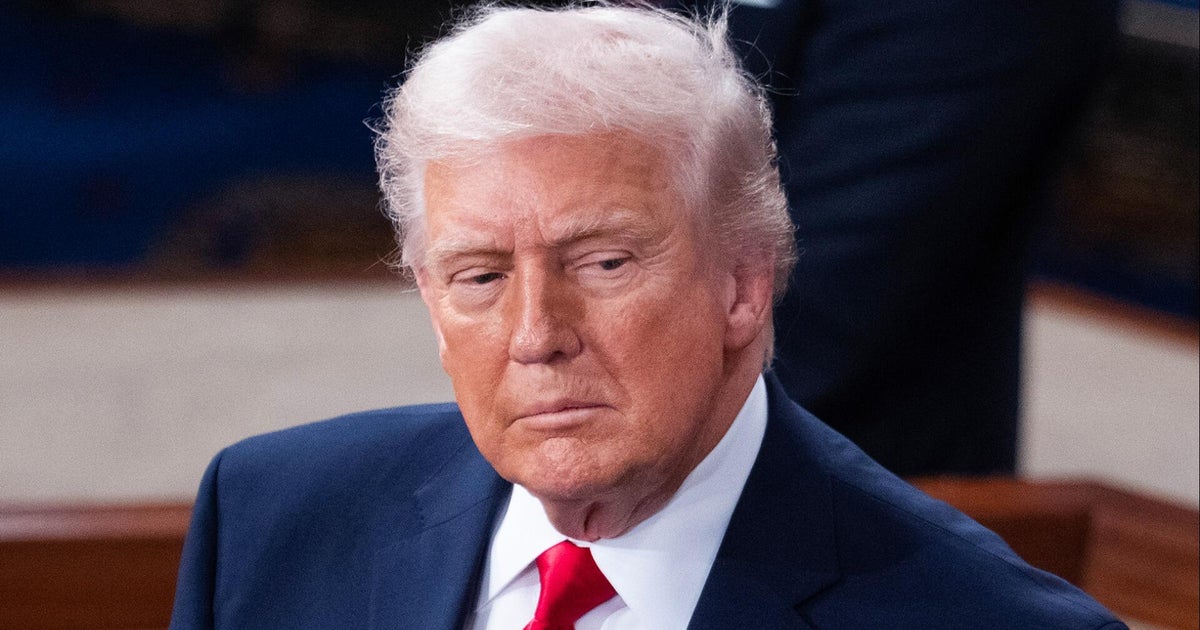
In what marks one of the most significant military operations in recent Middle Eastern history, President Trump spoke with CBS News on Saturday evening following U.S. and Israeli strikes that reportedly killed Iran’s Supreme Leader Ayatollah Ali Khamenei. The Iranian leader, who had held power for nearly 37 years, was among approximately 40 Iranian officials killed in the coordinated attack. Trump characterized the day as “a great day for this country, a great day for the world,” expressing strong confidence in the operation’s success. The president’s tone suggested both satisfaction with the military outcome and optimism about what might come next. When asked about the possibility of finding a diplomatic solution to the ongoing crisis, Trump didn’t hesitate, stating that negotiations would be “much easier now than it was a day ago, obviously,” adding that Iranian forces “are getting beat up badly.” This statement reveals the administration’s belief that military pressure has fundamentally shifted the balance of power in the region and created conditions more favorable to American interests.
Monitoring Iran’s Response and Assessing the Damage
Despite the bold strike that eliminated Iran’s top leadership, President Trump told reporters that he continues to closely monitor how Iran is responding across the Middle East. Throughout Saturday, the president remained in communication with both U.S. officials and world leaders, coordinating responses and assessing the evolving situation on the ground. Iran’s retaliation came swiftly, with ballistic missiles launched toward Israel and attacks directed at U.S. allies elsewhere in the region. However, Trump indicated that the Iranian response has been less severe than American intelligence had anticipated. “We thought it’d be double,” he explained, though he was careful to note that the situation remains unpredictable and could still escalate. “Thus far, it’s been less than we thought,” he added, suggesting either that Iran’s military capabilities were more damaged than expected or that the country’s leadership is exercising restraint despite the devastating loss. In Israel, the retaliatory strikes resulted in one death and dozens of injuries, while U.S. Central Command reported no American deaths or injuries during the operation in Iran itself—a detail the administration clearly views as a success.
The Question of Iran’s Future Leadership
One of the most intriguing aspects of Trump’s interview was his comment about Iran’s political future following Khamenei’s death. When asked about who might fill the power vacuum left by the supreme leader’s assassination, Trump cryptically stated that “there are some good candidates” to lead Iran but declined to provide any additional details. This brief remark raises numerous questions about what the administration knows regarding Iran’s internal politics and whether the U.S. has already identified potential successors who might be more amenable to American interests. The lack of elaboration could indicate either that these discussions are still highly sensitive or that the administration is deliberately keeping its options open as the situation develops. The death of a supreme leader who ruled for nearly four decades creates unprecedented uncertainty in Iran’s political system, and the coming days will likely reveal whether the succession process proceeds smoothly according to Iran’s constitutional framework or descends into internal conflict among various factions competing for power.
Political Reactions at Home: Unity and Division
The domestic political response to the strikes has largely followed predictable partisan lines, though with some notable nuances. Republican lawmakers have generally rallied behind President Trump, expressing support for the operation and praising what they view as decisive action against a long-time adversary of the United States. However, Democratic leaders have struck a more cautious tone, with Senate Minority Leader Chuck Schumer calling on the administration to provide “Congress and the American people with critical details about the scope and immediacy of the threat” that prompted such drastic military action. This request reflects broader Democratic concerns about presidential war powers, transparency, and the proper constitutional role of Congress in authorizing military operations. When asked directly whether he wants to work with Congress on Iran-related matters going forward, Trump offered a diplomatic response: “I always want to work with Congress. Always. I’ve always worked with Congress.” This answer, while politically careful, doesn’t fully address the constitutional questions that have been raised about whether the president should have sought congressional authorization before conducting strikes that killed a foreign leader and dozens of other officials.
Avoiding the “War” Label While Eliminating Threats
Perhaps most telling was President Trump’s response—or lack thereof—when asked whether he considers the current situation with Iran to be a “war.” The president declined to answer this question directly, instead pivoting to emphasize that his focus remains on “eliminating threats to the United States.” This careful avoidance of the term “war” is likely strategic for several reasons. Legally, declaring the situation a war could trigger various congressional oversight requirements and potentially complicate the administration’s freedom of action. Politically, the American public has shown considerable war-weariness after decades of military engagement in the Middle East, and explicitly framing the conflict as a new war could prove unpopular. Diplomatically, leaving the door open for the situation to be something less than full-scale war preserves flexibility for eventual negotiations and de-escalation. By focusing on threat elimination rather than war-making, Trump appears to be positioning the strikes as defensive actions rather than the opening salvo of a prolonged military campaign, even as the actual scope of military operations suggests something far more significant than routine defensive measures.
Looking Ahead: Diplomacy or Further Escalation?
As the immediate shock of the strikes begins to settle, the critical question becomes what happens next. President Trump’s repeated emphasis on the strikes opening a pathway to diplomacy suggests that the administration views this moment as an opportunity to fundamentally reshape the U.S.-Iran relationship from a position of strength. The death of Khamenei removes a figure who was deeply ideologically opposed to accommodation with the United States and who wielded enormous power over Iran’s political and military establishment. If a successor emerges who is more pragmatic or simply more vulnerable to external pressure, the administration may indeed find new opportunities for negotiation. However, this optimistic scenario is far from guaranteed. Iran could just as easily rally around the supreme leader’s death, viewing it as a martyrdom that demands vengeance rather than capitulation. The country’s response in the coming days and weeks will reveal whether Trump’s gamble—that overwhelming military force would create diplomatic opportunities—was strategically sound or whether it has instead set the region on a path toward wider conflict. For now, the president appears confident that the military operation has achieved its objectives and that Iran’s relatively measured response indicates weakness rather than restraint. Whether this assessment proves accurate will determine not just the immediate future of U.S.-Iran relations but potentially the stability of the entire Middle East region for years to come.