
President Trump Addresses Nation as Military Operation Against Iran Continues
A Somber Acknowledgment of American Sacrifice
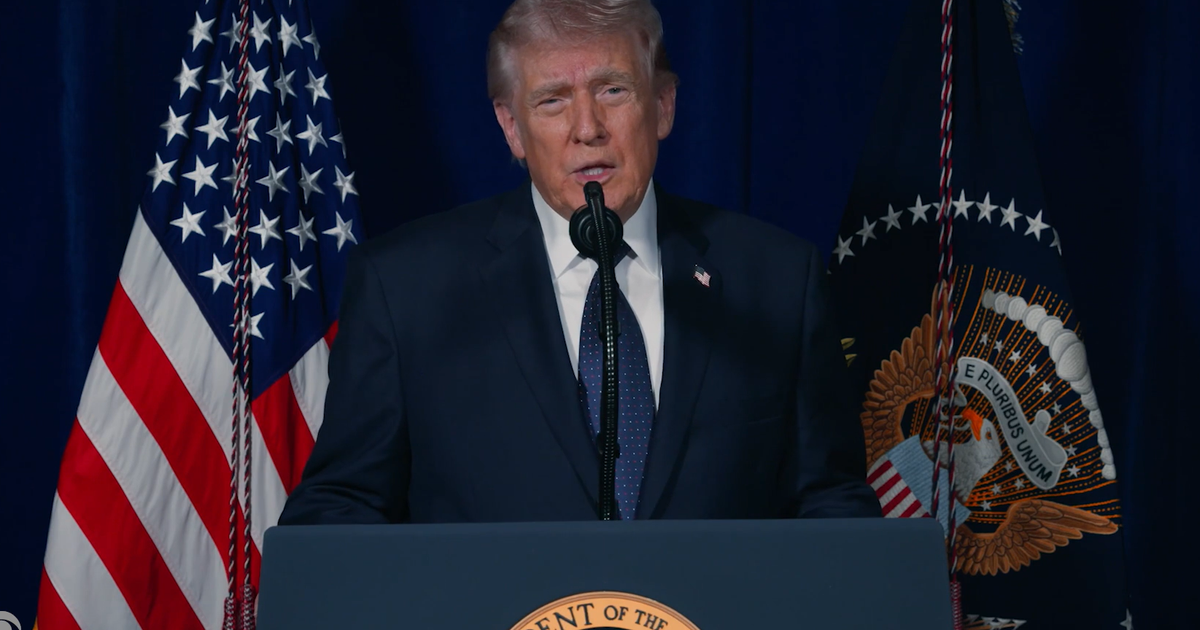
In a solemn video address posted to social media on Sunday, President Trump spoke directly to the American people about the ongoing military operation against Iran, known as Operation Epic Fury. Speaking from his Mar-a-Lago residence in Florida, the President delivered difficult news: three American service members have already been killed in the operation, and he warned that more casualties are likely before the mission concludes. “As one nation, we grieve for the true American patriots who have made the ultimate sacrifice for our nation, even as we continue the righteous mission for which they gave their lives,” Trump stated, his tone reflecting the weight of his words. He expressed prayers for the wounded and extended gratitude to the families of the fallen, acknowledging the harsh reality of military conflict with the words, “That’s the way it is. Likely be more.” The President promised that America would avenge these deaths and deliver what he called “the most punishing blow to the terrorists who have waged war against, basically, civilization.” This acknowledgment of ongoing sacrifice set a serious tone for an operation that Trump described as continuing “in full force” until all objectives are achieved.
The Scale and Scope of Operation Epic Fury
President Trump characterized the military action as “one of the largest, most complex, most overwhelming military offensives the world has ever seen,” painting a picture of a massive coordinated strike involving both American and allied forces. According to his description, the operation targeted hundreds of locations across Iran within a matter of minutes, demonstrating both the precision and overwhelming force of modern military capabilities. The targets included Revolutionary Guard facilities, Iranian air defense systems, and naval assets—specifically nine ships plus their naval base. This comprehensive approach suggests a strategy designed not just to deliver a symbolic blow but to fundamentally degrade Iran’s military infrastructure and capability to threaten American interests or allies in the region. The President’s emphasis on the operation being a joint effort with Israel underscores the strategic partnership between the two nations in confronting what they perceive as Iranian aggression and support for terrorism. The speed and coordination required to strike so many targets simultaneously represents a significant military achievement, though one that comes at the cost of American lives and carries the risk of broader regional instability.
The Death of Iran’s Supreme Leader and Leadership Vacuum
Perhaps the most significant development announced in Trump’s address was the confirmation that Iran’s Supreme Leader Ayatollah Khamenei had been killed in a missile strike on Saturday, along with other senior Iranian officials. Trump minced no words in describing the deceased leader: “This wretched and vile man had the blood of hundreds and even thousands of Americans on his hands and was responsible for the slaughter of countless thousands of innocent people, all across many countries.” Intelligence gathered by the CIA and shared with Israel reportedly led to the successful strike that eliminated Khamenei, representing a major intelligence and military success but also creating an uncertain situation regarding Iran’s future leadership. The President claimed that across Iran, people took to the streets celebrating the news of Khamenei’s death, though such claims are difficult to verify independently. With no clear successor identified, Iranian President Masoud Pezeshkian announced that an interim leadership council had been established and had begun its work. This leadership vacuum creates both opportunity and danger—opportunity for potential reform or regime change, but danger of chaos, power struggles, or unpredictable responses from various Iranian military and political factions during this period of transition.
Conflicting Assessments of Iran’s Military Capability
While President Trump declared that Iran’s “entire military command is gone” and suggested that thousands of Iranian military personnel were seeking to surrender and requesting immunity, Iranian officials offered a starkly different assessment of the situation. Iranian Foreign Minister Abbas Araghchi, speaking on ABC News’ “This Week with George Stephanopoulos,” insisted that “nothing has changed” in Iran’s military capability following the strikes. He drew a comparison to previous strikes in June, noting that when Israel killed some of Iran’s top commanders, they were replaced quickly, and Iran was able to begin retaliation in less than 12 hours. This discrepancy between American and Iranian accounts highlights the challenge of assessing the true impact of military operations in real-time and the role that information warfare plays in modern conflict. Araghchi’s comments suggest that Iran may not be as degraded or demoralized as the Trump administration portrays, raising questions about whether the operation will achieve its stated objectives or potentially lead to further escalation. The competing narratives also reflect each side’s need to project strength to their respective domestic audiences—Trump showing decisive action to the American public, while Iranian officials demonstrate resilience to maintain morale and legitimacy at home.
The Nuclear Dimension and Failed Negotiations
A significant context for Operation Epic Fury, according to President Trump, was the failure of nuclear negotiations with Iran that were ongoing when the strikes began. “They could have done something two weeks ago, but they just couldn’t get there,” Trump said, expressing frustration with the diplomatic process. The President framed the military action as necessary to prevent Iran from developing long-range missiles and nuclear weapons, which he described as “a dire threat to every American.” This justification echoes arguments made for previous military interventions in the Middle East and raises questions about the relationship between diplomacy and military force in dealing with Iran’s nuclear ambitions. Interestingly, despite the ongoing military operations, Trump indicated openness to dialogue with new Iranian leadership, telling The Atlantic that “they want to talk, and I have agreed to talk, so I will be talking to them.” This willingness to engage diplomatically even while military operations continue suggests a strategy that combines maximum pressure with the promise of potential resolution if Iran meets American demands. However, Trump also criticized Iranian leadership for waiting too long to agree to what he characterized as “very practical and easy” terms, placing blame for the military escalation on Iran’s intransigence rather than any failure of American diplomacy.
A Call for Regime Change and American Support for Iranian People
In perhaps the most provocative element of his address, President Trump directly urged Iranian military and security forces to “lay down your arms and receive full immunity or face certain death,” while simultaneously calling on the Iranian people to “seize this moment, to be brave, be bold, be heroic and take back your country.” This explicit call for regime change goes beyond the stated military objectives of degrading Iran’s military capability and preventing nuclear weapons development, suggesting a broader goal of fundamentally transforming Iran’s government. Trump promised that “America is with you,” offering support to those who might rise up against the current regime. He characterized Iran as having attacked the United States for nearly 50 years while chanting “Death to America” and “Death to Israel,” describing the Iranian government as “the world’s number one state sponsor of terror.” By framing the conflict in these terms, Trump positioned the operation not merely as a defensive measure but as part of a longer struggle against what he characterized as “wicked extremists” and a “blood thirsty terrorist regime.” The President concluded his address by telling the American people, “I made a promise to you, and I fulfilled that promise. The rest will be up to you, but we’ll be there to help.” This statement suggests that while the immediate military objectives may be achieved, the broader goal of transformation in Iran will require sustained engagement and potentially support for opposition movements within the country, raising questions about America’s long-term commitment and strategy in the region beyond the current military operation.