


Justice Department Defends Itself Against Claims of Political Retribution
Acting Attorney General Pushes Back on Obama’s Criticism
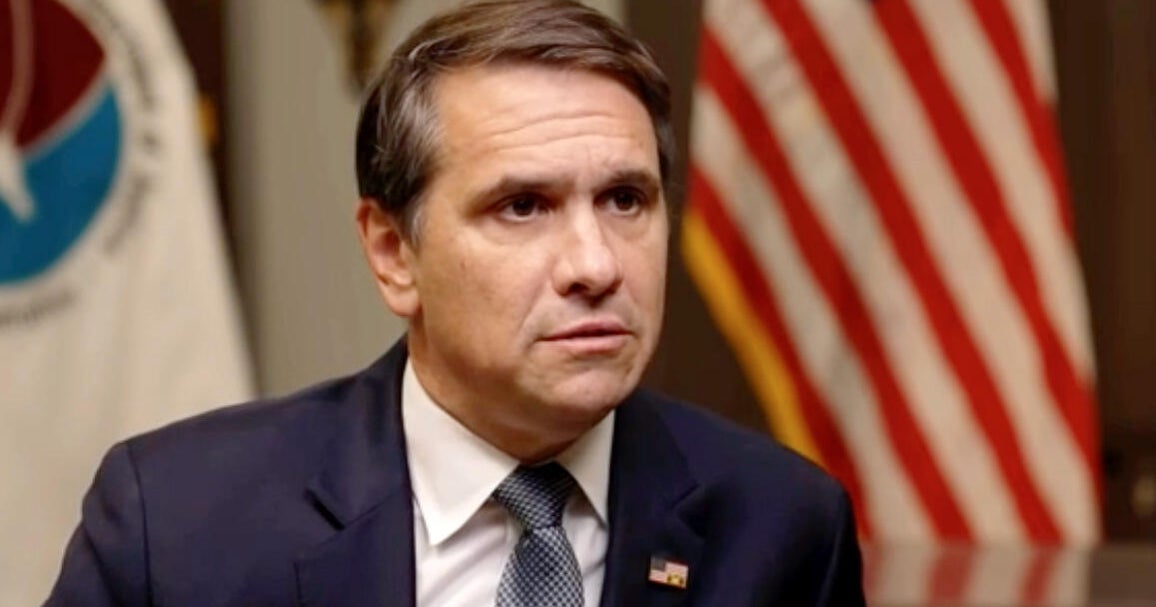
Acting Attorney General Todd Blanche has firmly rejected accusations that the Department of Justice is conducting a politically motivated revenge campaign against President Trump’s critics and opponents. In a detailed interview with CBS News in Phoenix, Blanche directly addressed concerns raised by former President Barack Obama and other critics who worry that the traditionally independent Justice Department is becoming a tool for settling political scores. Blanche insisted that the allegations are “simply false” and emphasized that prosecutors within the department are “doing our jobs” and working toward “making America safe again.” His comments come amid growing controversy over criminal charges filed against several high-profile Trump adversaries, including former FBI Director James Comey and New York Attorney General Letitia James. The debate touches on fundamental questions about presidential power, the independence of law enforcement, and whether long-standing norms about the separation between the White House and the Justice Department are being eroded under the current administration.
High-Profile Cases Fuel the Controversy
The Justice Department under Blanche’s leadership has faced intense scrutiny for bringing criminal charges against individuals who have previously clashed with President Trump. Among the most controversial cases is the indictment of James Comey, the former FBI director who Trump fired and who later became a vocal critic of the president. The charges against Comey center on an unusual allegation: that he threatened the 47th president by posting a photograph on social media showing seashells arranged to form the numbers “86 47.” Beyond Comey, New York Attorney General Letitia James—who previously pursued civil fraud cases against Trump and his business organization—has also been indicted. Critics point to these prosecutions as evidence of a troubling pattern, arguing that the Justice Department, which historically maintained a careful distance from White House influence, is losing its reputation as an apolitical agency dedicated to impartial enforcement of the law. When questioned about these specific cases, Blanche attempted to downplay the Justice Department’s role, characterizing the Comey prosecution as just one among thousands of cases handled by the department annually and insisting it was initiated by “local prosecutors” and “local agents” rather than directed from Washington. “I don’t even know their names,” Blanche said of the North Carolina-based federal prosecutors handling the case.
Obama Speaks Out About Justice System Politicization
Former President Barack Obama added his voice to the chorus of critics on Tuesday during an appearance on “The Late Show with Stephen Colbert.” Obama expressed deep concern about “the politicization of our justice system” and warned about the dangers that arise when “whoever is in charge of the government starts using that to go after their political enemies.” While Obama’s remarks carefully avoided mentioning President Trump by name, the target of his criticism was unmistakable given the current controversies. Obama articulated what many legal experts and former Justice Department officials have been saying: “The White House shouldn’t be able to direct the attorney general to go around prosecuting whoever the president wants to prosecute.” This statement reflects a long-standing principle in American governance—that the Justice Department should operate independently from direct presidential control when it comes to individual prosecutions. The tradition, though not enshrined in law, has been seen as essential for maintaining public confidence that criminal prosecutions are based on evidence and law rather than political calculations. Obama’s decision to speak out publicly represents a rare intervention by a former president into current political affairs, suggesting the depth of his concerns about the direction of the Justice Department.
Constitutional Interpretation and Presidential Power
Blanche’s response to Obama’s criticism revealed a fundamentally different understanding of the relationship between the president and the Justice Department. During the CBS News interview, Blanche made his position dramatically clear by pulling out a pocket-sized copy of the Constitution and turning to Article Two, which outlines the structure of the executive branch. Reading from the document, Blanche emphasized that “the executive power shall be vested in the President of the United States of America,” and pointedly added, “It does not say that the Attorney General stands off to the side.” This constitutional interpretation suggests a vision of presidential authority that extends to direct oversight of criminal prosecutions—a position that contrasts sharply with decades of Justice Department norms and practices. Blanche further noted that as a member of President Trump’s Cabinet, he views the president as having the right to lead the country “in all areas,” including matters of criminal justice. He argued that Americans actually want presidential involvement in addressing major challenges: “To the extent that President Trump calls me and says that he thinks that we have a problem in this country, whether it’s the scourge of drugs, illegal immigration, every American wants him to do that, and he should.” This perspective represents a significant departure from the traditional view that while the president sets general law enforcement priorities, decisions about individual prosecutions should be insulated from political influence.
The Timeline of Prosecutions Raises Questions
The timeline and circumstances surrounding the recent indictments have only intensified concerns about political motivation. Comey and James were initially indicted last fall on charges of lying to Congress and bank fraud, respectively, but those cases were dismissed on procedural grounds—specifically, that the interim U.S. attorney who led the prosecutions was invalidly appointed. The dismissals might have ended the matter, but instead, prosecutors brought new charges. What raised particular alarm among critics was that shortly before the original charges were filed, President Trump had posted on Truth Social urging then-Attorney General Pam Bondi (Blanche’s predecessor) to investigate Comey, James, and a third Trump critic, Democratic Senator Adam Schiff. The apparent connection between Trump’s public call for investigations and the subsequent indictments fueled suspicions that these prosecutions originated from the White House rather than from independent assessment by career prosecutors. When CBS News asked Blanche directly whether President Trump calls him and directs him to prosecute specific individuals, Blanche declined to discuss the content of his conversations with the president. However, he offered reassurance: “But rest assured, he has much better, bigger and important things to do than to worry about me doing my job. And I wake up with a very clean conscience every morning. We are absolutely doing nothing but what we should be doing at the Department of Justice.”
Blanche Turns Criticism Back on Democrats
In defending the Justice Department’s actions, Blanche didn’t just deny wrongdoing—he went on the offensive, turning the accusations back on Democrats and suggesting they were hypocritical. Blanche called allegations that President Trump is prosecuting his opponents “extraordinarily rich,” pointing to the extensive criminal charges that Trump himself faced before returning to office. These prosecutions included cases brought by state prosecutors in New York and Georgia, as well as by a federal special counsel appointed during the previous administration. Before becoming Acting Attorney General, Blanche had served as one of President Trump’s defense attorneys in several of these cases, giving him a front-row seat to what Trump and his allies characterized as politically motivated prosecutions. From Blanche’s perspective, Democrats who now criticize the Justice Department lack credibility because they remained silent—or actively supported—prosecutions of Trump. “So I welcome criticism. Let’s go. But if you’re sitting in a glass house, you ought not throw stones,” Blanche said. This “what-about-ism” defense resonates with Trump supporters who believe the former president was unfairly targeted, but critics argue it sidesteps the fundamental question of whether the Justice Department should be pursuing cases that appear politically motivated, regardless of what happened in the past. The debate ultimately centers on whether the solution to perceived past politicization is to return to strict norms of independence, or whether each administration is now entitled to use prosecutorial power against political opponents—a cycle that could fundamentally undermine the American justice system’s legitimacy and the principle that no one, regardless of political position, is above the law.