


The Heavy Burden: How Rising Gas Prices Are Forcing Impossible Choices for American Families
A Single Mother’s Daily Dilemma
Melissa Miles faces a heartbreaking decision that no student should have to make. Every morning, the 42-year-old single mother stands at a crossroads between her education and her financial survival. As a full-time social work student at Eastern Michigan University, Miles undertakes an exhausting 160-mile daily round trip from her home in Hillsdale, Michigan. But with gas prices soaring to $4.80 per gallon in her state, each trip to campus has become a financial calculation fraught with anxiety. “Literally every day, I have to figure out, do I have the groceries for the week, or do I have the necessities for today? And then compare it to, can I miss this class?” she explains. This isn’t just about budgeting—it’s about choosing between her future and her present, between her dreams of a better career and the immediate needs of her five-year-old son, Kingston. The pressure has become so intense that she’s begun skipping classes altogether, a decision that could jeopardize not only her academic standing but also her long-term career prospects. For Miles, the fuel tank gauge has become a constant source of stress, a reminder that pursuing higher education while living paycheck to paycheck in America has become exponentially harder.
The National Crisis at the Pump
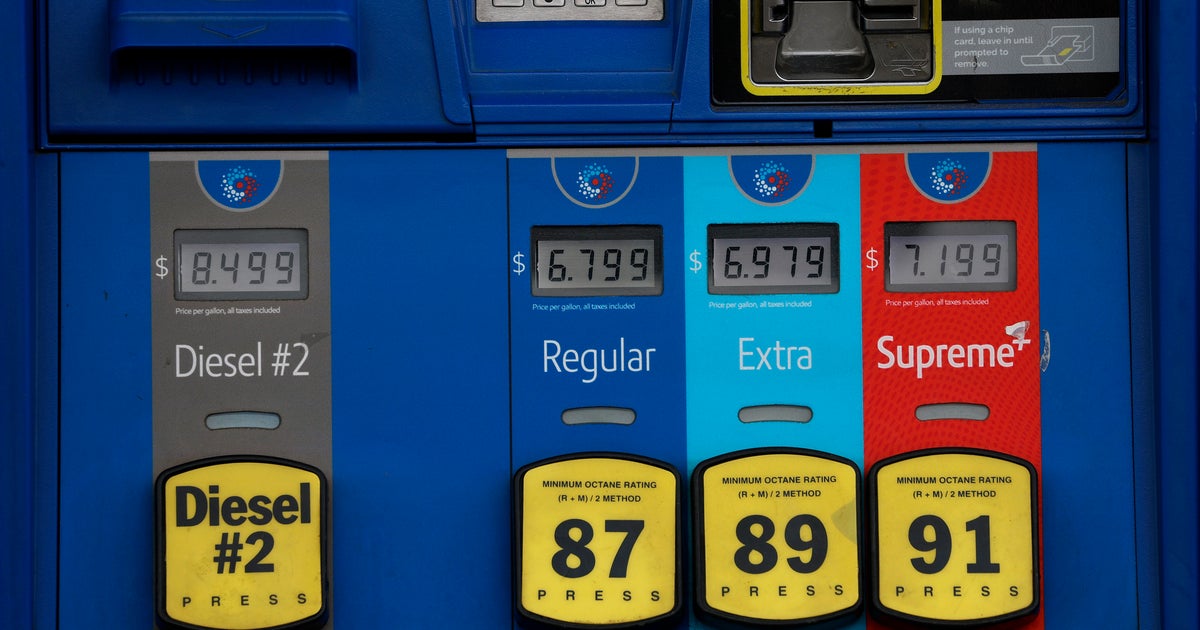
Miles is far from alone in her struggle. Millions of Americans are confronting a harsh new reality at gas stations nationwide as fuel prices have skyrocketed amid the Iran war conflict. According to AAA data, the national average gas price jumped to $4.54 per gallon—an increase of more than $1.50 since the conflict erupted in late February. This represents a massive financial shock to households already stretched thin by inflation and economic uncertainty. The pain isn’t limited to gasoline either; diesel fuel has surged to $5.67 per gallon, up from $3.54 just a year ago. This diesel price spike threatens to create a ripple effect throughout the entire economy, as the cost of transporting goods by truck and rail increases, inevitably leading to higher prices on grocery store shelves and beyond. Energy experts and economists paint a sobering picture for the months ahead, predicting that relief won’t come quickly. Mark Zandi, chief economist at Moody’s Analytics, forecasts that even when prices eventually stabilize, Americans should expect to pay around $3.50 per gallon by the end of 2026—still roughly 50 cents higher than pre-war levels. This suggests that the current pain at the pump isn’t a temporary inconvenience but rather a prolonged financial burden that families will need to absorb into their budgets for the foreseeable future.
Political Promises and Public Frustration
The White House has attempted to reassure Americans that relief is on the horizon, though many remain skeptical. Taylor Rogers, a White House spokeswoman, stated that President Trump remains committed to lowering fuel costs and expressed confidence that “as the president continues to exert maximum leverage over Iran with the ongoing successful blockade to bring this conflict to an end, we will see global energy markets stabilize and gas prices plummet back to the multi-year lows Americans enjoyed prior to the start of Operation Epic Fury.” However, for many Americans filling their tanks each week, these promises feel hollow against the reality of their shrinking bank accounts. Daniel Hock, a 33-year-old university admissions adviser living in Sacramento, California, voices the frustration felt by countless citizens. In his state, gas prices have reached a staggering $6.16 per gallon—the highest in the nation. “I ultimately am the one footing the bill under a presidency that said that my gas prices would go down,” Hock told CBS News. For him, this isn’t just political rhetoric; it’s a weekly $100 expense that consumes roughly 9% of his pre-tax income. That money represents opportunities lost—debt from a recent four-month unemployment period that remains unpaid, savings goals delayed, and financial security that slips further from reach with each fill-up.
The Disproportionate Impact on Low-Income Americans
While high gas prices create hardship across all income levels, the burden falls most heavily on those least able to bear it. Low-income families are experiencing what economists call a regressive impact—they spend a significantly larger percentage of their income on fuel compared to wealthier households. Bank of America data from March reveals this stark disparity: low-income families spent 4.2% of their income on gas, while wealthier households spent only 2.7%. This percentage-point difference might seem small on paper, but it translates to profound real-world consequences for families living on tight budgets. When nearly one in every twenty dollars earned goes directly into a gas tank, there’s less money available for food, housing, medical care, childcare, and emergency expenses. This creates a cascading effect where one area of increased cost forces difficult compromises in others, leaving families in a constant state of financial triage. The psychological toll of this perpetual balancing act cannot be overstated—the stress of never quite having enough, of constantly calculating and recalculating, of knowing that one unexpected expense could topple the entire precarious structure of household finances.
Living Above Poverty But Below Stability
Steph Thornton embodies the struggles of America’s working poor—those who earn just enough to disqualify them from many assistance programs but not enough to achieve genuine financial security. The 42-year-old single mother of two from Macomb, Michigan, works as a community health worker, a job that requires her to use her 2017 Ford Escape to conduct home visits with clients. This means fuel isn’t just a personal expense; it’s a professional necessity that directly impacts her ability to earn a living. Thornton estimates she now spends approximately $400 per month on gas, compared to $320 earlier in the year when prices hovered around $3 per gallon. That $80 monthly increase might not seem catastrophic to someone with financial cushion, but for families like Thornton’s, it represents a significant chunk of disposable income that has simply vanished. “Many of us haven’t even regrouped from the pandemic,” she explains, highlighting how this latest crisis compounds previous hardships. “Things are just hitting us back-to-back.” Her words capture the exhaustion of families who have weathered multiple economic storms in rapid succession—the pandemic, inflation, supply chain disruptions, and now energy price spikes—without ever getting the chance to rebuild their financial reserves or catch their breath.
The Broader Economic and Social Implications
The current fuel price crisis represents more than just an economic inconvenience; it threatens to undermine social mobility and deepen existing inequalities in American society. When students like Melissa Miles must choose between attending class and feeding their children, the promise of education as a pathway to better opportunities begins to ring hollow. When workers like Steph Thornton spend increasing portions of their income just to get to work, the concept of productive employment becomes questionable. And when millions of Americans across the country find themselves in similar predicaments, the cumulative effect threatens economic growth, consumer spending, and overall quality of life. The psychological impact extends beyond immediate financial stress—it erodes hope and faith in the possibility of building a better future. Furthermore, the ripple effects of high diesel prices mean that virtually every product Americans purchase will likely become more expensive as transportation costs are passed along to consumers. This creates a vicious cycle where higher fuel prices drive general inflation, which in turn squeezes household budgets even tighter, leaving even less room for discretionary spending or savings. As economists continue to monitor the situation and politicians make promises about future relief, millions of American families continue making impossible daily choices, their long-term dreams increasingly constrained by the immediate reality of what they can and cannot afford to put in their gas tanks.