


Federal Judge Denies Fulton County’s Request to Reclaim 2020 Election Materials Seized by FBI
Court Ruling Upholds FBI’s Authority Despite Acknowledging Imperfections
In a significant legal decision that continues to reverberate through the ongoing debates about the 2020 election, a federal judge in Georgia has refused to order the return of ballots and election materials that the FBI seized from Fulton County earlier this year. U.S. District Judge Jean-Paul Boulee delivered his ruling on Wednesday, stating that while the FBI’s approach wasn’t flawless, it didn’t cross the legal threshold required to invalidate the search warrant. The decision represents a complex balancing act between acknowledging procedural concerns while upholding federal investigative authority. Judge Boulee’s 68-page ruling carefully examined whether the FBI had shown “callous disregard” for Fulton County’s rights when agents executed their search warrant at a county elections office. While he acknowledged that the FBI affidavit supporting the search contained some misleading statements about the final ballot count and troubling omissions about ballot mechanisms, he ultimately concluded these shortcomings didn’t rise to the level of intentional deception or reckless disregard for the truth. The judge emphasized that this wasn’t a situation where officers deliberately fabricated information or systematically excluded facts that would undermine their case for probable cause. His decision underscores the high bar that must be met when challenging federal search warrants, even when those warrants aren’t perfect.
The Scope of the FBI Seizure and Its Political Context
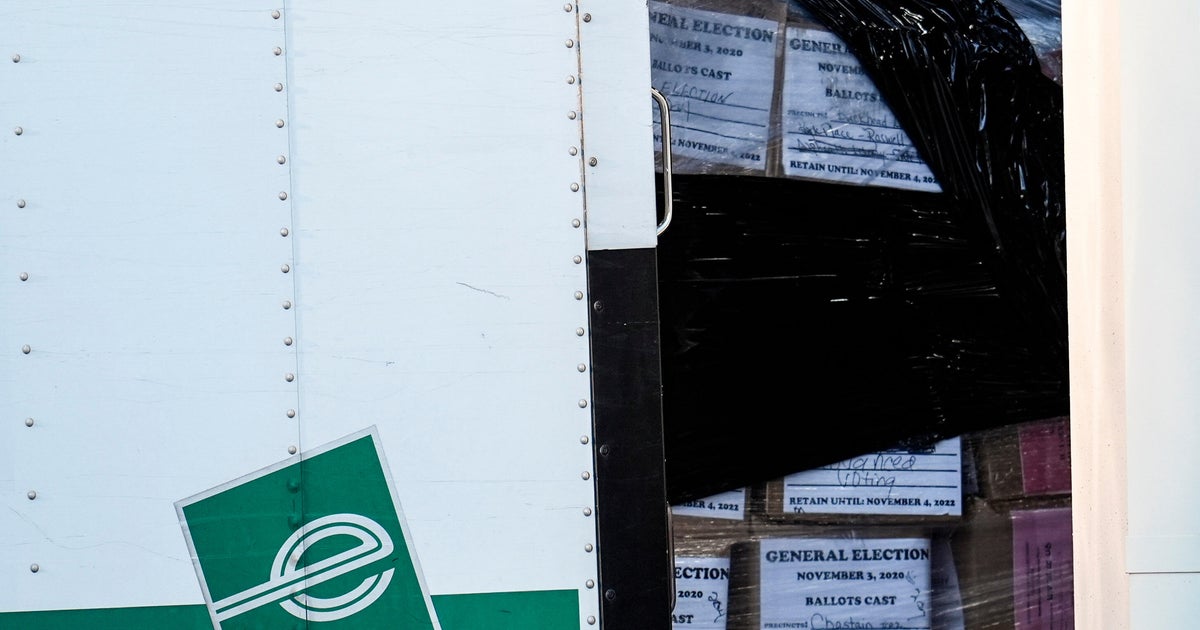
The FBI’s search warrant, executed more than two months before Judge Boulee’s ruling, was extraordinary in its scope. Federal agents sought to seize “all physical ballots” from the 2020 election, along with tapes from vote-tabulating machines, ballot images, and voter registration rolls. The operation ultimately resulted in the removal of more than 630 boxes of election material from Fulton County facilities. This massive seizure targeted one of Georgia’s most politically significant counties—Fulton County, home to Atlanta, which played a crucial role in former President Joe Biden’s narrow victory in Georgia during the 2020 presidential election. The deep-blue county has been at the center of numerous unfounded allegations of election fraud promoted by former President Donald Trump and his supporters, despite multiple recounts and investigations that confirmed the integrity of the election results. Georgia’s Republican governor and secretary of state have consistently defended the legitimacy of the 2020 election, noting that three separate counts all confirmed Biden’s victory in the state. The political sensitivity surrounding Fulton County stems from its role as a Democratic stronghold in a battleground state and its prominence in Trump’s efforts to overturn the election results.
Fulton County’s Legal Arguments and Constitutional Concerns
Attorneys representing Fulton County mounted a vigorous legal challenge against the FBI seizure, raising several constitutional and procedural arguments. The county filed a lawsuit seeking not only the return of the seized materials but also an order preventing the government from reviewing any copies until the legal dispute was resolved. Central to their case was the argument that the search represented a “gross intrusion” into the state’s constitutional role in administering elections and violated the county’s Tenth Amendment rights. Abbe Lowell, the attorney representing Fulton County, contended that the FBI affidavit contained insufficient evidence to justify such an expansive seizure. During a contentious hearing in March, Lowell argued that the statute of limitations had expired on the potential violations under investigation, which involve laws against election officials intimidating voters or depriving them of fair elections, and requirements for retaining federal election records for 22 months. The county’s legal team also brought in elections expert Ryan Macias, who testified that the affidavit contained “incoherent terminology” and conflated different election processes. Macias argued that the FBI had essentially recycled debunked rumors from over six years ago, and that the election had already been thoroughly investigated and validated. Lowell warned that while there was nothing to support an ongoing investigation that matters, the seized ballots might be used “for some future crime that may not exist.”
The Judge’s Concerns and the Government’s Defense
Despite ultimately ruling in favor of the FBI, Judge Boulee expressed significant concerns about aspects of the case during proceedings. He acknowledged that “the seizure in this case was certainly not perfect” and described the events as “in a variety of ways, unprecedented.” The judge particularly questioned the Justice Department about how extensive an affidavit needs to be to justify such a massive seizure, telling government attorney Tysen Duva that the seizure of more than 630 boxes bothered him “a rather considerable amount.” He pressed the government on the flaws in the affidavit, asking “How far does that affidavit have to go?” in establishing probable cause. Duva, leading the Justice Department’s defense, dismissed Fulton County’s arguments as “woefully inadequate” and pushed back against treating the affidavit like an academic exercise, stating bluntly that “this isn’t grading a paper.” He conceded that the FBI agent who prepared the affidavit “could have done better” and acknowledged the agent “may have missed a thing or two.” Perhaps most remarkably, Duva admitted that the FBI’s investigation might not lead to any criminal charges, stating “If there is an indictment, that remains to be seen. What may happen later? Maybe nothing.” This candid acknowledgment raised questions about whether such an expansive seizure was justified if the government itself couldn’t say whether it would result in prosecutions.
The Investigation’s Origins and Controversial Connections
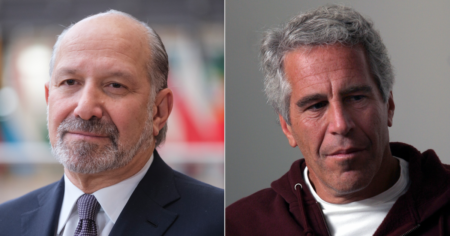
The origins of the FBI investigation added another layer of controversy to the case. According to the FBI affidavit, the investigation began with a referral from Kurt Olsen, whom the bureau described as a “Presidentially appointed Director of Election Security and Integrity.” However, Olsen’s background raised serious questions about the investigation’s credibility and motives. In 2020, Olsen worked as an attorney alongside Texas Attorney General Ken Paxton in efforts to persuade the Supreme Court to overturn the election results. The House January 6 Committee subpoenaed Olsen in 2022, alleging that he had contacted high-level Justice Department officials at President Trump’s direction to discuss filing challenges to election results and had multiple phone calls with Trump on January 6, 2021, the day of the Capitol attack. The Justice Department revealed in a May court filing that Olsen made his formal referral “no later than” January 5, with the FBI opening an assessment the following day and approving a full investigation about a week later. During the March hearing, Lowell pointed out that one witness cited in the government’s affidavit had a criminal record, and that Olsen himself had faced court sanctions in two incidents. Lowell argued that approximately half of the witnesses would be categorized as “election deniers,” raising questions about whether the investigation was based on credible evidence or politically motivated conspiracy theories that had already been repeatedly debunked.
Implications and Ongoing Legal Battles
Judge Boulee’s decision to allow the FBI to retain the seized election materials has significant implications for the balance between federal investigative powers and state election administration. The judge rejected Fulton County’s Tenth Amendment argument that the seizure violated the county’s rights to administer elections, and he dismissed claims that the warrant was obtained in bad faith after the Justice Department faced opposition in a separate civil case. However, his ruling acknowledged a critical argument from the government: while the election occurred more than five years ago, witness testimony in the affidavit alleged that ballot images in the county’s possession may have been modified as recently as 2024, potentially keeping the statute of limitations alive. The legal battles surrounding Fulton County’s 2020 election materials continue on multiple fronts. In a separate but related matter, county election officials asked a federal judge to quash a grand jury subpoena from the Justice Department seeking personal information—including names, addresses, and phone numbers—for thousands of people who helped run the 2020 election in the county. This subpoena, issued by federal prosecutors in North Carolina in April, targets everyone from people who drove voting units to election volunteers and ballot reviewers. The request has raised concerns about the privacy and safety of election workers, who have faced increased harassment and threats in recent years. As this case moves forward, it highlights the ongoing tensions between investigating alleged election irregularities and protecting the integrity of state-administered election systems, while also raising questions about how politically motivated referrals should be evaluated by law enforcement agencies.