


Trump Administration Revokes Federal Authority to Regulate Greenhouse Gas Emissions
A Historic Reversal in Climate Policy
In a dramatic shift that environmentalists are calling a catastrophic setback for the planet, President Trump and EPA Administrator Lee Zeldin announced Thursday that the federal government will no longer regulate greenhouse gas emissions from major sources like automobiles, power plants, and industrial facilities. This sweeping action eliminates what’s known as the “endangerment finding”—the legal foundation that has allowed the government to control carbon dioxide, methane, and other heat-trapping gases for nearly two decades. Zeldin hasn’t minced words about the scope of this change, declaring it “the largest act of deregulation in the history of the United States.” The announcement has sent shockwaves through environmental communities, with Dr. Gretchen Goldman, CEO of the Union of Concerned Scientists, describing it as “an obvious example of what happens when a corrupt administration and fossil fuel interests are allowed to run amok.” This decision doesn’t just tweak existing regulations—it fundamentally dismantles the government’s ability to address climate change through emissions controls, potentially opening the floodgates to unchecked pollution from the very sources scientists say are warming our planet.
Understanding the Endangerment Finding and Its Importance
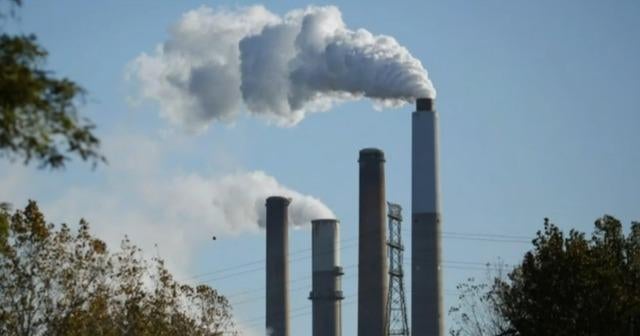
To understand why this reversal matters so much, we need to look at what the endangerment finding actually is and why it was established in the first place. Back in 2009, during the Obama administration, the EPA made a formal determination based on extensive scientific research: greenhouse gases pose a genuine threat to public health and welfare. This wasn’t just bureaucratic paperwork—it was a science-based conclusion that provided the legal justification for the federal government to regulate these emissions under the Clean Air Act. The finding addressed a sobering reality: up to 20% of all heat-trapping gases emitted in the United States come from the tailpipes of cars and light trucks alone. Add in airplanes, power plants, and oil and gas facilities, and you’re looking at the major contributors to climate change. For 17 years, this regulatory framework has been the backbone of federal efforts to combat climate change and reduce the risks associated with extreme weather events—the worsening heat waves that are killing vulnerable populations, the wildfires that are devastating communities and destroying ecosystems, the droughts that are threatening water supplies and agriculture, and the floods that are causing billions in property damage. By eliminating the endangerment finding, the Trump administration hasn’t just changed a policy—it’s removed the very foundation that justified federal action on climate change.
The Administration’s Rationale: Economics Over Environment
So why is the Trump administration taking this controversial step? According to officials, it all comes down to economics and energy policy. The White House argues that climate regulations have been unnecessarily expensive and have held back what they call “American energy dominance.” Press Secretary Karoline Levitt framed the repeal as a consumer-friendly move, claiming it would save the American public approximately $1.3 trillion, with much of those savings coming from lower vehicle prices. She painted a picture of average families saving more than $2,400 on the purchase of a new car, truck, or SUV—money that could go toward other household needs. The administration’s narrative positions environmental regulations as burdensome red tape that drives up costs without delivering proportionate benefits. President Trump himself has consistently dismissed climate change concerns throughout his political career, famously calling it a “hoax” despite overwhelming scientific consensus about the role of emissions in warming the planet and the serious risks this poses. From the administration’s perspective, this deregulation is about prioritizing immediate economic relief for Americans and freeing up the energy sector to operate without what they view as unnecessary government interference.
The Critics’ Response: Short-Term Savings, Long-Term Disaster
Environmental advocates and economists paint a starkly different picture of what this deregulation will mean for Americans. Critics argue that while there might be some short-term cost savings on vehicle purchases, these pale in comparison to the massive long-term economic damage that unchecked climate pollution will cause. Fred Krupp, president of the Environmental Defense Fund, warns that “this action will only lead to more of this pollution, and that will lead to higher costs and real harms for American families.” Interestingly, CBS News has reported that according to the EPA’s own data—data that presumably still exists even if the administration chooses to ignore it—maintaining the Biden-era fuel efficiency and electric vehicle policies would actually result in lower gas prices than revoking them would. This contradicts the administration’s narrative that deregulation will save consumers money at the pump. The broader concern among scientists and public health experts is that the costs of climate change—in terms of disaster recovery, healthcare expenses from pollution-related illnesses, agricultural losses from droughts and extreme weather, infrastructure damage from floods and storms, and the economic disruption of displaced communities—will far exceed whatever modest savings might come from cheaper vehicles or less regulated power plants. Environmental organizations view this move not as consumer protection but as a dangerous gift to fossil fuel industries at the expense of public welfare and planetary health.
Legal Challenges and the Science That Won’t Go Away
The Trump administration’s move to erase the endangerment finding faces a significant obstacle: you can’t simply delete established science and legal precedent with a stroke of a pen. Legal experts are already pointing out that the 2009 finding wasn’t based on political opinion—it was grounded in rigorous scientific research that has only grown stronger in the intervening years. Moreover, this determination has been tested and upheld in federal courts multiple times over the past decade and a half. Most significantly, the Supreme Court has affirmed that greenhouse gases are indeed air pollutants that fall under Clean Air Act regulation. This solid legal and scientific foundation makes the Trump administration highly vulnerable to what will likely be years of protracted litigation. Environmental groups, state attorneys general, and other parties are expected to challenge the repeal in court, arguing that the government cannot legally erase its own scientific and statutory conclusions simply because a new administration disagrees with them. The science showing that greenhouse gases trap heat, warm the planet, and create serious risks to human health and ecosystems hasn’t changed. The legal framework established by Congress in the Clean Air Act hasn’t changed. What’s changed is the political will to act on that science and use that legal authority—but courts may well determine that political preferences cannot override scientific reality and legal obligations.
What This Means for the Future: Business Realities and Long-Term Outlook
Despite the administration’s sweeping announcement, many experts believe the real-world impact may be more limited than it appears. John Tobin-de la Puente, a business professor at Cornell University’s SC Johnson College, offers an important perspective: he doesn’t expect companies to drastically alter their long-term strategies based on this action. As he points out, “Business operates on a far longer time scale than the four-year cycle of presidential elections, and to rely on the current administration’s announced action would be imprudent, especially given the substantial likelihood that the next administration will once again regulate carbon emissions.” This is a crucial insight. Major corporations, especially in the automotive and energy sectors, make investment decisions that play out over decades, not election cycles. Many have already committed billions to electric vehicle development, renewable energy projects, and emissions reduction strategies. These companies understand that global markets are moving toward cleaner energy regardless of what U.S. policy does in the short term, and that climate risks—to their supply chains, infrastructure, and operations—are real whether the federal government acknowledges them or not. Furthermore, many states, particularly California and those following California’s stricter emissions standards, are likely to continue their own regulatory efforts. The result may be a patchwork regulatory landscape where federal inaction doesn’t necessarily translate to actual deregulation across the board. While the Trump administration’s action is undoubtedly significant and will likely slow climate progress in the near term, the underlying drivers—scientific reality, economic trends toward clean energy, international commitments, state-level action, and corporate long-term planning—suggest that this reversal may prove more temporary than transformative. The battle over how America addresses climate change is far from over; it’s simply entered a new and more contentious phase.